

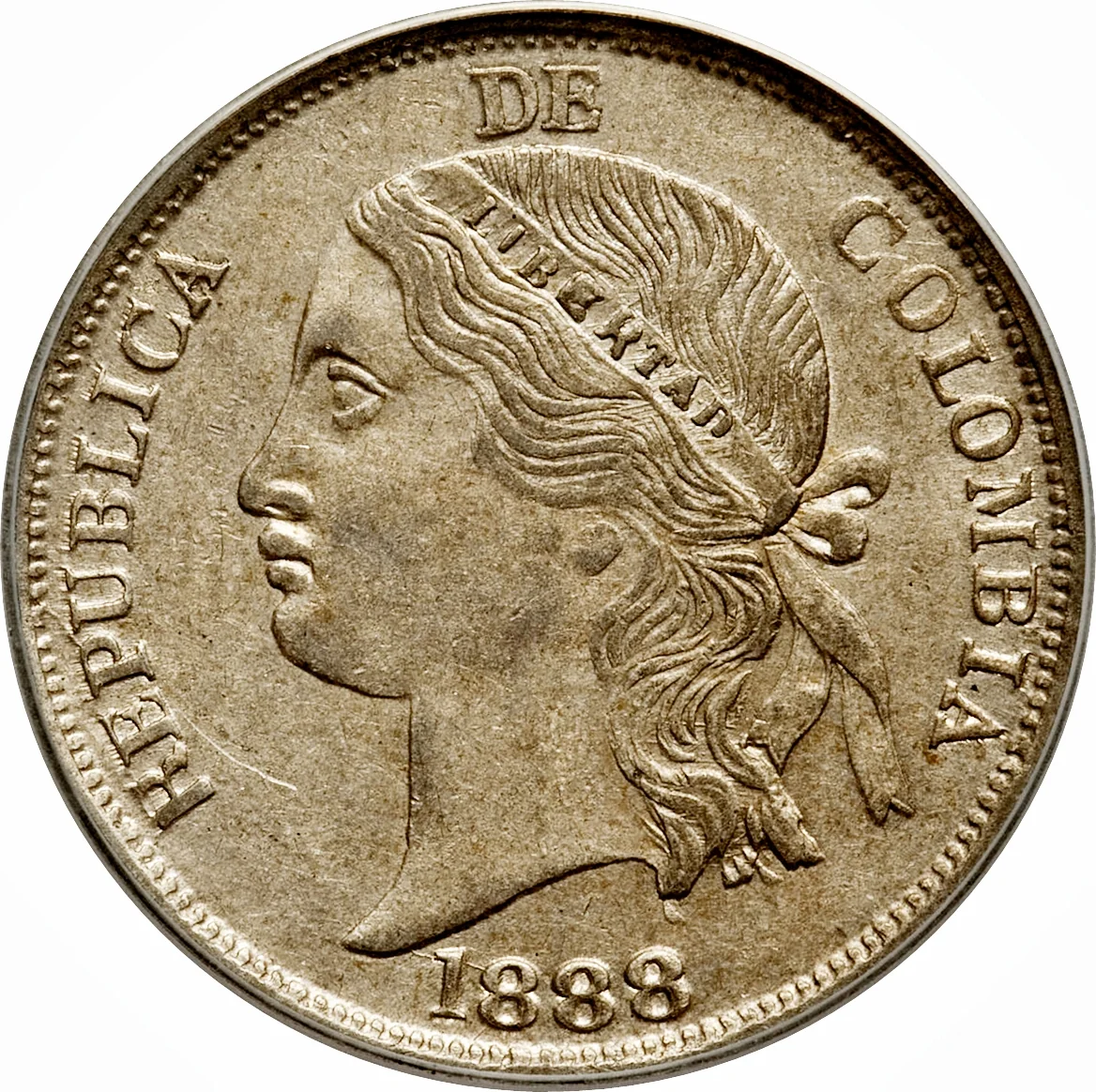

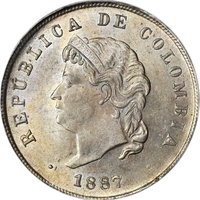
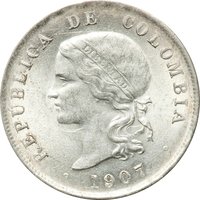
Obverse
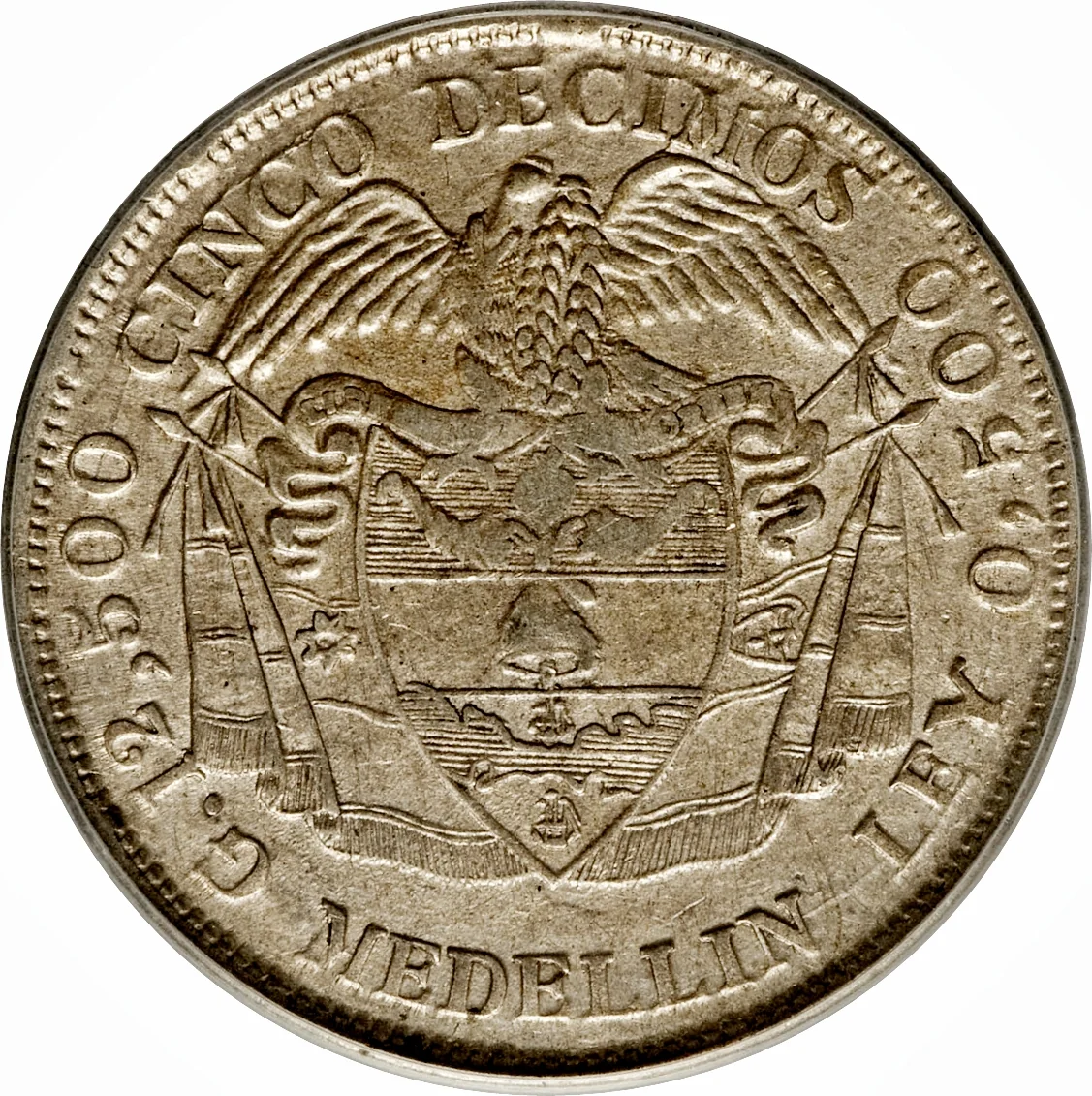
Reverse
Description:
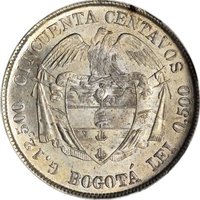
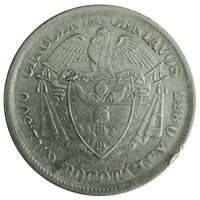
Condor over flagged arms, encircled by weight, value, silver fineness, and mint.
Inscription:
G. 12,500 CINCO DECIMOS
MEDELLIN LEY 0,500
MEDELLIN LEY 0,500
Script: Latin
Edge
Categories
| Symbol> Allegory |
| Symbols> Coat of Arms |
Mintings
| Year | Mint Mark | Mintage | Quality | Collection |
|---|---|---|---|---|
| 1888 | — | — | ||
| 1889 | — | — |
Historical background
In 1888, Colombia, then known as the Republic of Colombia (or the "Regeneration" period under President Rafael Núñez), was grappling with a profound monetary crisis rooted in political fragmentation and fiscal instability. The nation's currency system was chaotic, characterized by the simultaneous circulation of a bewildering variety of coins. These included not only official Colombian mintings in gold (peso oro) and silver (peso plata), but also a flood of foreign coins—particularly from Peru, Bolivia, and France—and even debased, counterfeit pieces. The value of these coins fluctuated wildly by region, as the weak central government struggled to enforce monetary authority, leading to commercial confusion and hindering national economic integration.
This disorder was a direct legacy of the 19th century's political turbulence, including the recent dissolution of the United States of Colombia (1863-1886), a federalist period that had ceded significant monetary powers to individual states. Many regional banks issued their own paper money, often without sufficient metallic backing, leading to depreciation and loss of public trust. The 1886 constitution recentralized power, but the monetary mess remained. Consequently, transactions often required the expertise of money changers (cambistas), and international trade relied heavily on stable foreign gold coins, undermining national sovereignty.
Recognizing this crisis, the Núñez government was actively laying the groundwork for a sweeping reform, which would culminate in the Law 87 of 1887. This law, implemented in the years following 1888, aimed to unify the monetary system by introducing a new national gold standard currency, the peso colombiano, and restricting the legal tender status of foreign and substandard coins. Thus, 1888 represents a pivotal juncture—the final year of profound monetary anarchy, immediately preceding the decisive, if challenging, centralizing reforms of the Regeneration that sought to impose order and modernize the Colombian economy.
This disorder was a direct legacy of the 19th century's political turbulence, including the recent dissolution of the United States of Colombia (1863-1886), a federalist period that had ceded significant monetary powers to individual states. Many regional banks issued their own paper money, often without sufficient metallic backing, leading to depreciation and loss of public trust. The 1886 constitution recentralized power, but the monetary mess remained. Consequently, transactions often required the expertise of money changers (cambistas), and international trade relied heavily on stable foreign gold coins, undermining national sovereignty.
Recognizing this crisis, the Núñez government was actively laying the groundwork for a sweeping reform, which would culminate in the Law 87 of 1887. This law, implemented in the years following 1888, aimed to unify the monetary system by introducing a new national gold standard currency, the peso colombiano, and restricting the legal tender status of foreign and substandard coins. Thus, 1888 represents a pivotal juncture—the final year of profound monetary anarchy, immediately preceding the decisive, if challenging, centralizing reforms of the Regeneration that sought to impose order and modernize the Colombian economy.
💎 Extremely Rare