

5 centavos (José San Martin) – Argentina
Add to wishlist
Circulating commemorative coins
Commemoration: 100th Anniversary of the Death of José San Martin
Argentina
Context
Year: 1950
Issuer: Argentina
Period:
(since 1861)
Currency:
(1881—1969)
Demonetization: 1 January 1970
Total mintage: 3,460,000
Material
Diameter: 17 mm
Weight: 2 g
Thickness: 1.2 mm
Shape: Round
Composition: Copper-nickel
Technique: Milled
Alignment: Coin alignment
flip
References
KM: #
Numista: #4834
Value
Exchange value: 0.05 ARM
Obverse
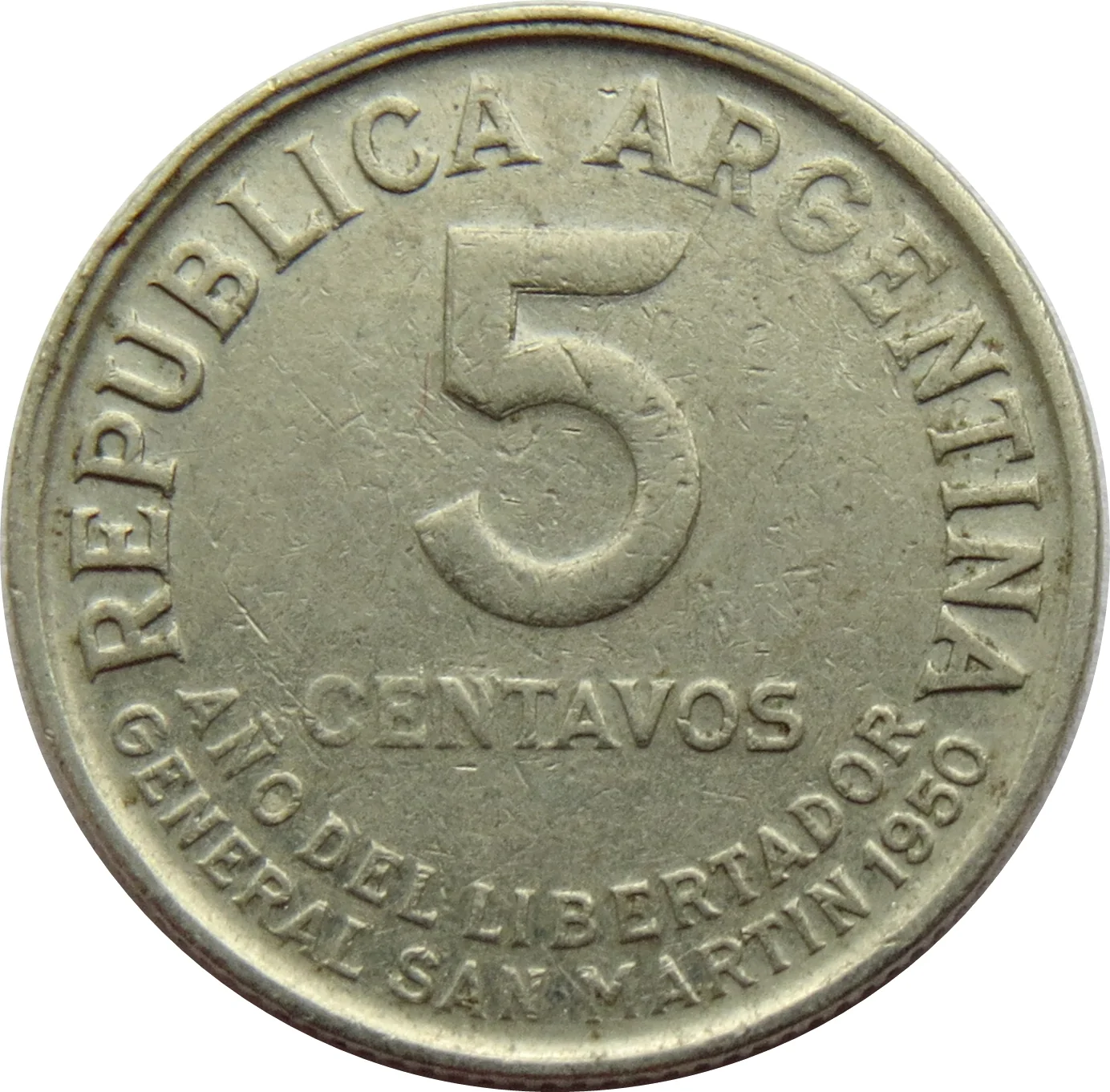
Description:
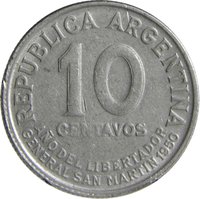
Value encircled by legend.
Inscription:
REPUBLICA ARGENTINA
5
CENTAVOS
AÑO DEL LIBERTADOR
GENERAL SAN MARTIN 1950
5
CENTAVOS
AÑO DEL LIBERTADOR
GENERAL SAN MARTIN 1950
Translation:
REPUBLIC OF ARGENTINA
5
CENTAVOS
YEAR OF THE LIBERATOR
GENERAL SAN MARTIN 1950
5
CENTAVOS
YEAR OF THE LIBERATOR
GENERAL SAN MARTIN 1950
Script: Latin
Language: Spanish
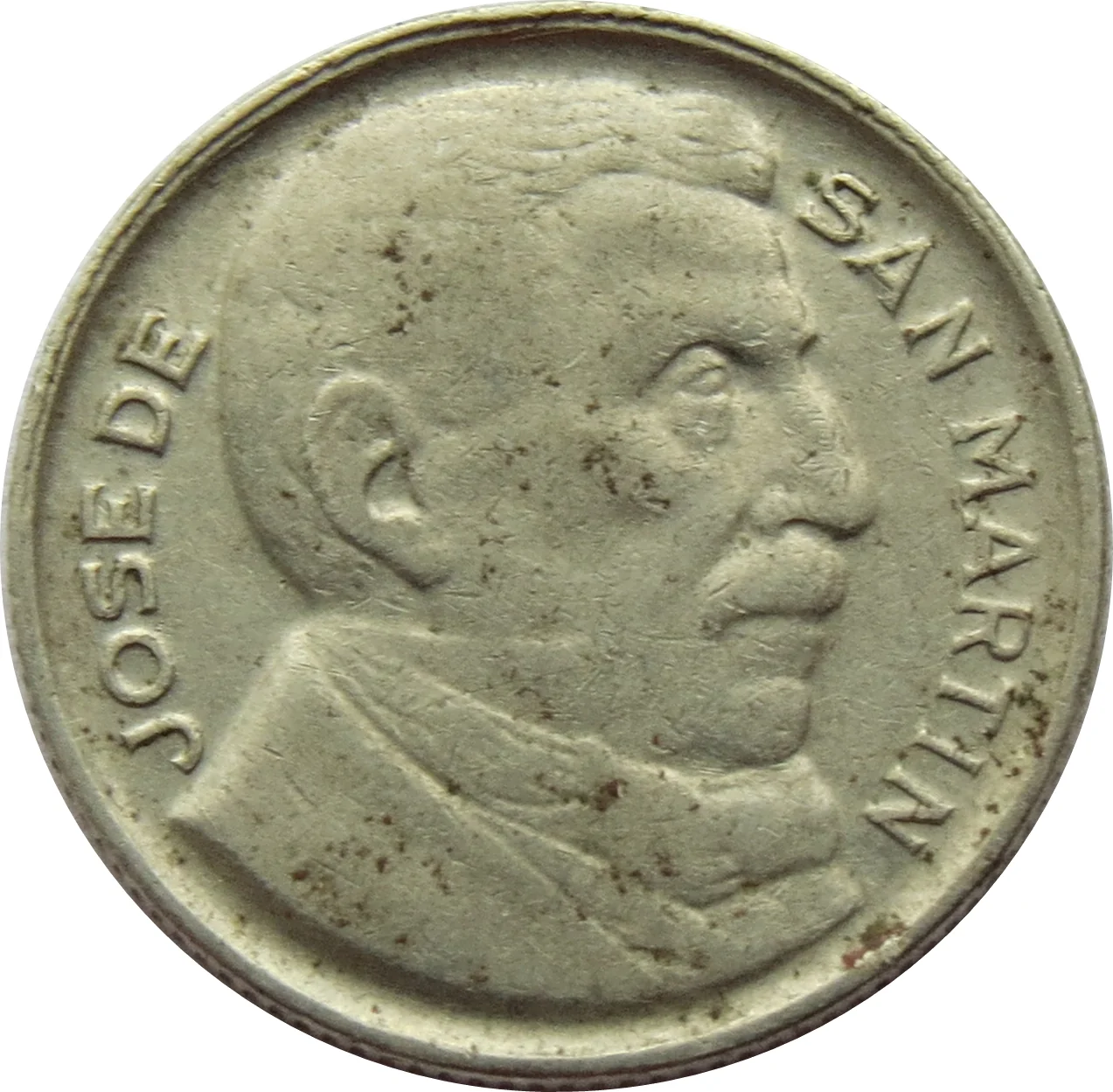
Engraver: Mario Baiardi
Reverse
Edge
Reeded
Categories
| Event> Death anniversary |
| Person> Military leader |
| Person> Politician |
Mints
| Name | Mark |
|---|---|
| Buenos Aires | — |
Mintings
| Year | Mint Mark | Mintage | Quality | Collection |
|---|---|---|---|---|
| 1950 | — | 3,460,000 |
Historical background
By 1950, Argentina's currency situation was characterized by a complex and deteriorating system of exchange controls and multiple exchange rates, a legacy of President Juan Perón's economic policies. The government, seeking to finance industrialization, social programs, and imports while maintaining a strong peso, had established a strict regime where the Central Bank held a monopoly on foreign exchange. The official exchange rate was fixed at an artificially high level (approximately 5 pesos per US dollar), but this rate was only accessible for prioritized imports like fuel and machinery. For all other transactions, a network of less favorable rates and a growing black market emerged, creating a significant gap between the official and real value of the peso.
This multi-tiered system led to severe economic distortions. Exporters, particularly in the vital agricultural sector, were forced to surrender their foreign currency earnings at the overvalued official rate, which acted as a heavy implicit tax. This discouraged production and investment in farming, eroding the country's primary source of hard currency. Simultaneously, the cheap dollars for favored imports fueled a consumption boom in manufactured goods, but often at the expense of efficiency, as domestic industries were shielded from international competition. The overvaluation made Argentine exports expensive abroad and encouraged capital flight, as those with wealth sought to move money out of the country at more realistic rates.
Consequently, 1950 marked a point of growing strain within the "Peronist economic model." While the system initially worked in the post-war context of high agricultural prices and ample reserves, by the turn of the decade, the fundamental imbalances were becoming clear. Foreign exchange reserves were dwindling, inflation was rising (though officially suppressed), and the black market premium for dollars was widening. The currency controls, intended to foster economic independence, were instead creating bottlenecks, discouraging the very exports Argentina depended on, and setting the stage for the persistent balance of payments crises and devaluations that would follow in the years ahead.
This multi-tiered system led to severe economic distortions. Exporters, particularly in the vital agricultural sector, were forced to surrender their foreign currency earnings at the overvalued official rate, which acted as a heavy implicit tax. This discouraged production and investment in farming, eroding the country's primary source of hard currency. Simultaneously, the cheap dollars for favored imports fueled a consumption boom in manufactured goods, but often at the expense of efficiency, as domestic industries were shielded from international competition. The overvaluation made Argentine exports expensive abroad and encouraged capital flight, as those with wealth sought to move money out of the country at more realistic rates.
Consequently, 1950 marked a point of growing strain within the "Peronist economic model." While the system initially worked in the post-war context of high agricultural prices and ample reserves, by the turn of the decade, the fundamental imbalances were becoming clear. Foreign exchange reserves were dwindling, inflation was rising (though officially suppressed), and the black market premium for dollars was widening. The currency controls, intended to foster economic independence, were instead creating bottlenecks, discouraging the very exports Argentina depended on, and setting the stage for the persistent balance of payments crises and devaluations that would follow in the years ahead.
🌱 Common