

20 reales vellon – Spain
Add to wishlist
Spain
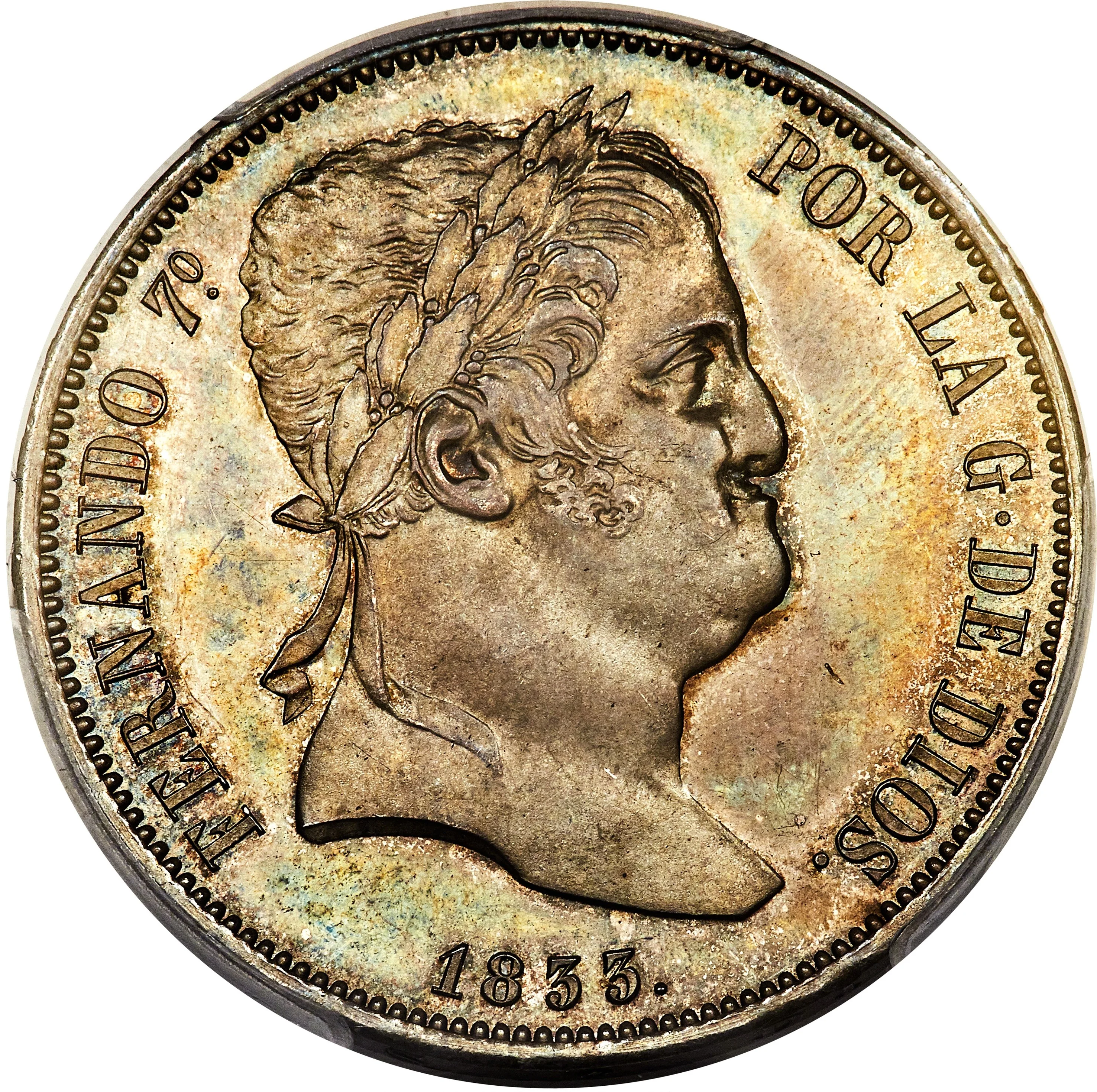
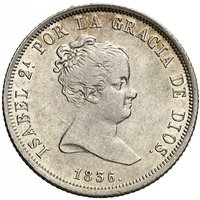
Obverse
Description:
King Fernando VII facing right.
Inscription:
FERNANDO 7º. POR LA G · DE DIOS.
1833.
1833.
Translation:
FERDINAND 7TH. BY THE GRACE OF GOD.
1833.
1833.
Script: Latin
Language: Spanish
Engraver: Mariano González de Sepúlveda Salazar
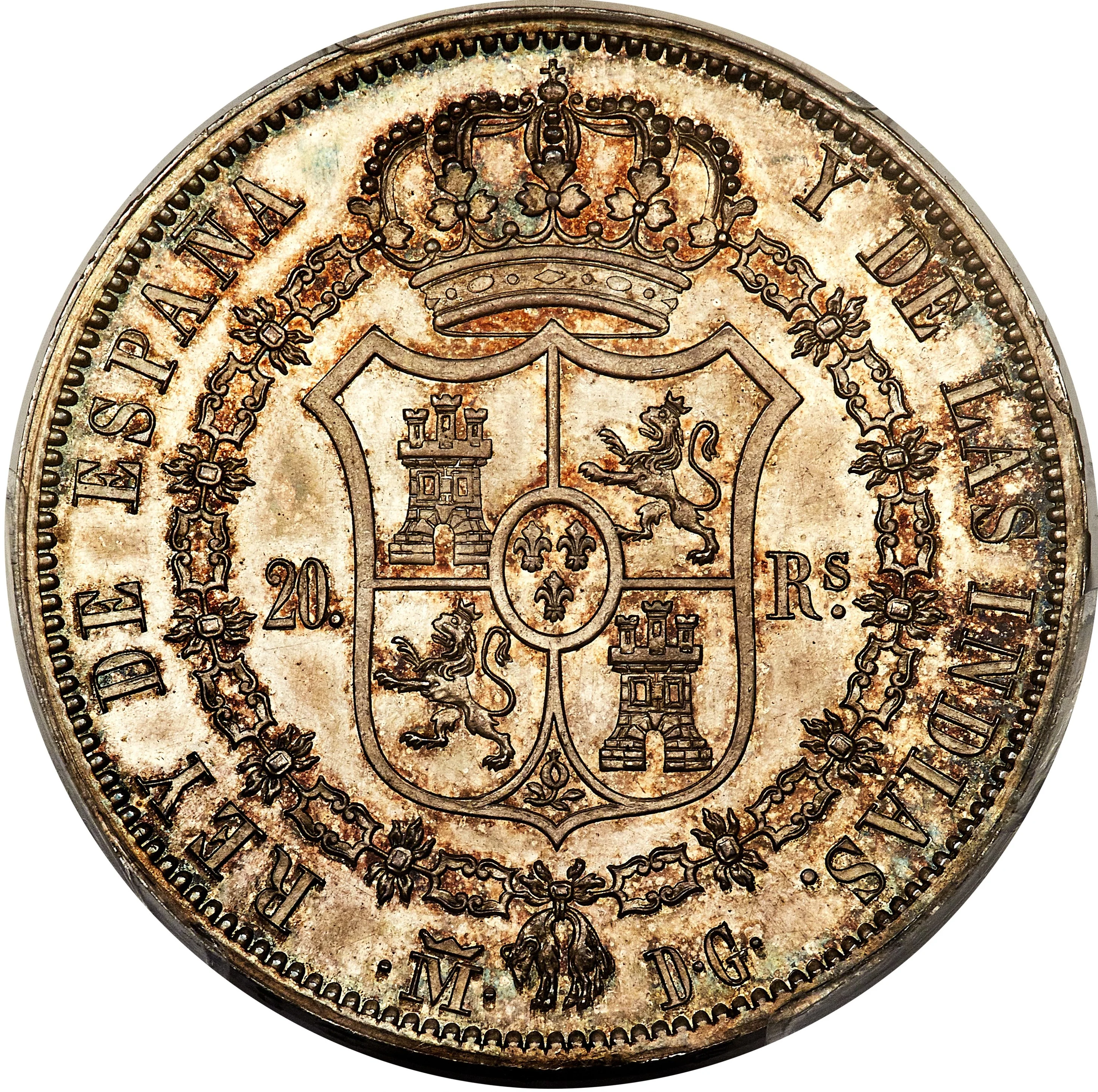
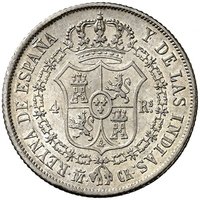
Reverse
Description:
Crowned Spanish coat of arms with the Golden Fleece.
Inscription:
REY DE ESPAÑA Y DE LAS INDIAS.
20. Rs.
· M · D·G·
20. Rs.
· M · D·G·
Translation:
King of Spain and of the Indies.
20 Reales.
By the Grace of God.
20 Reales.
By the Grace of God.
Script: Latin
Language: Spanish
Engraver: Mariano González de Sepúlveda Salazar
Edge
Categories
| Symbols> Coat of Arms |
Mints
| Name | Mark |
|---|---|
| Royal Mint of Madrid | (M) |
Mintings
| Year | Mint Mark | Mintage | Quality | Collection |
|---|---|---|---|---|
| 1833 | MDG | — |
Historical background
In 1833, Spain was in a state of profound monetary disorder following the Napoleonic Wars and the loss of its American colonies. The national treasury was bankrupt, and the country operated on a bimetallic system of silver reales and gold escudos, but the coinage in circulation was chaotic. Decades of war had led to severe debasement, with clipped, worn, and counterfeit coins commonplace, while much of the remaining full-weight silver had been hoarded or exported. This created a severe shortage of reliable specie, crippling commerce and state finances at the outset of the First Carlist War, which erupted upon the death of King Ferdinand VII that same year.
The government, under the regency of Maria Christina for the infant Queen Isabella II, faced the immediate fiscal crisis of funding a major civil war. This led to the aggressive issuance of paper money, particularly vales reales (royal bonds), which had been in use since the 1780s but were now printed in excessive quantities. These notes traded at a steep and fluctuating discount to their face value in metal, creating a de facto dual-currency system where prices were often higher for those paying with paper. The effective devaluation eroded public confidence and further destabilized the economy.
This unstable environment set the stage for significant monetary reform. The pressing need to consolidate the liberal state and fund the war effort would soon lead to concrete actions, culminating in the decree of 1848 that established the peseta as the basic unit of account. Thus, 1833 represents a pivotal low point—a moment of acute crisis in coinage, credit, and confidence that made the eventual creation of a modern, unified national currency an urgent necessity for the emerging Spanish nation-state.
The government, under the regency of Maria Christina for the infant Queen Isabella II, faced the immediate fiscal crisis of funding a major civil war. This led to the aggressive issuance of paper money, particularly vales reales (royal bonds), which had been in use since the 1780s but were now printed in excessive quantities. These notes traded at a steep and fluctuating discount to their face value in metal, creating a de facto dual-currency system where prices were often higher for those paying with paper. The effective devaluation eroded public confidence and further destabilized the economy.
This unstable environment set the stage for significant monetary reform. The pressing need to consolidate the liberal state and fund the war effort would soon lead to concrete actions, culminating in the decree of 1848 that established the peseta as the basic unit of account. Thus, 1833 represents a pivotal low point—a moment of acute crisis in coinage, credit, and confidence that made the eventual creation of a modern, unified national currency an urgent necessity for the emerging Spanish nation-state.
✨ Legendary