

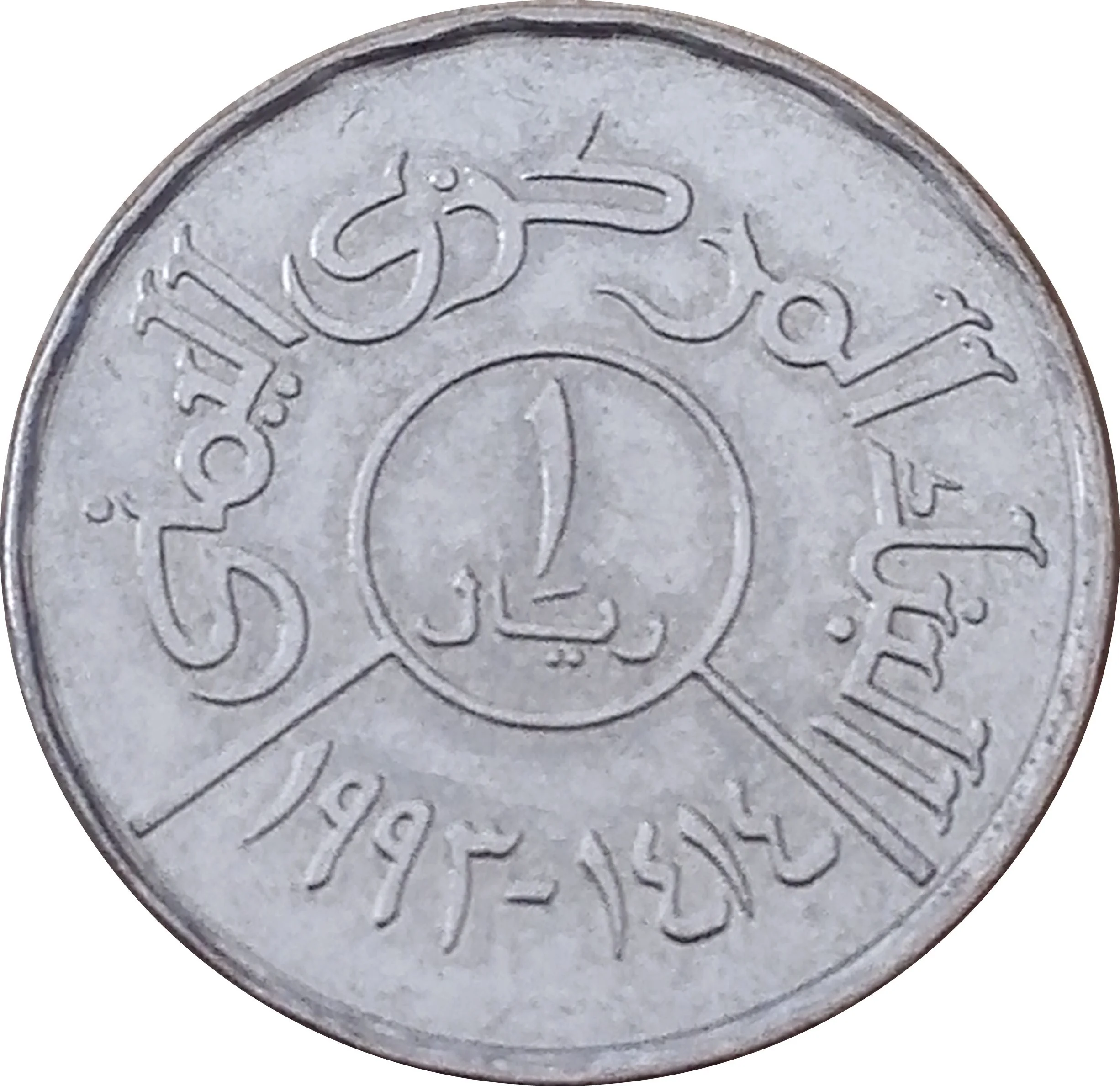
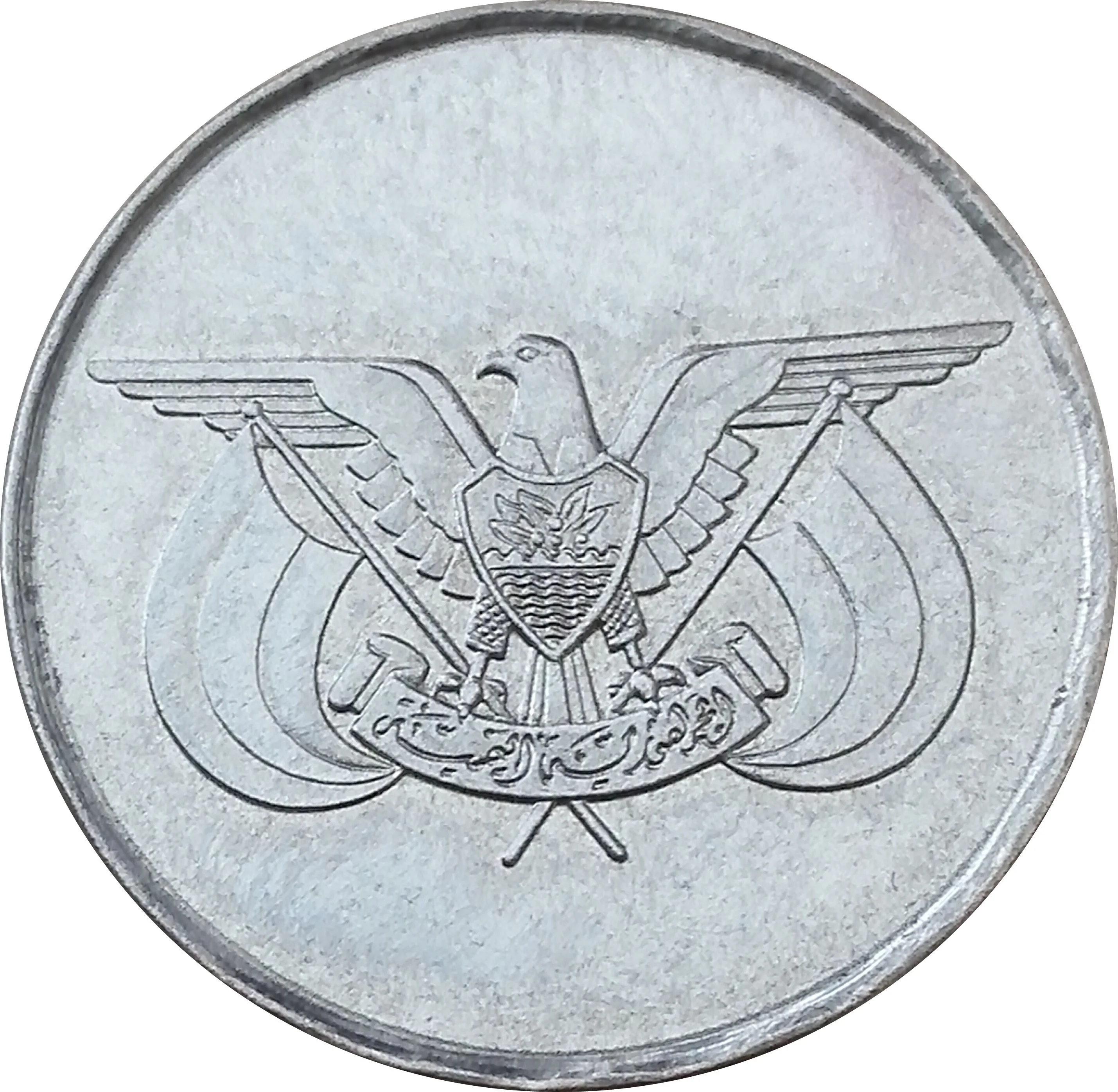
1 rial – Yemen
Add to wishlist
Yemen
Context
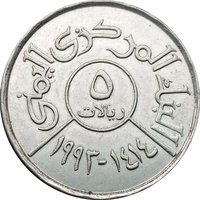
Year: 1993
Islamic (Hijri) Year:: 1414
Issuer: Yemen
Issuing organization: Central Bank of Yemen
Period:
(since 1990)
Currency:
(since 1990)
Material
Diameter: 19.95 mm
Weight: 2.65 g
Thickness: 1.5 mm
Shape: Icosihenagonal
Composition: Stainless steel
Technique: Milled
Alignment: Medal alignment
flip
References
KM: #
Numista: #4830
Value
Exchange value: 1 YER
Mints
| Name | Mark |
|---|---|
| Monnaie de Paris | — |
Mintings
| Year | Mint Mark | Mintage | Quality | Collection |
|---|---|---|---|---|
| 1993 | — | — |
Historical background
In 1993, Yemen's currency situation was defined by the complex and fragile aftermath of unification between the Yemen Arab Republic (North Yemen) and the People's Democratic Republic of Yemen (South Yemen) in 1990. A critical but unstable milestone was reached on June 11, 1993, when the Yemeni rial (YER) was established as the sole legal tender, formally replacing both the North Yemeni rial and the South Yemeni dinar. This monetary union was a cornerstone of the unification process, intended to symbolize and facilitate economic integration. However, the exchange rate was politically contentious, set at an artificial 1 dinar to 26 rials, which many in the more economically structured south felt undervalued their currency and savings.
The unified currency faced immediate and severe pressures. The new Republic of Yemen lacked a unified central banking system, as the former states' banks operated independently, leading to poor monetary control and competitive note printing to finance government deficits. This, combined with the immense cost of integrating two disparate economic systems and a dramatic fall in remittances after Yemen's stance during the Gulf War, fueled rampant inflation. The government's inability to curb spending or generate revenue led to a rapid depreciation of the new rial on the black market, eroding public confidence and purchasing power.
Therefore, by the end of 1993, the currency situation was a clear barometer of the nation's deepening political crisis. The economic strain exacerbated the growing distrust between northern and southern leadership, with the botched monetary integration becoming a key point of southern grievance. Rather than fostering unity, the fragile single currency highlighted the profound administrative and ideological divisions, contributing to the tensions that would erupt into a brief civil war in 1994, just months later.
The unified currency faced immediate and severe pressures. The new Republic of Yemen lacked a unified central banking system, as the former states' banks operated independently, leading to poor monetary control and competitive note printing to finance government deficits. This, combined with the immense cost of integrating two disparate economic systems and a dramatic fall in remittances after Yemen's stance during the Gulf War, fueled rampant inflation. The government's inability to curb spending or generate revenue led to a rapid depreciation of the new rial on the black market, eroding public confidence and purchasing power.
Therefore, by the end of 1993, the currency situation was a clear barometer of the nation's deepening political crisis. The economic strain exacerbated the growing distrust between northern and southern leadership, with the botched monetary integration becoming a key point of southern grievance. Rather than fostering unity, the fragile single currency highlighted the profound administrative and ideological divisions, contributing to the tensions that would erupt into a brief civil war in 1994, just months later.
🌱 Very Common