

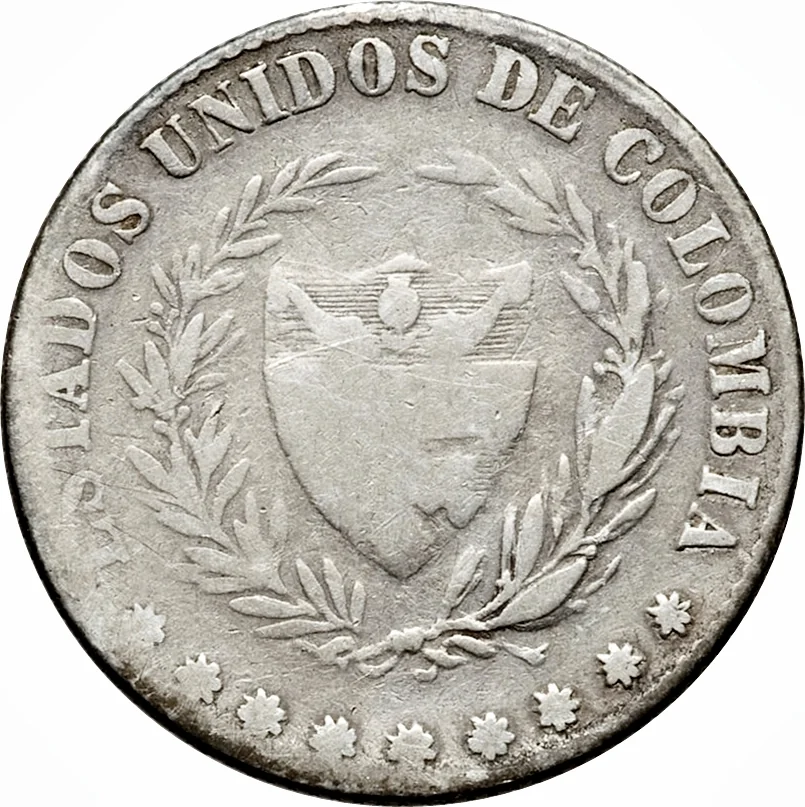
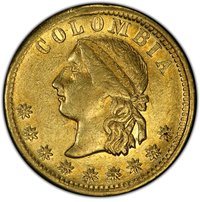
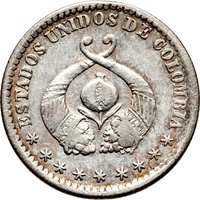
Obverse
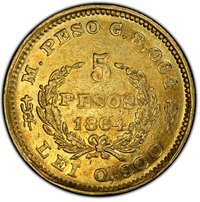
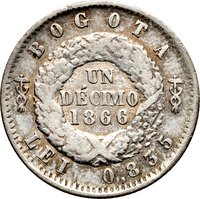
Reverse
Description:
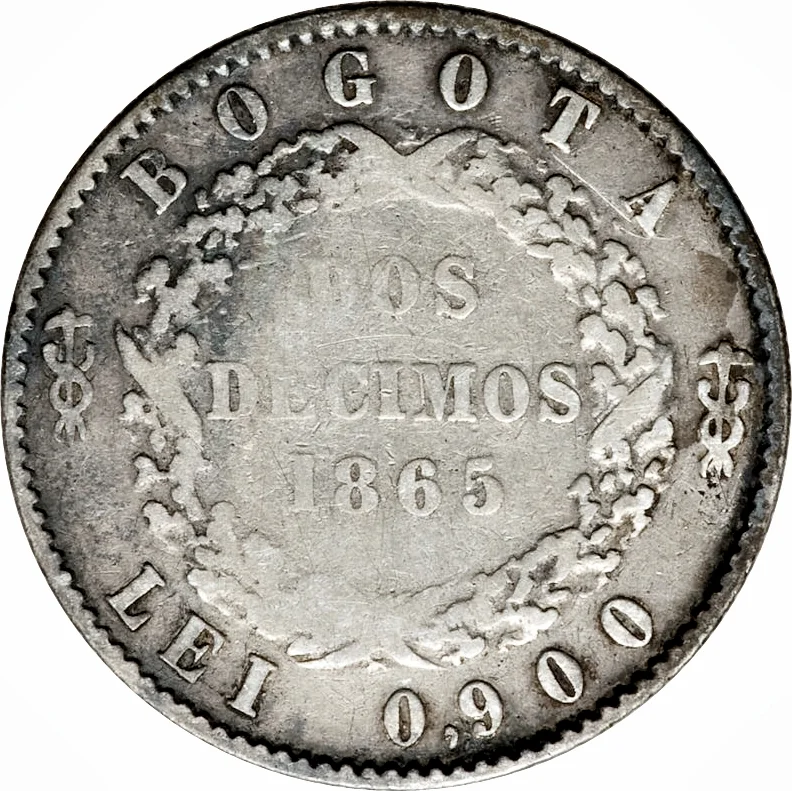
Denomination and year in wreath, mint above, fineness below.
Inscription:
BOGOTA
DOS DECIMOS
1865
DOS DECIMOS
1865
Script: Latin
Edge
Categories
| Symbols> Coat of Arms |
| Symbol> Wreath |
Mints
| Name | Mark |
|---|---|
| Bogota Mint | BOGOTA |
Mintings
| Year | Mint Mark | Mintage | Quality | Collection |
|---|---|---|---|---|
| 1865 | — | — |
Historical background
In 1865, Colombia was navigating the complex monetary landscape of the post-independence era as the United States of Colombia, a federal republic established under the 1863 Constitution of Rionegro. This period was characterized by a profound decentralization of monetary authority, where the nation's nine sovereign states held the power to issue their own paper currency, often to finance local budgets and public works. Consequently, a patchwork of disparate banknotes, with varying designs and dubious backing, circulated with little coordination, leading to significant confusion and a severe lack of uniform national currency.
The financial system was further strained by the legacy of chronic fiscal deficits and the scarcity of precious metals. While the peso remained the official unit of account, the actual circulating medium was dominated by low-value, inconvertible paper money issued by both state governments and private banks. This proliferation of currency, without sufficient specie reserves, naturally led to widespread depreciation and exchange rate instability. The value of a note depended heavily on public trust in the specific state or bank that issued it, creating a hierarchy of money and hindering interstate trade.
This fragmented and inflationary environment posed a major obstacle to national economic integration and development. The federal government in Bogotá possessed limited tools to exert monetary control, and debates between proponents of hard currency (metalistas) and advocates of flexible paper money (papelistas) were ongoing. Therefore, the currency situation in 1865 was one of monetary pluralism and weakness, a direct result of radical federalism, which would continue to challenge economic stability until the centralizing reforms of the late 19th and early 20th centuries.
The financial system was further strained by the legacy of chronic fiscal deficits and the scarcity of precious metals. While the peso remained the official unit of account, the actual circulating medium was dominated by low-value, inconvertible paper money issued by both state governments and private banks. This proliferation of currency, without sufficient specie reserves, naturally led to widespread depreciation and exchange rate instability. The value of a note depended heavily on public trust in the specific state or bank that issued it, creating a hierarchy of money and hindering interstate trade.
This fragmented and inflationary environment posed a major obstacle to national economic integration and development. The federal government in Bogotá possessed limited tools to exert monetary control, and debates between proponents of hard currency (metalistas) and advocates of flexible paper money (papelistas) were ongoing. Therefore, the currency situation in 1865 was one of monetary pluralism and weakness, a direct result of radical federalism, which would continue to challenge economic stability until the centralizing reforms of the late 19th and early 20th centuries.
✨ Legendary