

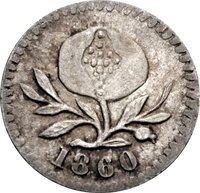
Obverse
Description:
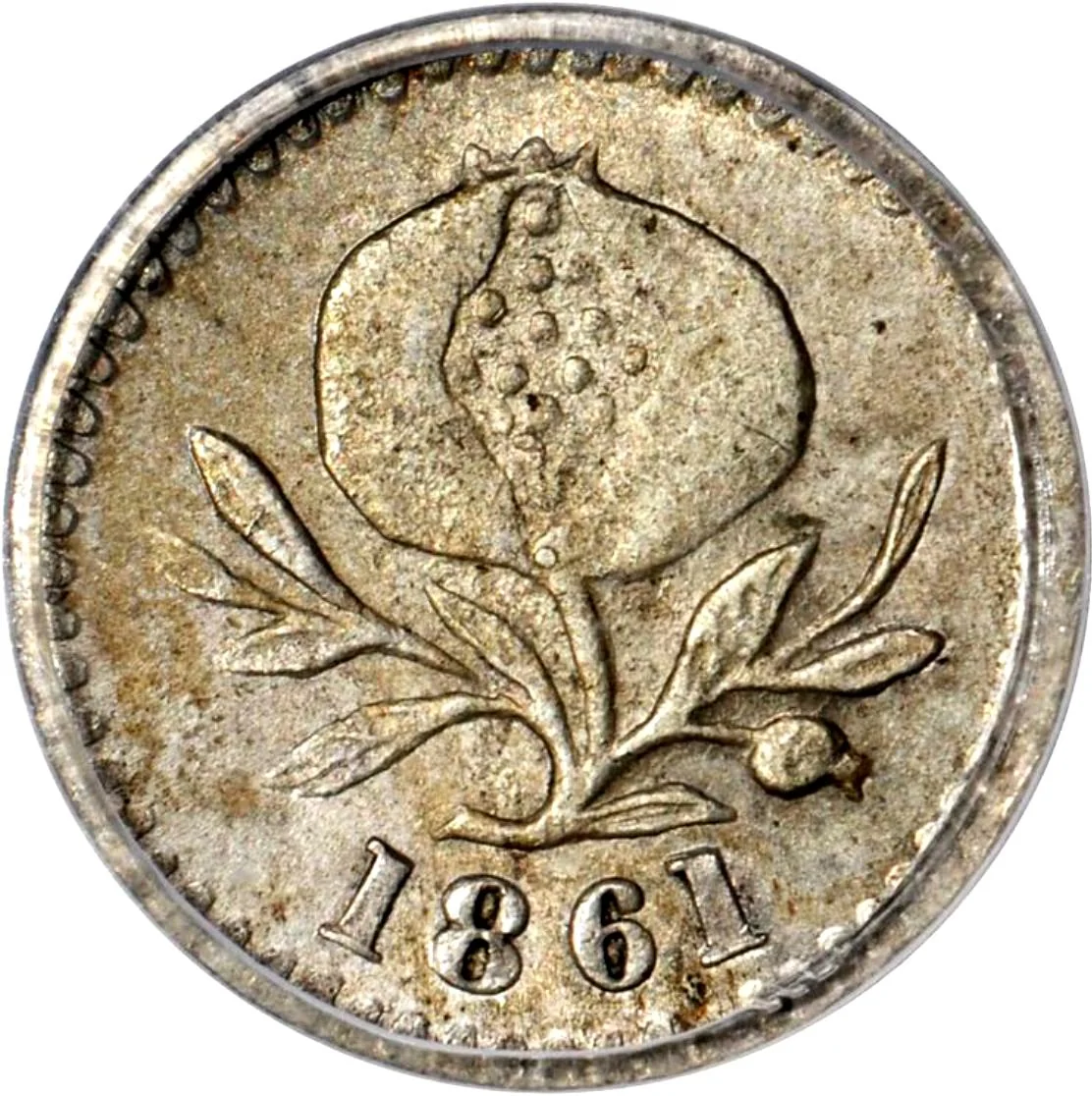
Pomegranate: A jewel-toned fruit with sweet-tart seeds.
Inscription:
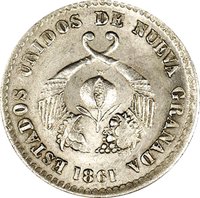
1861
Script: Latin
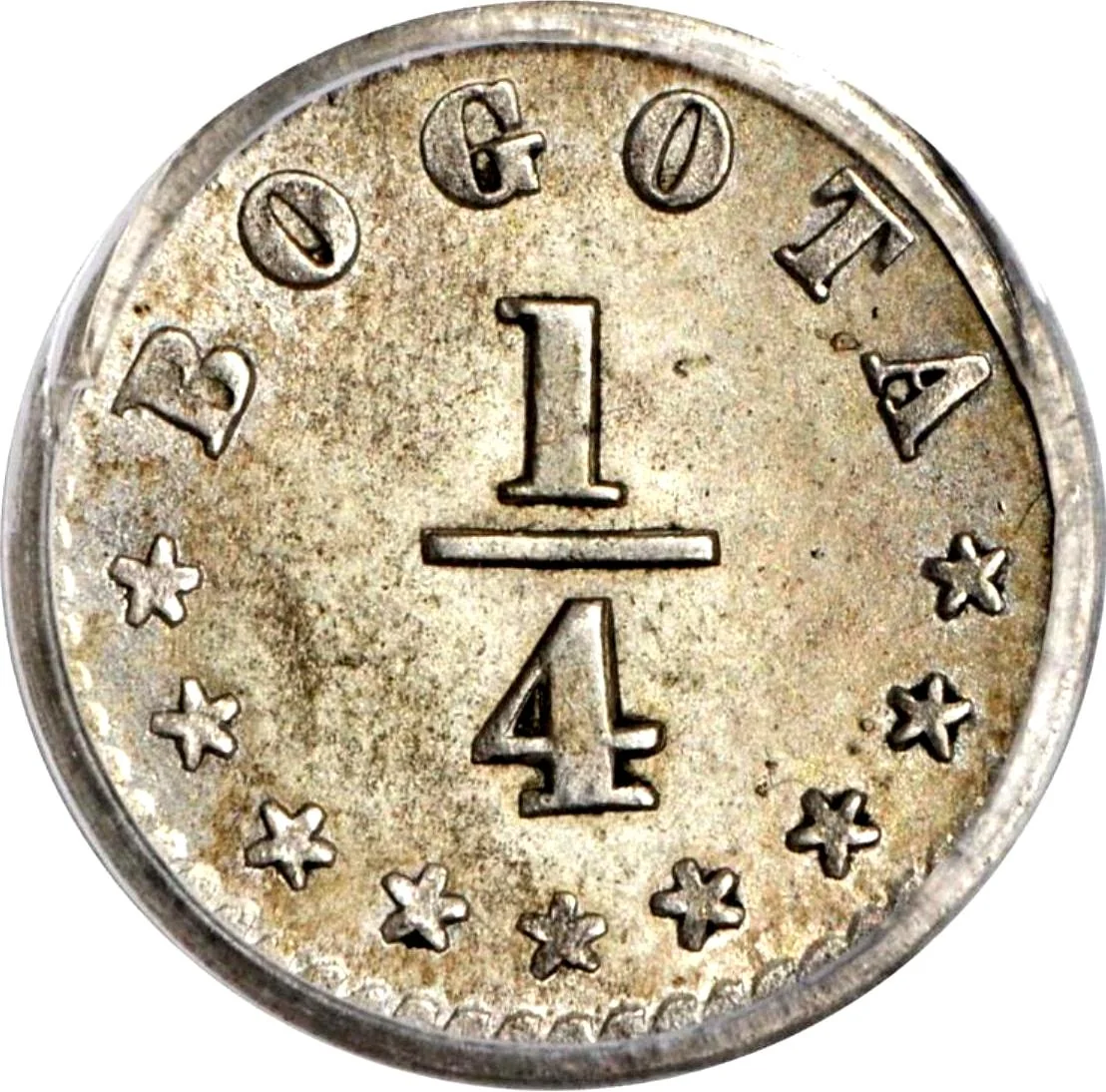
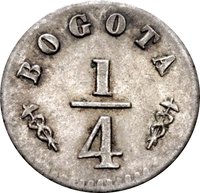
Reverse
Edge
Mints
| Name | Mark |
|---|---|
| Bogota Mint | — |
| Casa de Moneda de Colombia | — |
Mintings
| Year | Mint Mark | Mintage | Quality | Collection |
|---|---|---|---|---|
| 1860 | — | — | ||
| 1861 | — | — | ||
| 1862 | — | — |
Historical background
In 1860, Colombia was embroiled in the "Guerra de los Supremos" or War of the Supremes (1860-1862), a complex civil conflict driven by federalist ambitions and regional rivalries against the centralist government of President Mariano Ospina Rodríguez. This political and military upheaval directly caused severe monetary chaos. The central government in Bogotá, facing immense war expenses, resorted to the unchecked printing of paper money, while various regional caudillos and state governments, asserting their sovereignty, also issued their own competing currencies to fund their forces. The result was a fragmented and inflationary monetary landscape with little to no standardization or central control.
The currency system was a confusing patchwork. The official currency remained the peso, theoretically divisible into 8 reales and backed by silver, but its value and acceptance were highly unstable. Alongside devalued government notes, a plethora of private banknotes, promissory notes from local commanders, and even stamped metal tokens circulated with varying degrees of legitimacy. This proliferation of fiduciary money, most of it without proper metallic backing, led to rapid depreciation, loss of public confidence, and widespread economic disruption, crippling trade and creating a barter economy in many areas.
This period starkly highlighted the intrinsic link between political fragmentation and monetary instability in 19th-century Colombia. The inability of any single authority to guarantee the value of currency underscored the weakness of the central state. The crisis of 1860 set a precedent for the monetary challenges that would plague the country for decades, ultimately influencing later 19th-century debates that led to the creation of the Banco Nacional in 1880, a first major step toward re-establishing a unified and reliable monetary system.
The currency system was a confusing patchwork. The official currency remained the peso, theoretically divisible into 8 reales and backed by silver, but its value and acceptance were highly unstable. Alongside devalued government notes, a plethora of private banknotes, promissory notes from local commanders, and even stamped metal tokens circulated with varying degrees of legitimacy. This proliferation of fiduciary money, most of it without proper metallic backing, led to rapid depreciation, loss of public confidence, and widespread economic disruption, crippling trade and creating a barter economy in many areas.
This period starkly highlighted the intrinsic link between political fragmentation and monetary instability in 19th-century Colombia. The inability of any single authority to guarantee the value of currency underscored the weakness of the central state. The crisis of 1860 set a precedent for the monetary challenges that would plague the country for decades, ultimately influencing later 19th-century debates that led to the creation of the Banco Nacional in 1880, a first major step toward re-establishing a unified and reliable monetary system.
✨ Legendary