

1 rial (United Nations) – Oman
Add to wishlist
Non-circulating coins
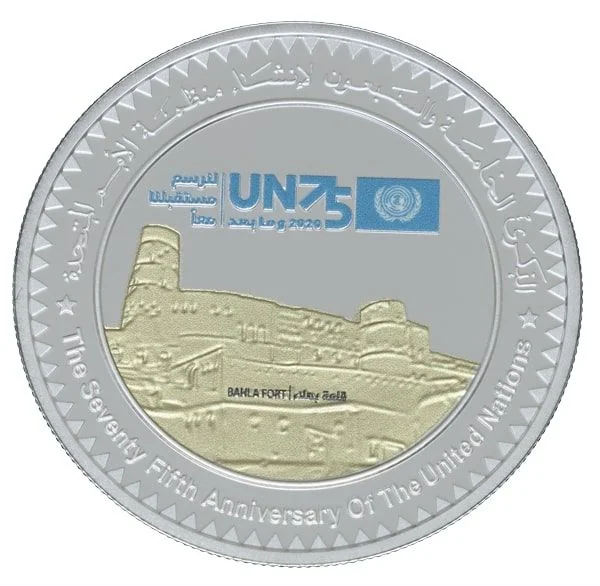
Commemoration: 75th anniversary of the United Nations
Oman
Context
Year: 2020
Issuer: Oman
Issuing organization: Central Bank of Oman
Ruler: Haitham bin Tariq
Currency:
(since 1972)
Material
References
Numista: #481609
Value
Exchange value: 1 OMR
Bullion value: $67.36
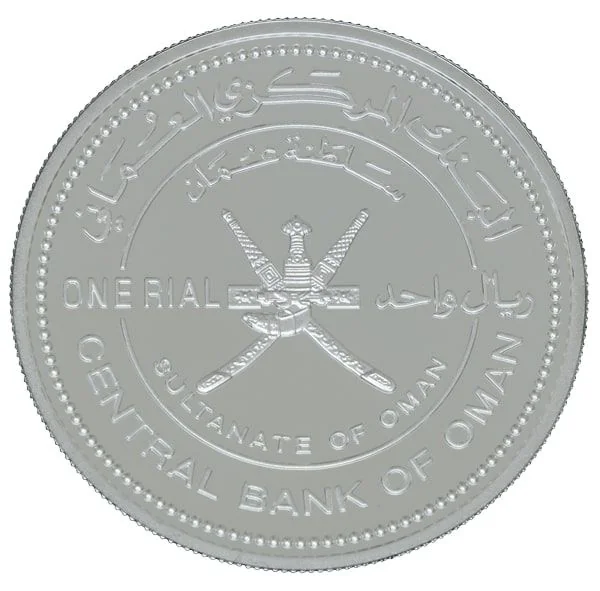
Obverse
Reverse
Description:
UN logo, Arabic event logo, Bahla Fort, and Arabic text.
Inscription:
الذكرى الخامسة والسبعون لإنشاء منظمة الأمم المتحدة
The Seventy Fifth Anniversary of The United Nations
The Seventy Fifth Anniversary of The United Nations
Translation:
The Seventy-Fifth Anniversary of the Establishment of the United Nations Organization.
Script: Arabic
Language: Arabic
Edge
Categories
| Building> Castle or fortification |
| Organization> United Nations |
| Symbols> Coat of Arms |
| Object> Cold weapons |
Mints
| Name | Mark |
|---|---|
| Mint of Poland | — |
Mintings
| Year | Mint Mark | Mintage | Quality | Collection |
|---|---|---|---|---|
| 2020 | — | — |
Historical background
In 2020, Oman's currency situation was defined by the dual pressures of a historically low oil price and the economic fallout from the COVID-19 pandemic. As an economy heavily reliant on hydrocarbon revenues, the collapse in global oil demand placed severe strain on public finances and the balance of payments. This intensified longstanding market concerns about the sustainability of the Omani rial's peg to the US dollar, a policy maintained since 1986. Speculation about a potential devaluation increased, reflected in the rial's forward rates trading at a discount in the derivatives market, as investors questioned the Central Bank of Oman's (CBO) ability to defend the peg amidst dwindling foreign exchange reserves.
The government and the CBO took decisive actions to reassure markets and maintain stability. They emphasized an unwavering commitment to the dollar peg, which was seen as a cornerstone of financial and price stability. To bolster finances, Oman tapped international debt markets, issuing bonds and sukuk to raise billions of dollars, which helped support foreign reserves. Furthermore, the state introduced fiscal austerity measures, including spending cuts and the introduction of a 5% Value Added Tax (VAT) scheduled for 2021, to address the budget deficit and reduce pressure on the currency.
By the end of 2020, the immediate pressure on the rial had eased, though underlying vulnerabilities remained. The combination of external borrowing, firm commitment to the peg, and a modest recovery in oil prices in the latter half of the year provided temporary relief. However, the year underscored Oman's fundamental economic challenge: the urgent need for fiscal consolidation and diversification under its Vision 2040 plan to reduce oil dependence and ensure the long-term defense of its fixed exchange rate regime in the face of future shocks.
The government and the CBO took decisive actions to reassure markets and maintain stability. They emphasized an unwavering commitment to the dollar peg, which was seen as a cornerstone of financial and price stability. To bolster finances, Oman tapped international debt markets, issuing bonds and sukuk to raise billions of dollars, which helped support foreign reserves. Furthermore, the state introduced fiscal austerity measures, including spending cuts and the introduction of a 5% Value Added Tax (VAT) scheduled for 2021, to address the budget deficit and reduce pressure on the currency.
By the end of 2020, the immediate pressure on the rial had eased, though underlying vulnerabilities remained. The combination of external borrowing, firm commitment to the peg, and a modest recovery in oil prices in the latter half of the year provided temporary relief. However, the year underscored Oman's fundamental economic challenge: the urgent need for fiscal consolidation and diversification under its Vision 2040 plan to reduce oil dependence and ensure the long-term defense of its fixed exchange rate regime in the face of future shocks.

✨ Legendary