

5 kina – Papua New Guinea
Add to wishlist
Non-circulating coins
Commemoration: 2015 Pacific Games, Port Moresby
Papua New Guinea
Context
Material
Diameter: 38.61 mm
Weight: 31.1 g
Silver Weight:: 31.07 g
Thickness: 2.8 mm
Shape: Round
Composition: 99.9% Silver
Standard: Silver ounce
Magnetic: No
Alignment: Medal alignment
flip
References
KM: #
Numista: #150010
Value
Exchange value: 5 PGK
Bullion value: $77.85
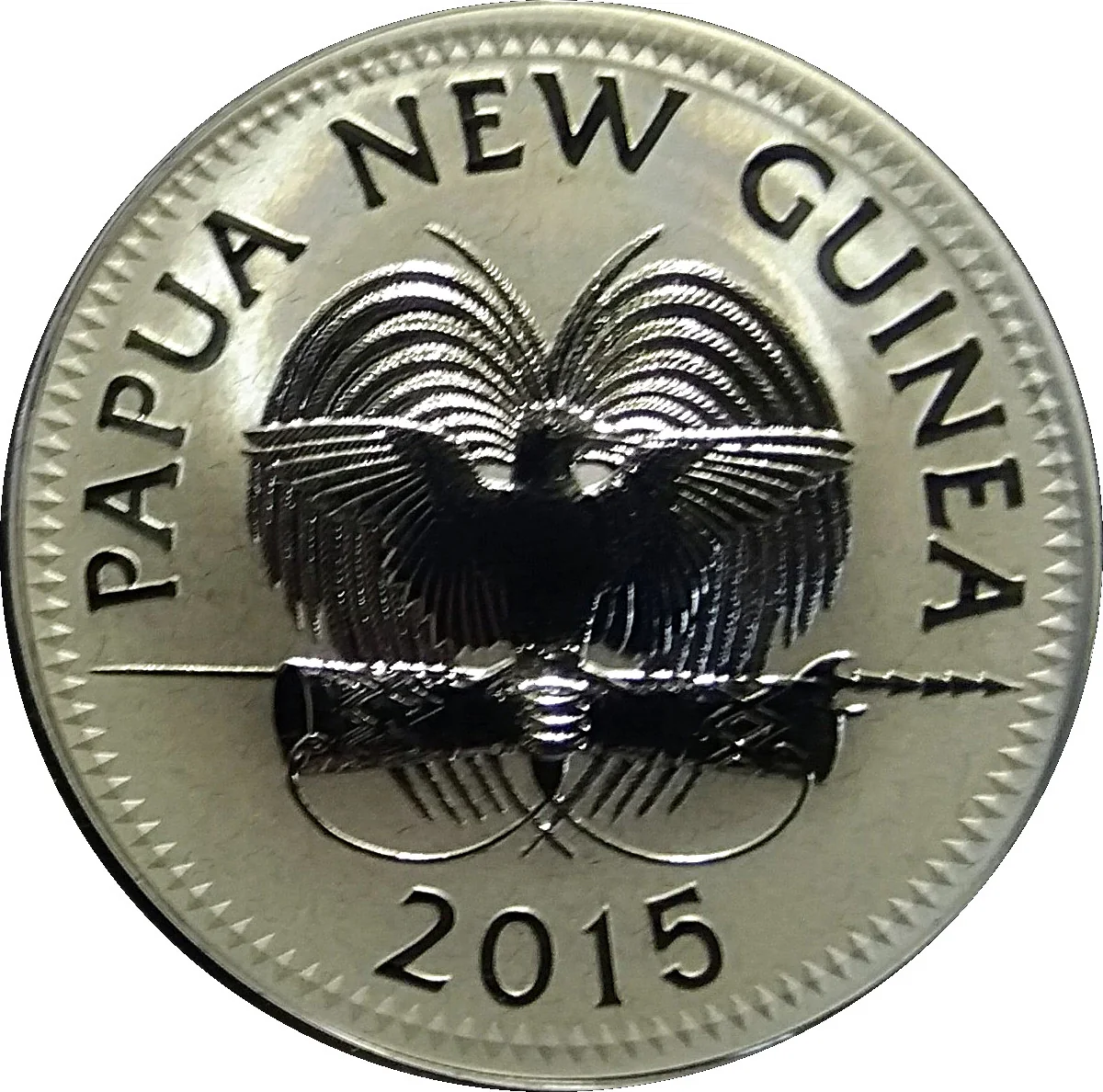
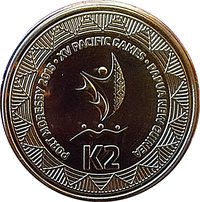
Obverse
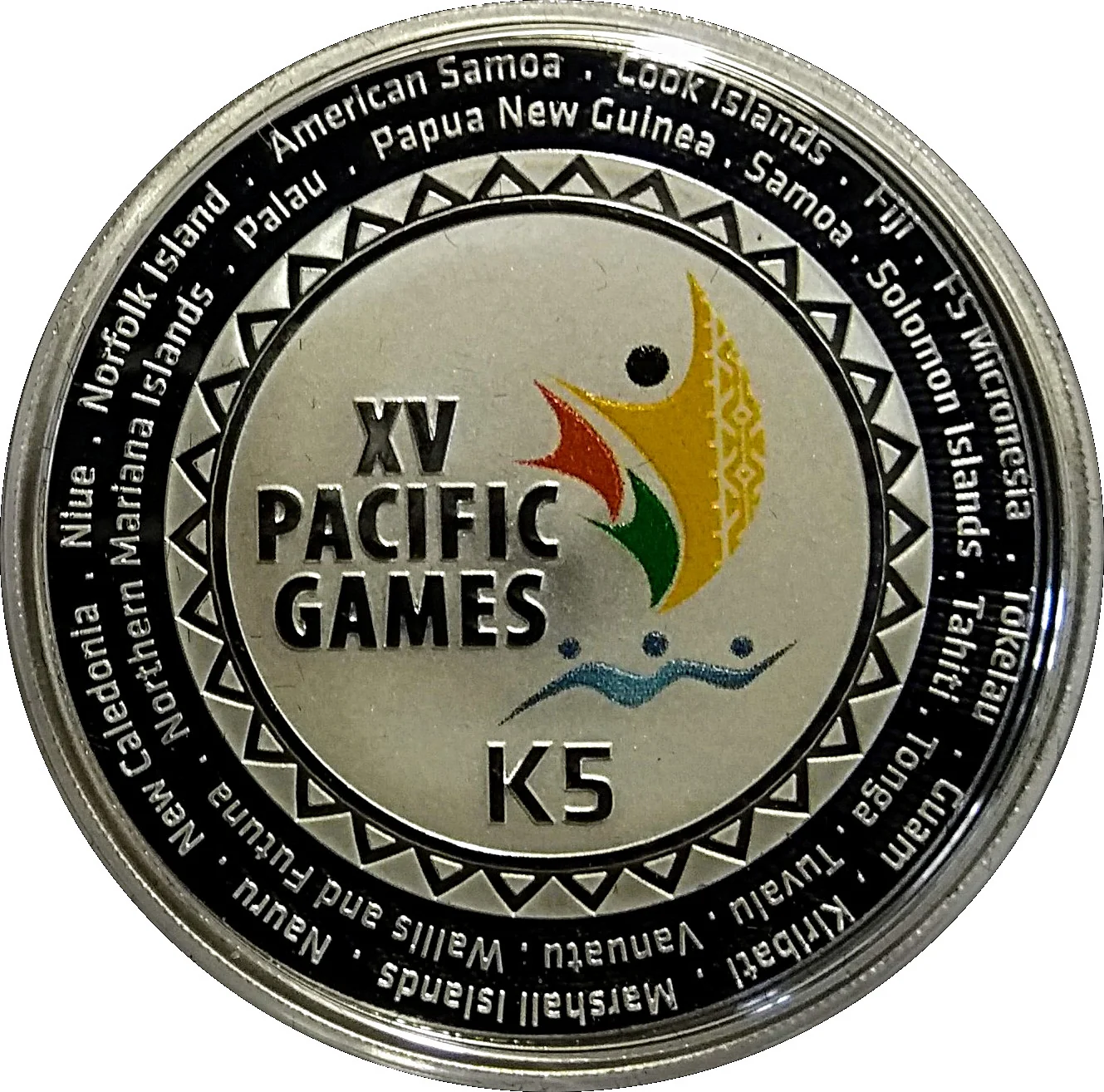
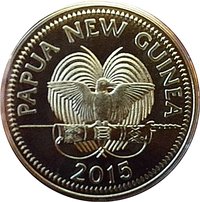
Reverse
Description:
XV Pacific Games logo
Inscription:
American Samoa, Cook Islands, Fiji, FS of Micronesia, Tokelau, Guam, Kiribati, Marshall Islands, Nauru, New Caledonia, Niue, Norfolk Island
Papua New Guinea, Samoa, Solomon Islands, Tahiti, Tonga, Tuvalu, Vanuatu, Wallis and Futuna, Northern Mariana Islands, Palau
XV
PACIFIC
GAMES
K5
Papua New Guinea, Samoa, Solomon Islands, Tahiti, Tonga, Tuvalu, Vanuatu, Wallis and Futuna, Northern Mariana Islands, Palau
XV
PACIFIC
GAMES
K5
Script: Latin
Engraver: M.Bruce
Edge
Reeded
Categories
| Animal> Bird |
| Symbols> Coat of Arms |
Mints
| Name | Mark |
|---|---|
| Royal Australian Mint | — |
Mintings
| Year | Mint Mark | Mintage | Quality | Collection |
|---|---|---|---|---|
| 2015 | — | 5,000 |
Historical background
In 2015, Papua New Guinea (PNG) faced significant currency pressures driven by a sharp decline in global commodity prices. As a resource-dependent economy, PNG's primary exports—liquefied natural gas (LNG), oil, gold, and copper—saw their revenues fall dramatically. This created a substantial imbalance, as the country's import bill remained high while export earnings dwindled, leading to a severe shortage of foreign exchange (FX). The kina (PGK), which is pegged to a basket of currencies, came under intense downward pressure, forcing the Bank of Papua New Guinea (BPNG) to heavily intervene in the market to defend the peg, depleting the nation's foreign reserves.
The FX shortage had real-world consequences, creating a backlog of orders for businesses needing US dollars to pay for imported goods and services. This crisis stifled economic activity, as companies faced long delays—sometimes months—in accessing foreign currency, hindering their ability to import essential machinery, spare parts, and materials. The situation was exacerbated by a prolonged drought linked to the El Niño weather pattern, which damaged agricultural production and increased the need for food imports, further straining the FX market and contributing to rising inflation.
In response, the government and central bank implemented a series of austerity and stabilization measures. The 2015 budget introduced spending cuts and increased some taxes to reduce the fiscal deficit. BPNG tightened monetary policy and imposed stricter FX allocation rules, prioritizing essential imports like medicine and fuel. While these actions aimed to stabilize the kina and conserve reserves, they also slowed economic growth and highlighted the structural vulnerabilities of PNG's economy, setting the stage for continued challenges in the years that followed.
The FX shortage had real-world consequences, creating a backlog of orders for businesses needing US dollars to pay for imported goods and services. This crisis stifled economic activity, as companies faced long delays—sometimes months—in accessing foreign currency, hindering their ability to import essential machinery, spare parts, and materials. The situation was exacerbated by a prolonged drought linked to the El Niño weather pattern, which damaged agricultural production and increased the need for food imports, further straining the FX market and contributing to rising inflation.
In response, the government and central bank implemented a series of austerity and stabilization measures. The 2015 budget introduced spending cuts and increased some taxes to reduce the fiscal deficit. BPNG tightened monetary policy and imposed stricter FX allocation rules, prioritizing essential imports like medicine and fuel. While these actions aimed to stabilize the kina and conserve reserves, they also slowed economic growth and highlighted the structural vulnerabilities of PNG's economy, setting the stage for continued challenges in the years that followed.
✨ Legendary