

10 euro (UNESCO World Heritage) – Belgium
Add to wishlist
Non-circulating coins
Commemoration: 25 years of UNESCO World Heritage
Belgium
Obverse
Description:
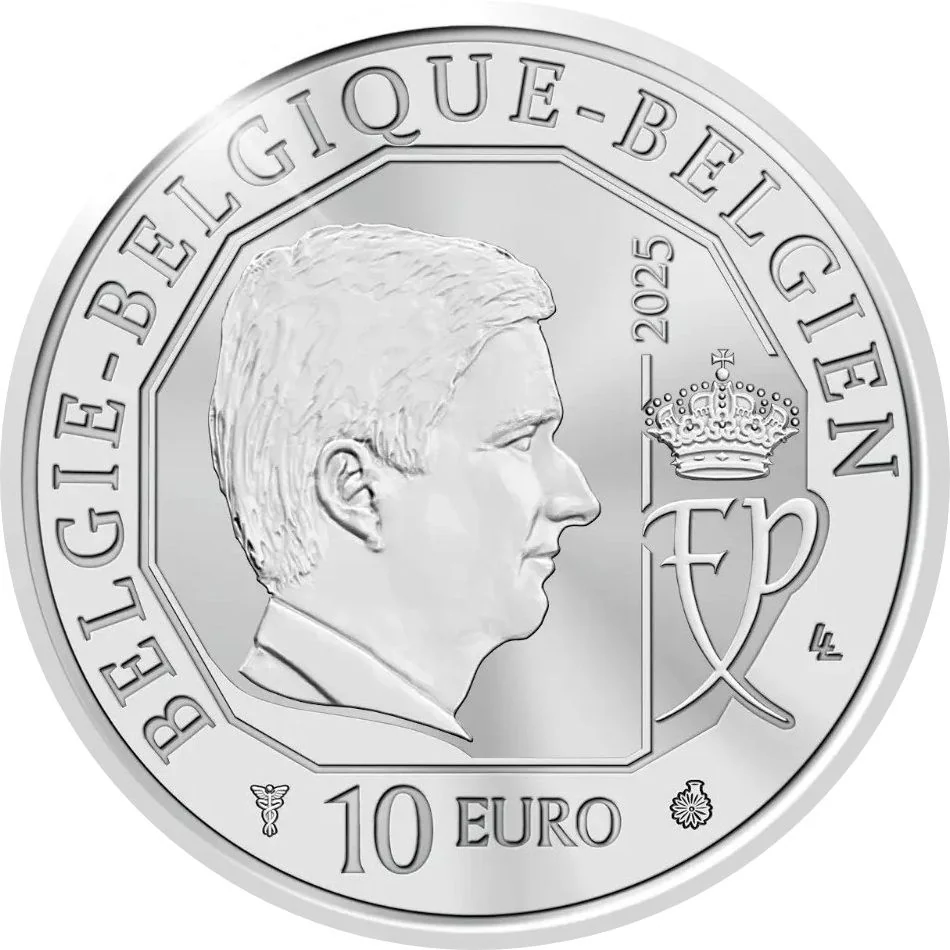
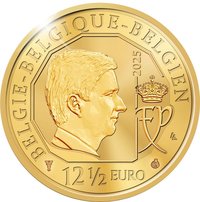
King Philip facing right, with his monogram and 2025, inside an eleven-sided frame. The edge bears the country name, mint marks, and value.
Inscription:
BELGIE - BELGIQUE - BELGIEN
FP LL 2025
10 EURO
FP LL 2025
10 EURO
Translation:
BELGIUM - BELGIUM - BELGIUM
FP LL 2025
10 EURO
FP LL 2025
10 EURO
Script: Latin
Designer: Luc Luycx
Reverse
Description:
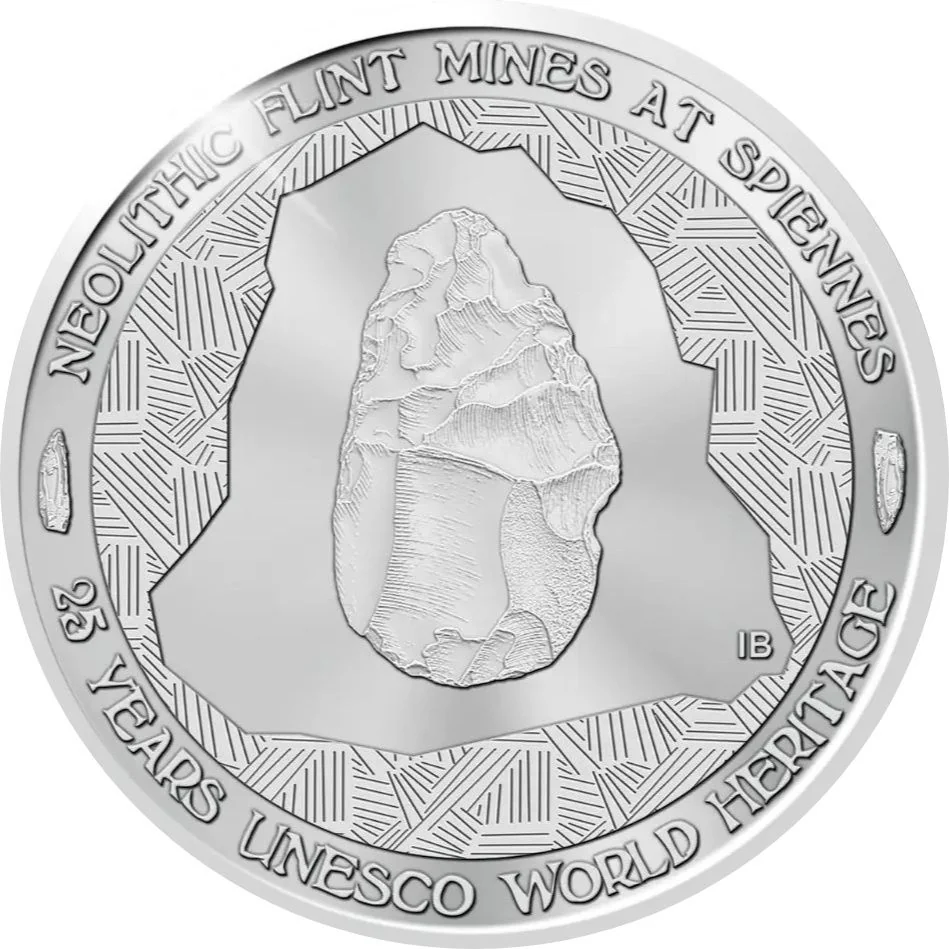
A lifelike flint hand axe at a mine entrance, with English text in matching typography.
Inscription:
NEOLITHIC FLINT MINES AT SPIENNES
IB
25 YEARS OF UNESCO WORLD HERITAGE
IB
25 YEARS OF UNESCO WORLD HERITAGE
Script: Latin
Designer: Iris Bruijns
Edge
Plain
Categories
| Person> Monarch |
| Symbols> Monogram |
| Organization> UNESCO |
| Transportation> Tunnel |
| Industry |
Mints
| Name | Mark |
|---|---|
| Royal Dutch Mint | — |
Mintings
| Year | Mint Mark | Mintage | Quality | Collection |
|---|---|---|---|---|
| 2025 | — | 3,000 | Proof |
Historical background
As of 2025, Belgium remains a fully integrated member of the Eurozone, with the euro (EUR) serving as its sole official currency. The country’s monetary policy is determined by the European Central Bank (ECB), which continues to navigate a post-pandemic economic landscape marked by efforts to control inflation and stabilize the euro's value against major global currencies. Domestically, the use of cash is in gradual decline, though it remains important, while digital payments and contactless transactions have become thoroughly normalized across Belgian society.
The primary monetary debate within Belgium does not concern a return to the Belgian franc, an idea supported only by a small minority, but rather focuses on the broader future of the Eurozone's fiscal and banking integration. Belgian policymakers and financial institutions are actively engaged in EU-level discussions on completing the Banking Union and the potential introduction of a digital euro. These developments are seen as crucial for strengthening the currency's resilience and ensuring the smooth functioning of the single market, which is vital for Belgium's export-oriented economy.
Economically, the strength of the euro in 2025 is a double-edged sword for Belgium. While it lowers the cost of energy and commodity imports, a strong currency continues to pose challenges for key industrial and export sectors, particularly in Flanders. The National Bank of Belgium, in line with ECB directives, monitors these effects closely. The overall stability of the euro provides a foundational benefit, shielding the Belgian economy from the exchange rate volatility that could otherwise destabilize its high public debt, which remains one of the highest in Europe and a key focus for federal fiscal policy.
The primary monetary debate within Belgium does not concern a return to the Belgian franc, an idea supported only by a small minority, but rather focuses on the broader future of the Eurozone's fiscal and banking integration. Belgian policymakers and financial institutions are actively engaged in EU-level discussions on completing the Banking Union and the potential introduction of a digital euro. These developments are seen as crucial for strengthening the currency's resilience and ensuring the smooth functioning of the single market, which is vital for Belgium's export-oriented economy.
Economically, the strength of the euro in 2025 is a double-edged sword for Belgium. While it lowers the cost of energy and commodity imports, a strong currency continues to pose challenges for key industrial and export sectors, particularly in Flanders. The National Bank of Belgium, in line with ECB directives, monitors these effects closely. The overall stability of the euro provides a foundational benefit, shielding the Belgian economy from the exchange rate volatility that could otherwise destabilize its high public debt, which remains one of the highest in Europe and a key focus for federal fiscal policy.
✨ Legendary