

100 euro – Slovenia
Add to wishlist
Non-circulating coins
Commemoration: European Capital of Culture 2025 Nova Gorica (Slovenia) – Gorizia (Italy)
Slovenia
Context
Material
References
KM: #
Numista: #474280
Value
Exchange value: 100 EUR
Bullion value: $980.83
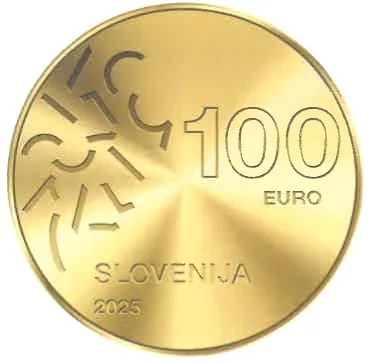
Obverse
Description:
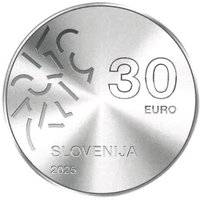
Rearranged mosaic pieces form a fresh image, symbolizing new ideas, cooperation, and creativity.
Inscription:
100 EURO
SLOVENIJA
2025
SLOVENIJA
2025
Translation:
100 EURO
SLOVENIA
2025
SLOVENIA
2025
Script: Latin
Designer: Gorazd Učakar
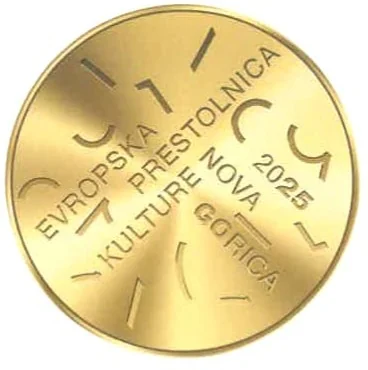
Reverse
Description:
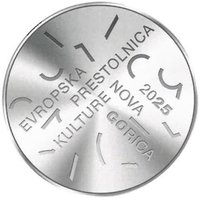
The reverse depicts elements from Europe Square's circular mosaic, with a line connecting NOVA and GORICA symbolising their link. The bold 25 GO highlights the ECOC motif.
Inscription:
EVROPSKA PRESTOLNICA KULTURE
2025
NOVA
GORICA
2025
NOVA
GORICA
Script: Latin
Designer: Gorazd Učakar
Edge
Mints
| Name | Mark |
|---|---|
| Imprensa Nacional - Casa da Moeda | — |
Mintings
| Year | Mint Mark | Mintage | Quality | Collection |
|---|---|---|---|---|
| 2025 | — | 750 | Proof |
Historical background
In 2025, Slovenia remains a committed and integrated member of the Eurozone, using the euro (EUR) as its sole official currency since its adoption in 2007. The country's monetary policy is set by the European Central Bank (ECB), which provides stability and eliminates exchange rate risk within the single market—a critical advantage for Slovenia's export-oriented economy. Domestically, the euro is widely accepted in both physical and digital forms, with cash usage continuing a gradual decline in favor of card and mobile payments, a trend accelerated by the post-pandemic shift in consumer habits.
The primary monetary focus for Slovenia in 2025 revolves around navigating the broader Eurozone's challenges, particularly managing the lingering effects of elevated inflation and the ECB's subsequent interest rate policy. While inflation has cooled from its peak, policymakers and businesses are attentive to balancing price stability with economic growth. Domestically, the Bank of Slovenia continues to supervise the financial system, ensure smooth cash circulation, and promote financial literacy, while the government focuses on fiscal measures to complement the centralized monetary stance.
Looking ahead, there is no serious political or public movement to abandon the euro; the currency is seen as a cornerstone of Slovenia's economic identity and European integration. The main discussions concern optimizing the benefits of the single currency through enhanced productivity and competitiveness within the Eurozone framework. Slovenia's economic well-being in 2025 is thus less about a unique "currency situation" and more about its performance and adaptability within the shared monetary union and the evolving digital payments landscape.
The primary monetary focus for Slovenia in 2025 revolves around navigating the broader Eurozone's challenges, particularly managing the lingering effects of elevated inflation and the ECB's subsequent interest rate policy. While inflation has cooled from its peak, policymakers and businesses are attentive to balancing price stability with economic growth. Domestically, the Bank of Slovenia continues to supervise the financial system, ensure smooth cash circulation, and promote financial literacy, while the government focuses on fiscal measures to complement the centralized monetary stance.
Looking ahead, there is no serious political or public movement to abandon the euro; the currency is seen as a cornerstone of Slovenia's economic identity and European integration. The main discussions concern optimizing the benefits of the single currency through enhanced productivity and competitiveness within the Eurozone framework. Slovenia's economic well-being in 2025 is thus less about a unique "currency situation" and more about its performance and adaptability within the shared monetary union and the evolving digital payments landscape.
✨ Legendary