

2 Cedis – Ghana
Non-circulating coins
Commemoration: Religious scenes
Ghana
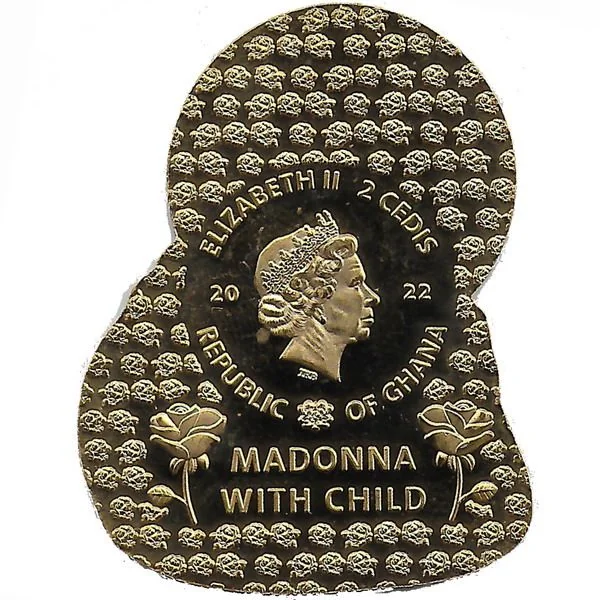
Obverse
Description:
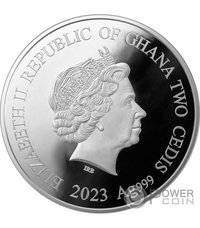
Queen Elizabeth II bust flanking date.
Inscription:
ELIZABETH II 2 CEDIS
2022
IRB
REPUBLIC OF GHANA
MADONNA
WITH CHILD
2022
IRB
REPUBLIC OF GHANA
MADONNA
WITH CHILD
Translation:
ELIZABETH II 2 CEDIS
2022
IRB
REPUBLIC OF GHANA
MADONNA
WITH CHILD
2022
IRB
REPUBLIC OF GHANA
MADONNA
WITH CHILD
Script: Latin
Language: English
Designer: Ian Rank-Broadley
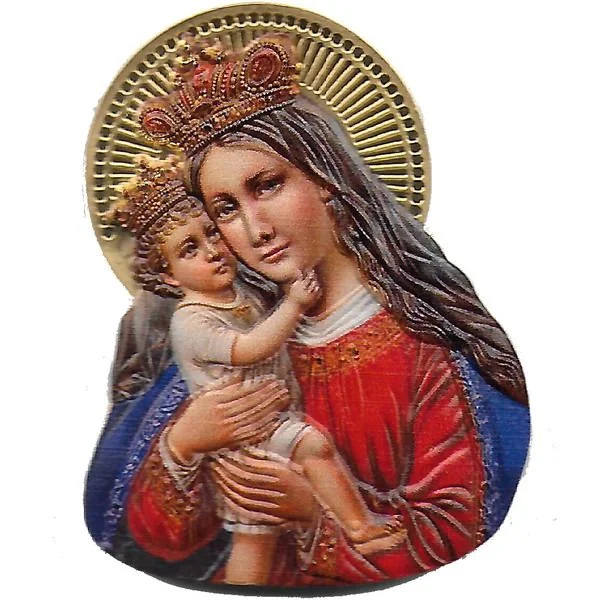
Reverse
Description:
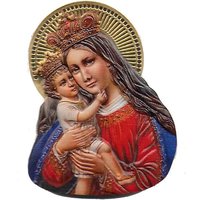
Madonna and Child, colorized
Edge
Plain
Categories
| Person> Monarch |
| Person> Religious figure |
| Plants> Flower |
| Symbols> Coat of Arms |
Mintings
| Year | Mint Mark | Mintage | Quality | Collection |
|---|---|---|---|---|
| 2022 | — | 1,500 | BU |
Historical background
In 2022, Ghana faced a severe currency crisis, with the Ghanaian cedi (GHS) becoming one of the worst-performing currencies in the world. The cedi depreciated by over 40% against the US dollar during the year, driven by a confluence of powerful external shocks and deep-rooted domestic vulnerabilities. The global context was critical, as soaring prices for fuel and food, exacerbated by the Russia-Ukraine war, sharply widened Ghana's import bill and current account deficit. Simultaneously, aggressive interest rate hikes by major central banks, particularly the U.S. Federal Reserve, triggered massive capital outflows from emerging markets like Ghana, draining foreign exchange reserves.
Domestically, the situation was compounded by pre-existing fiscal imbalances. Large government expenditures, coupled with falling revenues, led to a ballooning budget deficit and unsustainable public debt, which exceeded 90% of GDP. This loss of fiscal credibility sparked intense investor concern, restricted access to international capital markets, and led to credit rating downgrades deeper into speculative "junk" territory. The resulting loss of confidence fueled a cycle of high demand for dollars—by businesses to import goods and by individuals seeking to preserve savings—against a dwindling supply, accelerating the cedi's fall.
The currency collapse had devastating consequences on the Ghanaian economy, dramatically increasing the cost of living. As Ghana is heavily import-dependent, the weak cedi translated directly into soaring prices for essentials like fuel, medicine, and food, driving inflation to a 21-year peak of over 54% by December. This crisis ultimately pushed the government to seek a $3 billion bailout from the International Monetary Fund (IMF) in July, culminating in a staff-level agreement in December, as authorities acknowledged the need for a comprehensive debt restructuring and structural reforms to restore stability.
Domestically, the situation was compounded by pre-existing fiscal imbalances. Large government expenditures, coupled with falling revenues, led to a ballooning budget deficit and unsustainable public debt, which exceeded 90% of GDP. This loss of fiscal credibility sparked intense investor concern, restricted access to international capital markets, and led to credit rating downgrades deeper into speculative "junk" territory. The resulting loss of confidence fueled a cycle of high demand for dollars—by businesses to import goods and by individuals seeking to preserve savings—against a dwindling supply, accelerating the cedi's fall.
The currency collapse had devastating consequences on the Ghanaian economy, dramatically increasing the cost of living. As Ghana is heavily import-dependent, the weak cedi translated directly into soaring prices for essentials like fuel, medicine, and food, driving inflation to a 21-year peak of over 54% by December. This crisis ultimately pushed the government to seek a $3 billion bailout from the International Monetary Fund (IMF) in July, culminating in a staff-level agreement in December, as authorities acknowledged the need for a comprehensive debt restructuring and structural reforms to restore stability.

✨ Legendary