

5 euro – Latvia
Add to wishlist
Non-circulating coins
Commemoration: Sun and Wind / Liepāja
Latvia
Context
Material
References
KM: #
Numista: #472949
Value
Exchange value: 5 EUR
Bullion value: $58.71
Obverse
Description:
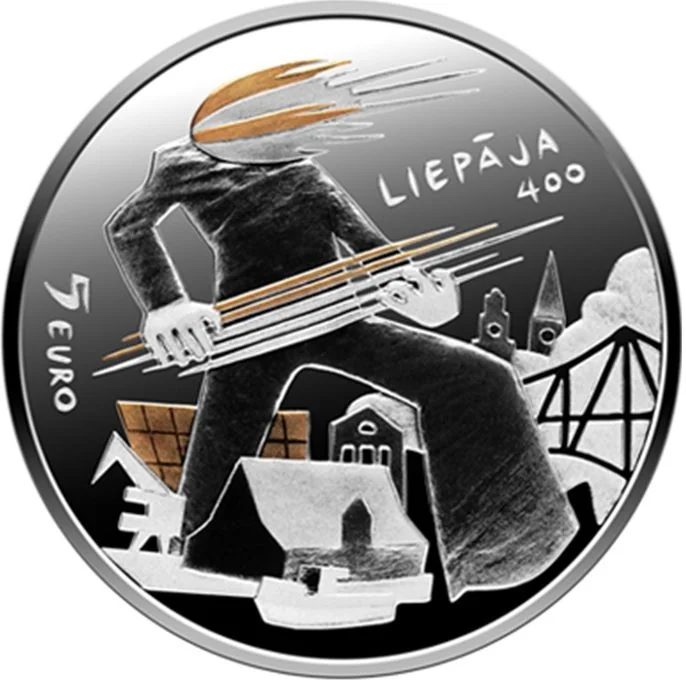
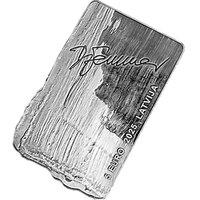
The coin's frosted and gilded obverse depicts the wild rocker Wind rampaging above Liepāja. The background features the harbour, a fishing boat, the "Liepājas Dzintars" concert hall, the Oskars Kalpaks Bridge, church spires, and city buildings. Inscriptions read "5 euro" on the left and "LIEPĀJA 400" on the right.
Inscription:
5 EURO
LIEPĀJA 400
LIEPĀJA 400
Translation:
5 EURO
LIEPĀJA 400
LIEPĀJA 400
Script: Latin
Engraver: Ligita Franckeviča
Designer: Krisš Salmanis
Reverse
Description:
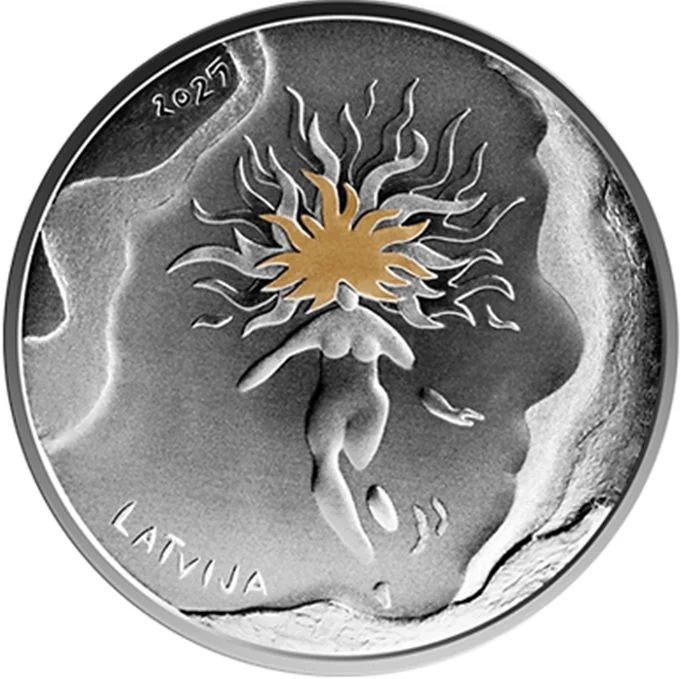
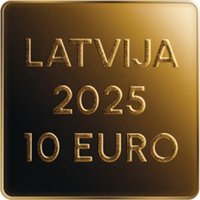
The reverse features a frosted and gilded Sun depicted as a woman bathing in the sea, her hair like sunbeams in the water. "2025" is at upper left, with "LATVIJA" in an arc along the lower left.
Inscription:
2025
LATVIJA
LATVIJA
Script: Latin
Engraver: Ligita Franckeviča
Designer: Krisš Salmanis
Edge
The inscriptions "LATVIJAS BANKA" and "LATVIJAS REPUBLIKA", separated by rhombic dots
Legend:
LATVIJAS BANKA ♦ LATVIJAS REPUBLIKA
Mints
| Name | Mark |
|---|---|
| Royal Dutch Mint | — |
Mintings
| Year | Mint Mark | Mintage | Quality | Collection |
|---|---|---|---|---|
| 2025 | — | 3,000 | Proof |
Historical background
In 2025, Latvia remains a fully integrated member of the Eurozone, with the euro as its sole legal tender since its adoption in 2014. The currency situation is characterized by stability and deep institutional anchoring within the European Central Bank's monetary policy framework. This integration provides Latvia with benefits such as eliminated exchange rate risk with its major trading partners, lower transaction costs, and a strong anchor against inflation, which continues to be a primary focus for the ECB following the post-pandemic and energy crisis spikes of the early 2020s.
Domestically, there is little to no political or public momentum for a return to the former national currency, the lats. The euro is widely accepted as a pragmatic reality that underpins Latvia's economic security and its identity within the core of the European Union. However, economic discussions in 2025 often center on the challenges of a one-size-fits-all monetary policy, particularly regarding interest rates set by the ECB. These rates may not always be optimally aligned with Latvia's specific economic cycle, sometimes creating headwinds for growth or credit accessibility compared to a hypothetical independent monetary policy.
Looking forward, Latvia's currency future is inextricably linked to the evolution of the Eurozone itself. National discourse focuses on leveraging the stability of the euro to attract investment and enhance competitiveness, while also advocating for greater EU-level fiscal integration and cohesion policies to mitigate regional disparities. The digital euro project, potentially entering its pilot phases, represents the next frontier, with Latvian financial institutions actively preparing for a future that includes a secure, central bank-backed digital currency alongside cash.
Domestically, there is little to no political or public momentum for a return to the former national currency, the lats. The euro is widely accepted as a pragmatic reality that underpins Latvia's economic security and its identity within the core of the European Union. However, economic discussions in 2025 often center on the challenges of a one-size-fits-all monetary policy, particularly regarding interest rates set by the ECB. These rates may not always be optimally aligned with Latvia's specific economic cycle, sometimes creating headwinds for growth or credit accessibility compared to a hypothetical independent monetary policy.
Looking forward, Latvia's currency future is inextricably linked to the evolution of the Eurozone itself. National discourse focuses on leveraging the stability of the euro to attract investment and enhance competitiveness, while also advocating for greater EU-level fiscal integration and cohesion policies to mitigate regional disparities. The digital euro project, potentially entering its pilot phases, represents the next frontier, with Latvian financial institutions actively preparing for a future that includes a secure, central bank-backed digital currency alongside cash.


✨ Legendary