

10 cents – South Africa
Add to wishlist
South Africa
Context
Year: 2025
Issuer: South Africa
Issuing organization: South African Reserve Bank
Period:
(since 1961)
Currency:
(since 1961)
Material
Diameter: 38.7 mm
Weight: 31.1 g
Silver Weight:: 31.07 g
Thickness: 2.84 mm
Shape: Round
Composition: 99.9% Silver
Standard: Silver ounce
Magnetic: No
Technique: Milled
Alignment: Medal alignment
flip
References
Numista: #471550
Value
Exchange value: 0.10 ZAR
Bullion value: $75.53
Obverse
Description:
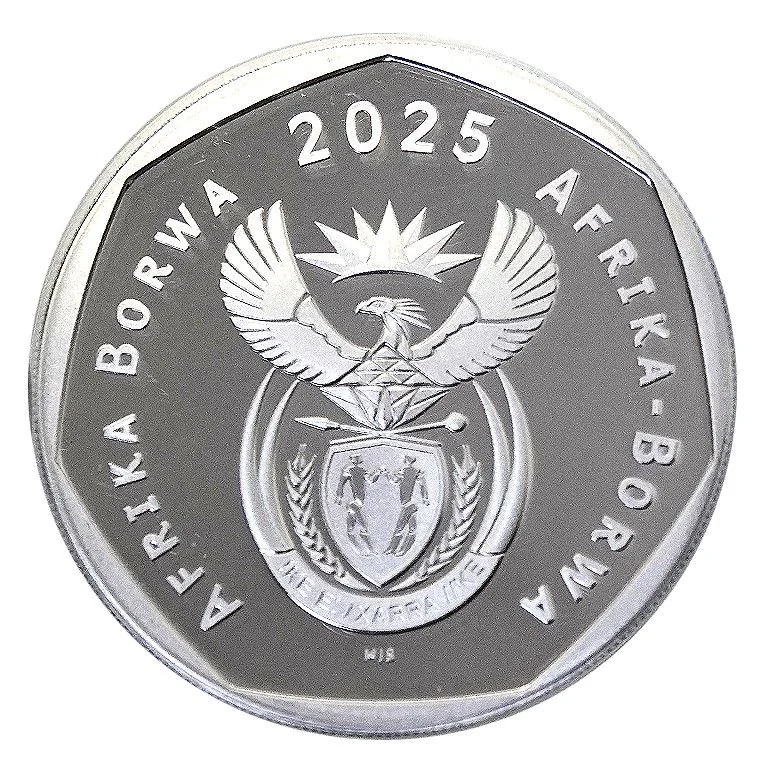
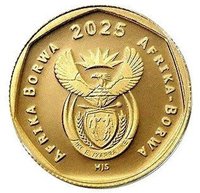
Coat of arms with date, topped by "South Africa" in Afrikaans and Venda.
Inscription:
2025
AFRIKA DZONGA
MJS
AFORIKA BORWA
AFRIKA DZONGA
MJS
AFORIKA BORWA
Translation:
2025
SOUTH AFRICA
MJS
SOUTH AFRICA
SOUTH AFRICA
MJS
SOUTH AFRICA
Script: Latin
Engraver: Thinus Scheepers
Reverse
Description:
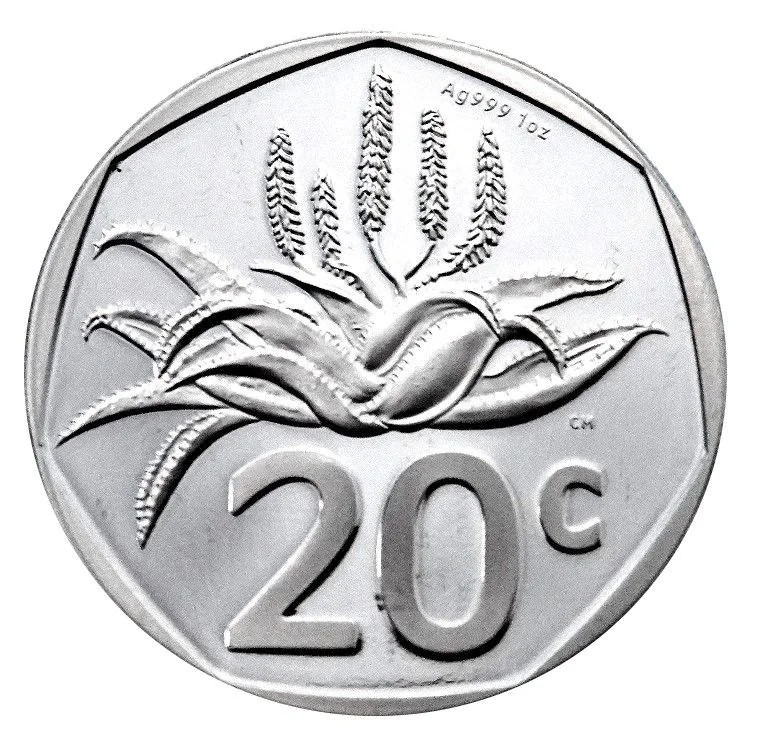
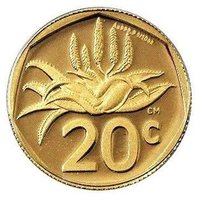
A Cape honey bee in flight over the veld.
Inscription:
Ag999 1oz
CM
10c
CM
10c
Script: Latin
Engraver: Thinus Scheepers
Designer: Sujay Sanan
Edge
Reeded
Categories
| Animal> Insect |
| Symbols> Coat of Arms |
Mints
| Name | Mark |
|---|---|
| South African Mint | — |
Mintings
| Year | Mint Mark | Mintage | Quality | Collection |
|---|---|---|---|---|
| 2025 | — | — | Proof |
Historical background
In 2025, the South African Rand (ZAR) remains under persistent pressure, navigating a complex landscape of domestic challenges and global headwinds. The currency's value continues to be heavily influenced by the country's longstanding structural issues, including severe load-shedding, logistical bottlenecks at Transnet, and high levels of public debt. These factors constrain economic growth, deter foreign direct investment, and contribute to a volatile trading environment for the Rand, which often reacts sharply to shifts in domestic political sentiment and news regarding state-owned enterprises.
Internationally, the Rand remains a high-risk, high-yield emerging market currency, sensitive to global monetary policy and commodity price cycles. In 2025, the pace of interest rate cuts by major central banks, particularly the U.S. Federal Reserve, is a critical external determinant. While higher-for-longer global rates historically drain capital from markets like South Africa, any sustained pivot toward easing could provide the Rand with temporary relief. Furthermore, as a key exporter of minerals, South Africa sees its currency fortunes still loosely tied to demand for commodities like platinum, coal, and iron ore, though this relationship has been dampened by domestic export constraints.
Looking ahead, the medium-term trajectory of the Rand in 2025 hinges significantly on the government's ability to implement credible fiscal consolidation and accelerate structural reforms. Markets are closely monitoring progress on energy security, port and rail efficiency, and efforts to curb the fiscal deficit. Without tangible improvements, the currency is likely to experience continued depreciation and volatility, keeping inflation elevated and pressuring the South African Reserve Bank to maintain a relatively hawkish stance, even in a potentially easing global cycle. The overall picture is one of a currency weathering a storm of its own domestic making, with its fate resting on policy execution more than external factors.
Internationally, the Rand remains a high-risk, high-yield emerging market currency, sensitive to global monetary policy and commodity price cycles. In 2025, the pace of interest rate cuts by major central banks, particularly the U.S. Federal Reserve, is a critical external determinant. While higher-for-longer global rates historically drain capital from markets like South Africa, any sustained pivot toward easing could provide the Rand with temporary relief. Furthermore, as a key exporter of minerals, South Africa sees its currency fortunes still loosely tied to demand for commodities like platinum, coal, and iron ore, though this relationship has been dampened by domestic export constraints.
Looking ahead, the medium-term trajectory of the Rand in 2025 hinges significantly on the government's ability to implement credible fiscal consolidation and accelerate structural reforms. Markets are closely monitoring progress on energy security, port and rail efficiency, and efforts to curb the fiscal deficit. Without tangible improvements, the currency is likely to experience continued depreciation and volatility, keeping inflation elevated and pressuring the South African Reserve Bank to maintain a relatively hawkish stance, even in a potentially easing global cycle. The overall picture is one of a currency weathering a storm of its own domestic making, with its fate resting on policy execution more than external factors.
✨ Legendary