

50 pounds – Syria
Add to wishlist
Syria
Context
Material
References
KM: #
Numista: #148703
Value
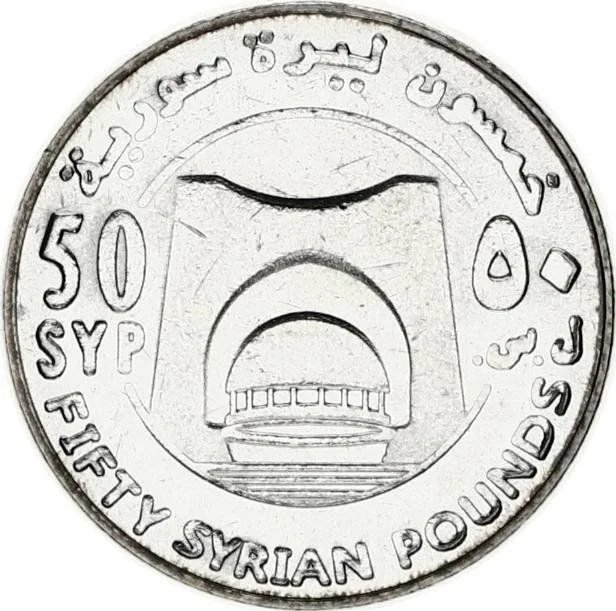
Exchange value: 50 SYP
Obverse
Description:
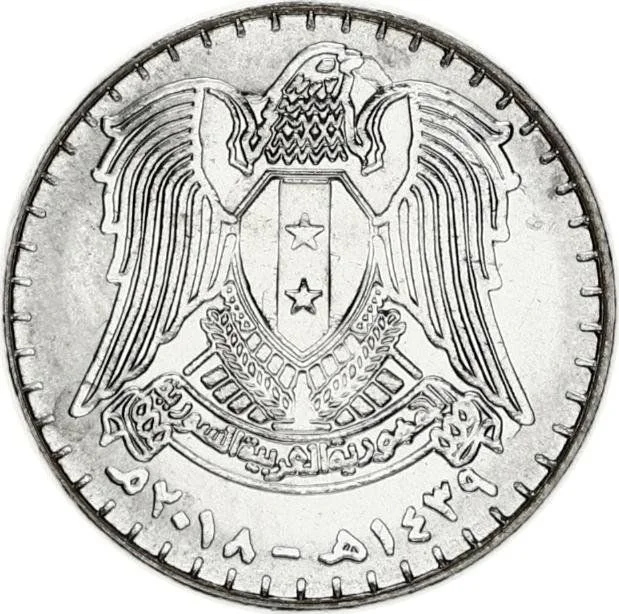
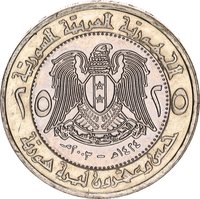
Syria's coat of arms: the Quraish hawk holding a shield with two stars and a scroll inscribed "Syrian Arab Republic" in Arabic. Arabic numerals for the Gregorian and Hijri dates appear below.
Inscription:
الجمهورية العربية السورية
١٤٣٩هـ - ٢٠١٨مـ
١٤٣٩هـ - ٢٠١٨مـ
Translation:
Syrian Arab Republic
1439H - 2018AD
1439H - 2018AD
Script: Arabic
Language: Arabic
Reverse
Edge
Reeded
Mintings
| Year | Mint Mark | Mintage | Quality | Collection |
|---|---|---|---|---|
| 2018 | — | — |
Historical background
By 2018, Syria's currency, the Syrian pound (SYP), was in a state of profound crisis, emblematic of the country's wider economic collapse after seven years of devastating civil war. The pound had lost over 90% of its pre-war value, trading at approximately 500 SYP to the US dollar on the black market, compared to 47 SYP in 2011. This hyperinflation was driven by a catastrophic contraction in GDP, the loss of key oil and agricultural revenues, widespread destruction of infrastructure, international sanctions, and the fragmentation of the country into zones controlled by the government, opposition forces, and Kurdish-led administrations, each with varying economic policies.
The Assad government, which retained control over the most populous areas including Damascus, struggled to manage the monetary chaos. It maintained an official, highly overvalued exchange rate (around 435 SYP to the dollar) for select government transactions and imports of essential goods, but this drained foreign reserves and created a vast disparity with the black-market rate used by the general population. This dual-rate system fueled corruption, as those with access to cheap official dollars could reap enormous profits. The Central Bank of Syria's ability to conduct effective monetary policy was severely hampered by isolation from the global financial system and the need to print money to cover massive budget deficits, further devaluing the currency.
For ordinary Syrians, the currency collapse was catastrophic, leading to extreme poverty and humanitarian suffering. Salaries, if paid, became nearly worthless, savings were obliterated, and the cost of basic food and medicine skyrocketed. The economy became increasingly dollarized for large transactions, while physical cash shortages of pound notes were common. The currency instability in 8 underscored that even as the government regained military momentum, any path to economic stabilization would be immensely difficult without a political settlement and the lifting of comprehensive international sanctions.
The Assad government, which retained control over the most populous areas including Damascus, struggled to manage the monetary chaos. It maintained an official, highly overvalued exchange rate (around 435 SYP to the dollar) for select government transactions and imports of essential goods, but this drained foreign reserves and created a vast disparity with the black-market rate used by the general population. This dual-rate system fueled corruption, as those with access to cheap official dollars could reap enormous profits. The Central Bank of Syria's ability to conduct effective monetary policy was severely hampered by isolation from the global financial system and the need to print money to cover massive budget deficits, further devaluing the currency.
For ordinary Syrians, the currency collapse was catastrophic, leading to extreme poverty and humanitarian suffering. Salaries, if paid, became nearly worthless, savings were obliterated, and the cost of basic food and medicine skyrocketed. The economy became increasingly dollarized for large transactions, while physical cash shortages of pound notes were common. The currency instability in 8 underscored that even as the government regained military momentum, any path to economic stabilization would be immensely difficult without a political settlement and the lifting of comprehensive international sanctions.
🌱 Fairly Common