

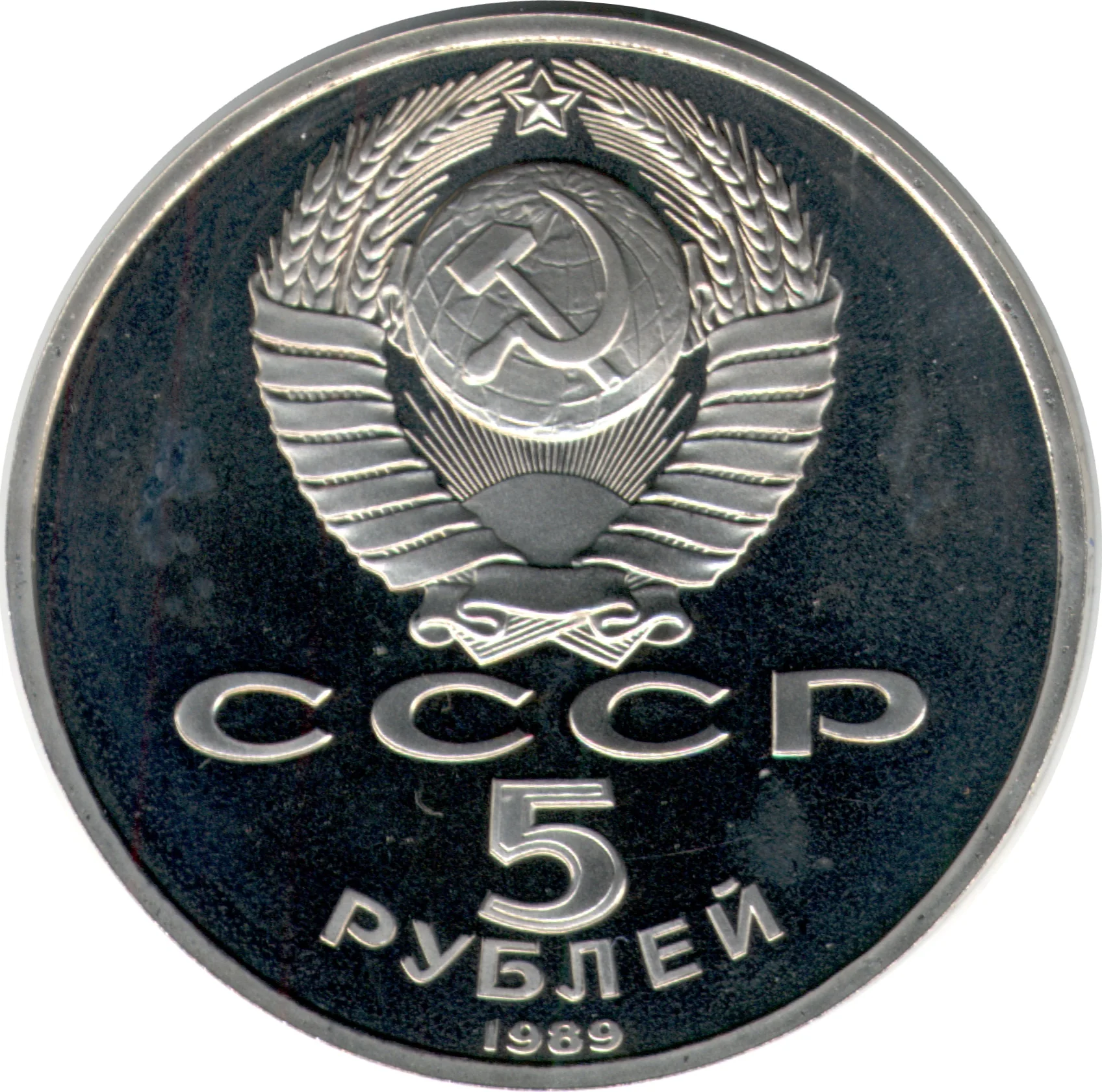
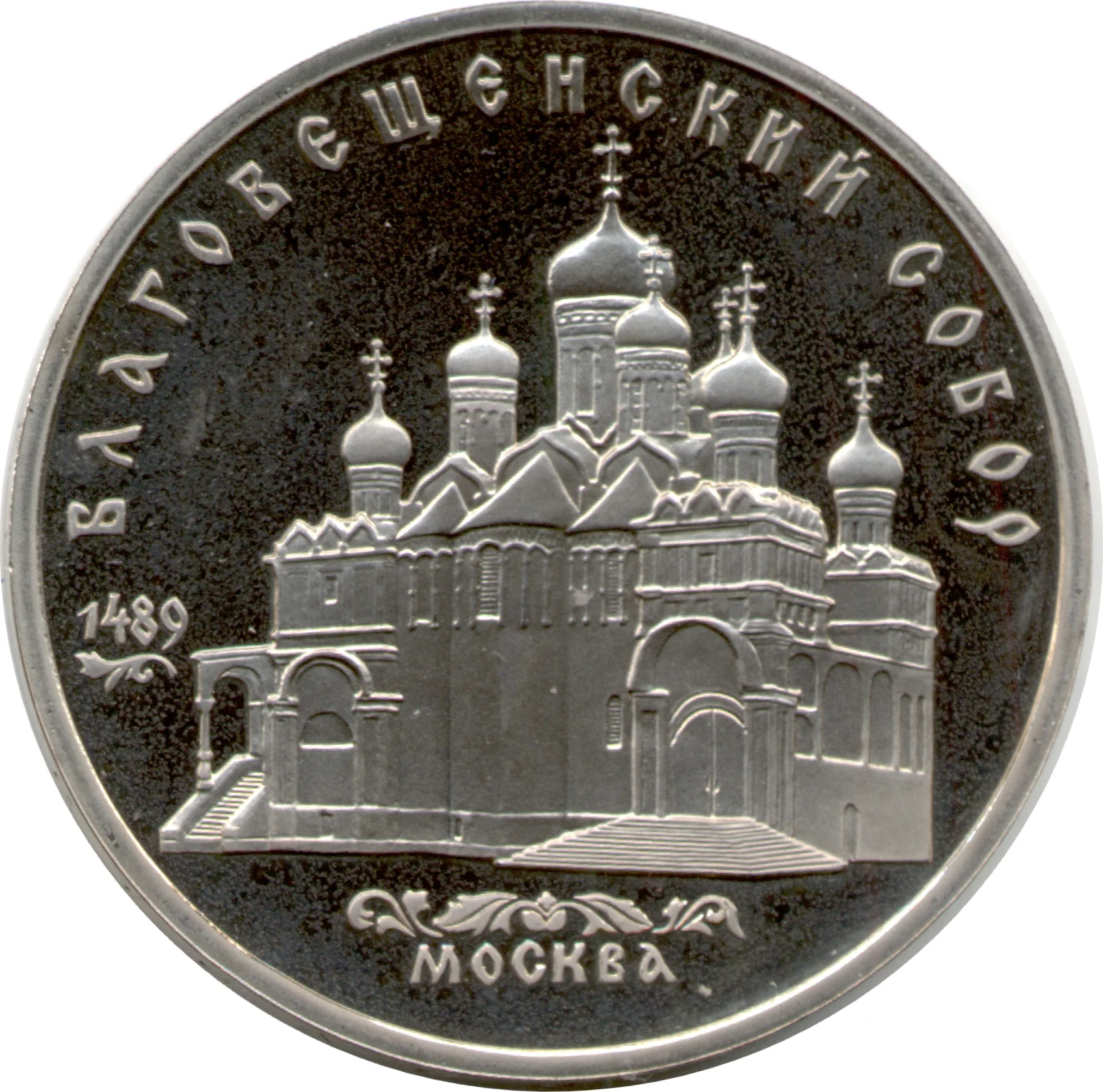
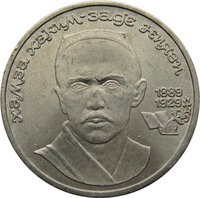
5 Rubles – Soviet Union
Circulating commemorative coins
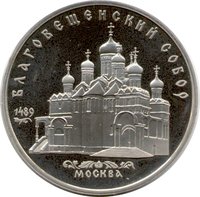
Commemoration: Cathedral of the Annunciation in Moscow
Russia
Context
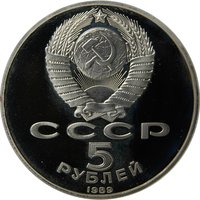
Year: 1989
Country: Russia 
Issuer: Soviet Union 
Period:
(1922—1991)
Currency:
(1961—1991)
Demonetization: 1991
Total mintage: 2,000,000
Material
Diameter: 35 mm
Weight: 19.8 g
Thickness: 2.6 mm
Shape: Round
Composition: Copper-nickel
Technique: Milled
Alignment: Medal alignment
flip
References
Y: #Click to copy to clipboard230
Numista: #4672
Value
Exchange value: 5 SUR
Obverse
Reverse
Edge
Smooth with the inscription
Legend:
* ПЯТЬ РУБЛЕЙ * ПЯТЬ РУБЛЕЙ
Translation:
FIVE RUBLES * FIVE RUBLES
Language: Russian
Categories
| Building> Religious building |
Mints
| Name | Mark |
|---|---|
| Saint Petersburg | — |
Mintings
| Year | Mint Mark | Mintage | Quality | Collection |
|---|---|---|---|---|
| 1989 | — | 1,700,000 | ||
| 1989 | — | 300,000 | Proof |
Historical background
By 1989, the Soviet Union's currency situation was a critical symptom of its deepening economic crisis. The official state ruble was increasingly divorced from economic reality, maintained at an artificially high exchange rate and rendered unconvertible on world markets. This "wooden ruble" masked severe underlying problems: a vast monetary overhang where citizens held large savings in rubles but faced chronic shortages of desirable goods in state stores. The result was a potent combination of suppressed inflation and a booming black market, where goods were available but at prices far exceeding state levels, and where the US dollar operated as a far more trusted shadow currency.
The root cause was the collapse of the command economy. Massive, inefficient state subsidies to unprofitable industries and the military-industrial complex were financed by simply printing money, while price controls on essential goods remained frozen for decades. This created a grotesque imbalance: too many rubles chased too few quality goods. The policy of uskoreniye (acceleration) and early reforms under Gorbachev had failed to increase the production of consumer goods, instead further inflating the money supply through wage increases and costly campaigns like the anti-alcohol initiative, which drained state revenue.
Consequently, 1989 was a year of looming monetary reckoning. The concept of a market transition forced the leadership to confront the ruble's fiction. Discussions began about a painful currency reform (which would materialize in 1991) to confiscate excess cash and restore monetary balance, while debates raged over introducing a convertible "hard ruble." The currency's weakness paralyzed foreign trade, as Western partners demanded payment in hard currency. Ultimately, the crumbling ruble in 9symbolized the loss of economic control and public trust, foreshadowing the monetary chaos and hyperinflation that would engulf the post-Soviet states in the early 1990s.
The root cause was the collapse of the command economy. Massive, inefficient state subsidies to unprofitable industries and the military-industrial complex were financed by simply printing money, while price controls on essential goods remained frozen for decades. This created a grotesque imbalance: too many rubles chased too few quality goods. The policy of uskoreniye (acceleration) and early reforms under Gorbachev had failed to increase the production of consumer goods, instead further inflating the money supply through wage increases and costly campaigns like the anti-alcohol initiative, which drained state revenue.
Consequently, 1989 was a year of looming monetary reckoning. The concept of a market transition forced the leadership to confront the ruble's fiction. Discussions began about a painful currency reform (which would materialize in 1991) to confiscate excess cash and restore monetary balance, while debates raged over introducing a convertible "hard ruble." The currency's weakness paralyzed foreign trade, as Western partners demanded payment in hard currency. Ultimately, the crumbling ruble in 9symbolized the loss of economic control and public trust, foreshadowing the monetary chaos and hyperinflation that would engulf the post-Soviet states in the early 1990s.
🌱 Common