

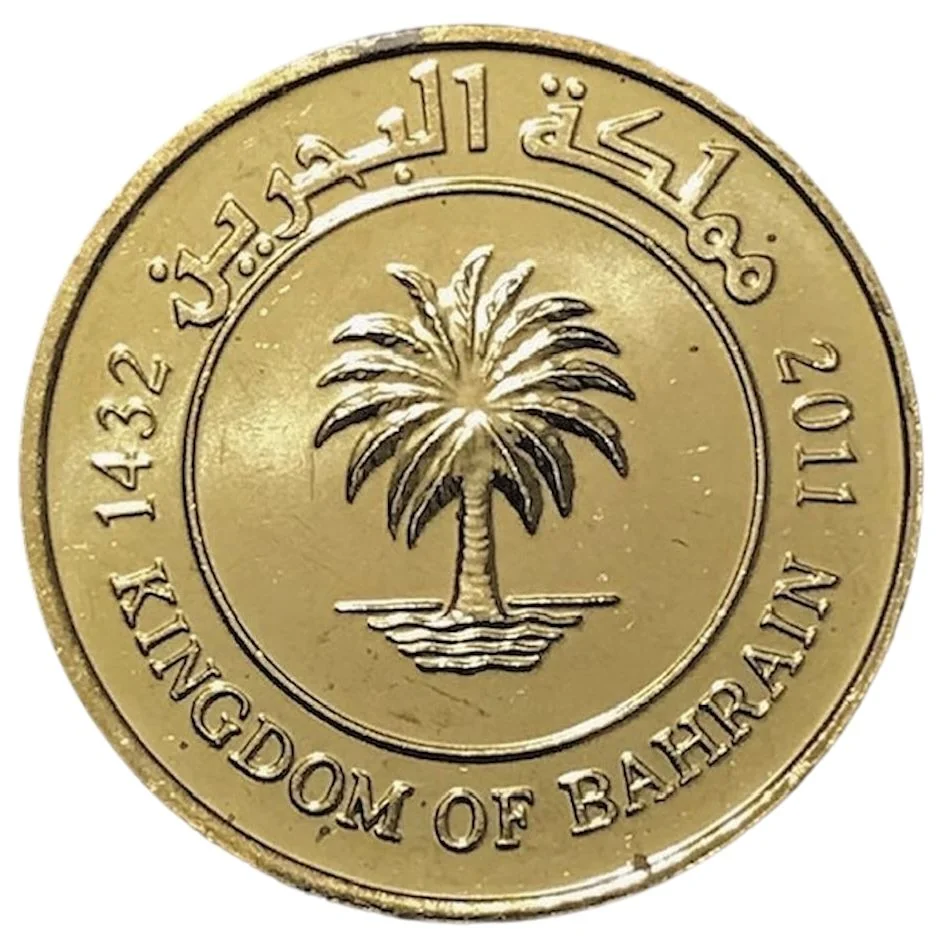

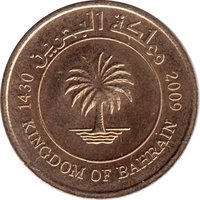
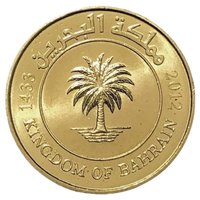
Obverse
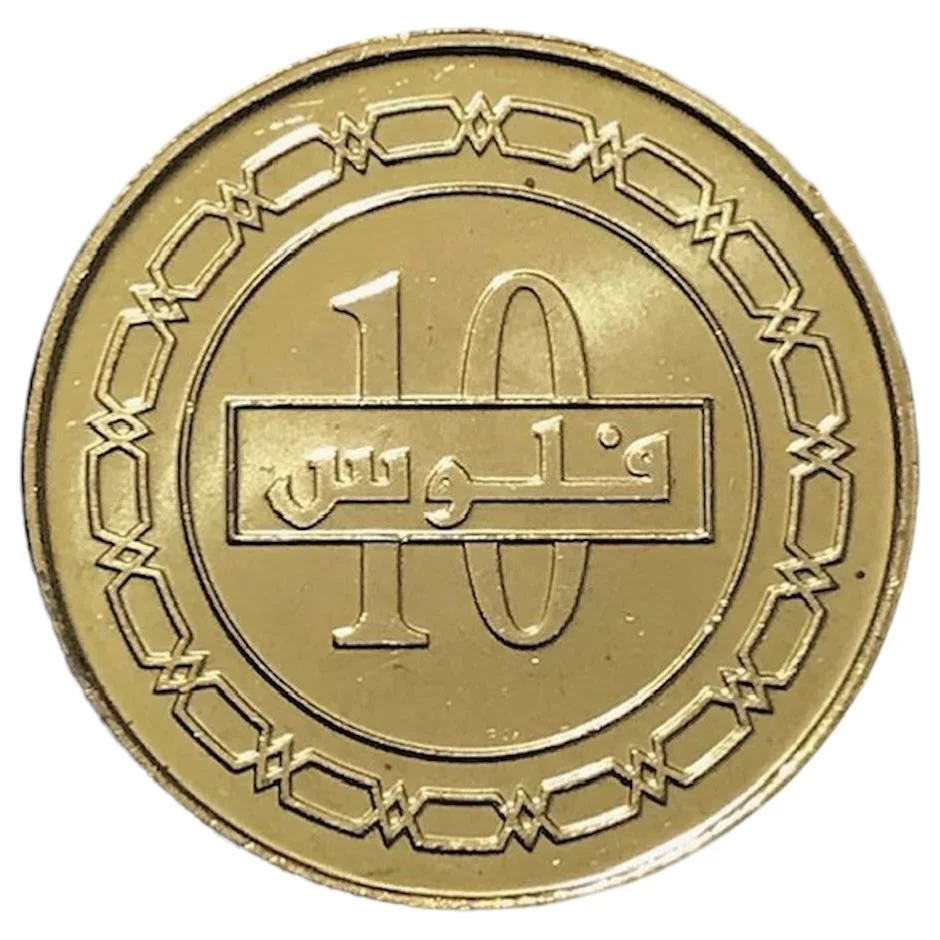
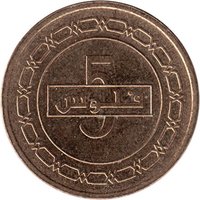
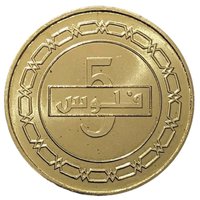
Reverse
Edge
Plain
Mints
| Name | Mark |
|---|---|
| Royal Mint | — |
Mintings
| Year | Mint Mark | Mintage | Quality | Collection |
|---|---|---|---|---|
| 2010 | — | — | ||
| 2011 | — | — | ||
| 2012 | — | — | ||
| 2013 | — | — | ||
| 2014 | — | — | ||
| 2015 | — | — | ||
| 2016 | — | — | ||
| 2017 | — | — | ||
| 2018 | — | — | ||
| 2019 | — | — | ||
| 2020 | — | — | ||
| 2021 | — | — |
Historical background
In 2010, Bahrain's currency situation was defined by stability and a firm peg to the US dollar, a policy maintained by the Bahraini dinar (BHD) since 2001. The Central Bank of Bahrain (CBB) fixed the exchange rate at 1 BHD = 2.6526 USD, a cornerstone of the kingdom's financial and economic strategy. This peg provided critical stability for trade, investment, and price levels, anchoring confidence in a small, open economy heavily reliant on hydrocarbons and financial services. It also aligned Bahrain with other Gulf Cooperation Council (GCC) states, which predominantly maintained dollar pegs as part of broader monetary coordination goals.
However, this stability occurred against a backdrop of regional economic strain and domestic fiscal pressure. The global financial crisis of 2008-2009 had impacted Bahrain's banking sector and reduced oil revenues, leading to budget deficits. While the peg itself was never in serious doubt, analysts monitored Bahrain's rising public debt and the cost of maintaining the fixed exchange rate, especially as inflationary pressures from imported goods (a typical side effect of a dollar peg) required careful management by the CBB. The kingdom's economic vulnerabilities were more pronounced than in its wealthier GCC neighbors, leading to occasional market speculation, though minimal, about long-term sustainability.
Ultimately, 2010 represented a period of steady monetary policy execution following the crisis, with the CBB successfully defending the peg through its foreign reserves and monetary tools. The focus was on maintaining the currency's credibility to support economic recovery and ongoing diversification efforts. This stable currency framework provided a predictable environment, even as the government navigated the broader challenges of post-crisis fiscal consolidation and social spending demands that would gain prominence in the following year.
However, this stability occurred against a backdrop of regional economic strain and domestic fiscal pressure. The global financial crisis of 2008-2009 had impacted Bahrain's banking sector and reduced oil revenues, leading to budget deficits. While the peg itself was never in serious doubt, analysts monitored Bahrain's rising public debt and the cost of maintaining the fixed exchange rate, especially as inflationary pressures from imported goods (a typical side effect of a dollar peg) required careful management by the CBB. The kingdom's economic vulnerabilities were more pronounced than in its wealthier GCC neighbors, leading to occasional market speculation, though minimal, about long-term sustainability.
Ultimately, 2010 represented a period of steady monetary policy execution following the crisis, with the CBB successfully defending the peg through its foreign reserves and monetary tools. The focus was on maintaining the currency's credibility to support economic recovery and ongoing diversification efforts. This stable currency framework provided a predictable environment, even as the government navigated the broader challenges of post-crisis fiscal consolidation and social spending demands that would gain prominence in the following year.
🌱 Very Common