

50 Dollars – United States
United States
Context
Material
Diameter: 27 mm
Weight: 15.55 g
Gold weight: 15.55 g
Thickness: 2.16 mm
Shape: Round
Composition: 100% Gold
Standard: Silver half ounce
Magnetic: No
Technique: Milled
References
Numista: #466618
Value
Exchange value: 50 USD = $50.00
Bullion value: $2590.86
Inflation-adjusted value: 51.18 USD
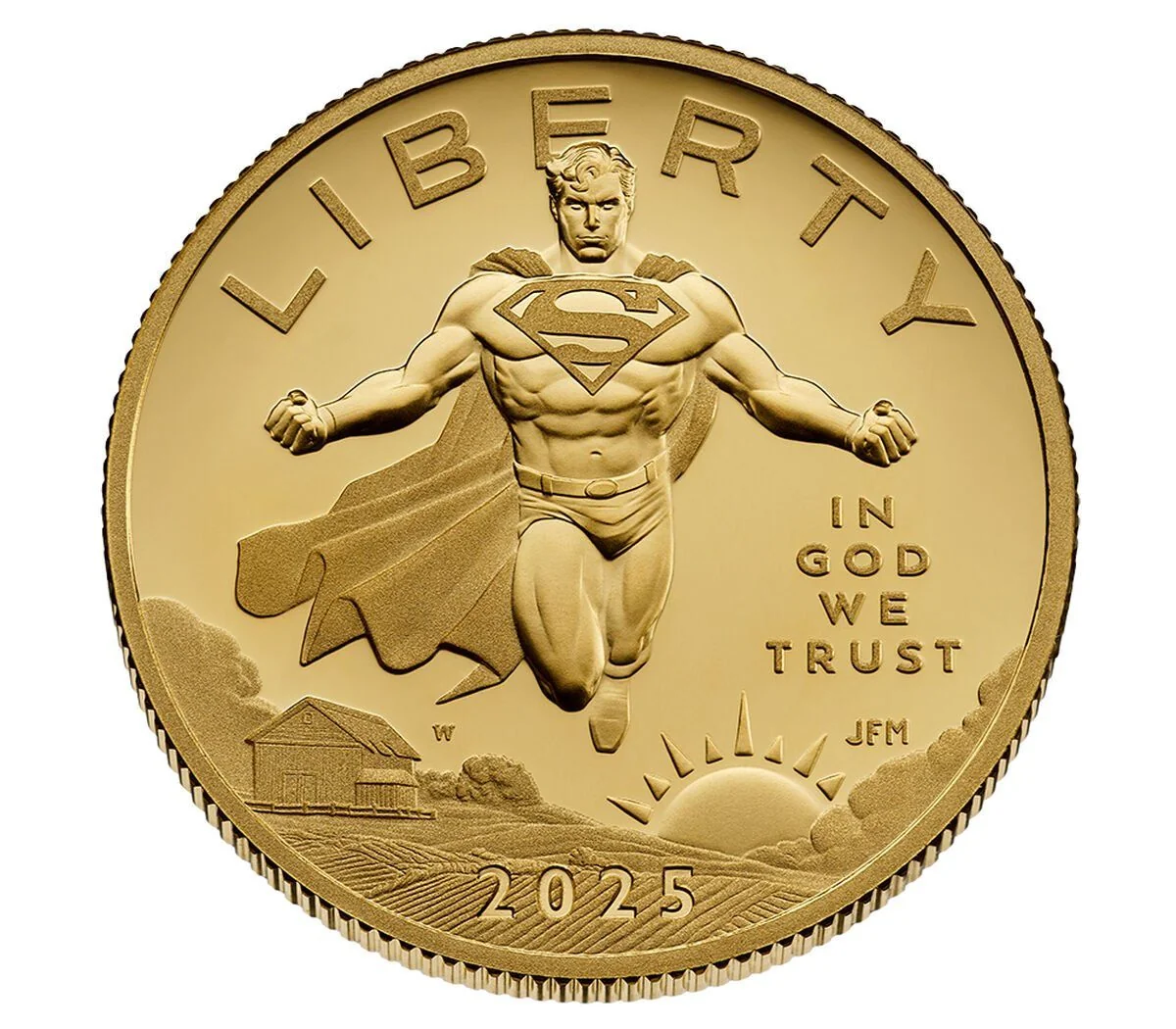
Obverse
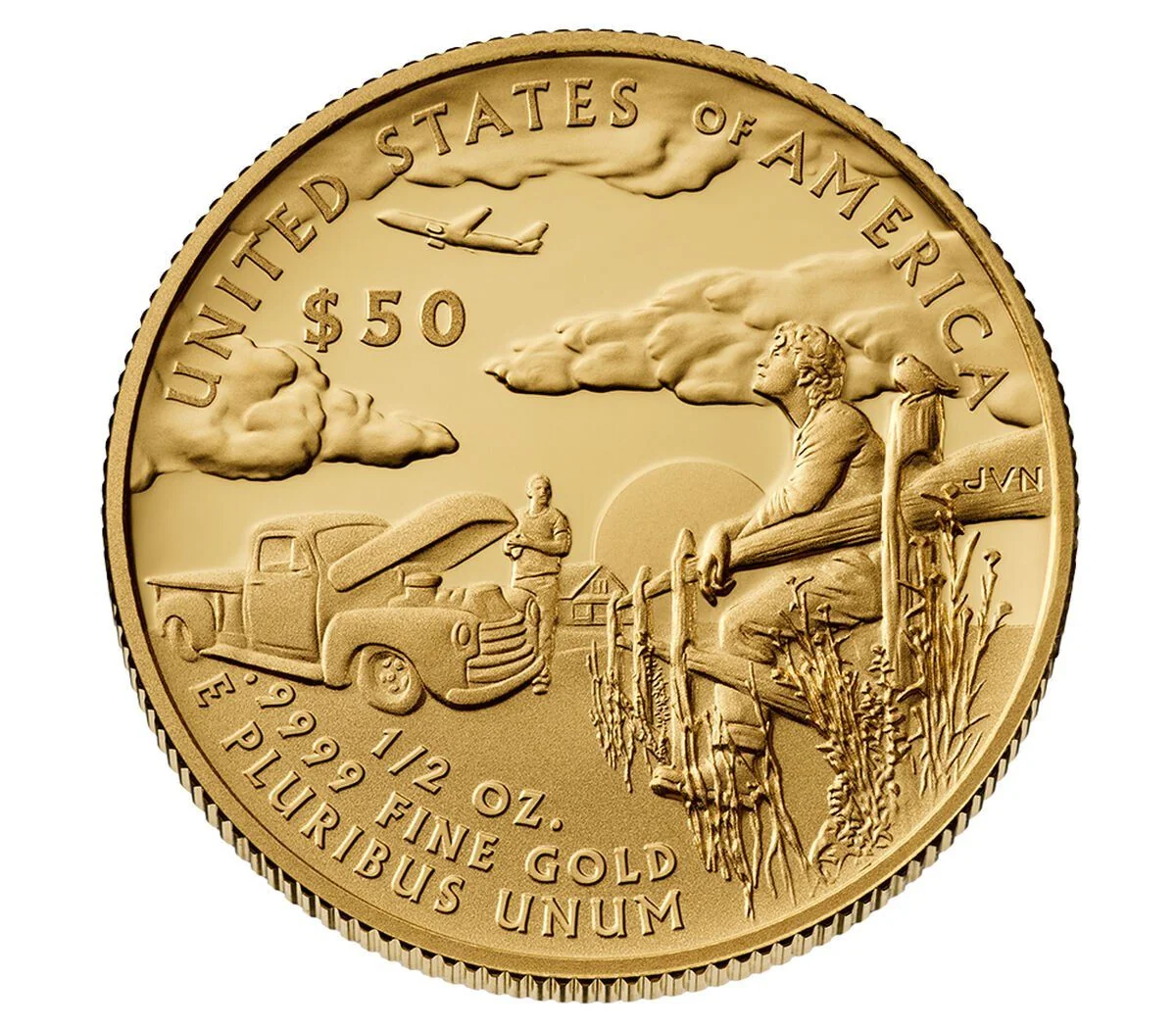
Reverse
Edge
Reeded
Categories
| Art> Fictional character |
| Transportation> Aircraft |
Mints
| Name | Mark |
|---|---|
| United States Mint of West Point | W |
Mintings
| Year | Mint Mark | Mintage | Quality | Collection |
|---|---|---|---|---|
| 2025 | W | — | Proof |
Historical background
In 2025, the United States currency situation is defined by a tense coexistence between traditional physical cash and a rapidly expanding digital dollar ecosystem. The Federal Reserve's central bank digital currency (CBDC), the "digital dollar," launched in late 2024 following a multi-year pilot. It operates alongside, and is directly convertible with, physical Federal Reserve notes, which remain legal tender and in circulation. However, the digital dollar's adoption by major financial institutions and its integration into government benefit disbursements and tax collection has accelerated its use, creating a de facto two-tier monetary system.
This shift has been driven by persistent concerns over financial inclusion, the dominance of private cryptocurrencies and stablecoins, and a Congressional mandate to modernize the nation's payment infrastructure. The digital dollar offers near-instantaneous settlement, programmable features for specific uses, and reduced transaction costs. Consequently, its use is becoming standard for large business transactions, federal contracts, and interbank settlements. Yet, its rollout has sparked intense debate over privacy, with legislation establishing strict limits on the government's ability to monitor transactional data without a warrant, a compromise that satisfied neither privacy absolutists nor law enforcement advocates.
The broader macroeconomic landscape continues to influence the currency's value. After the inflationary pressures of the early 2020s, the Federal Reserve maintains a cautious monetary policy, using the precise tools of the CBDC to implement targeted liquidity measures. The U.S. dollar retains its dominant role as the global reserve currency, though this position faces ongoing challenges from currency blocs and digital alternatives. Domestically, the primary tension lies in the pace of the cash-to-digital transition, with a growing generational and urban-rural divide in payment preferences, prompting continued federal mandates that all businesses, including small vendors, must accept both physical and digital forms of the U.S. dollar.
This shift has been driven by persistent concerns over financial inclusion, the dominance of private cryptocurrencies and stablecoins, and a Congressional mandate to modernize the nation's payment infrastructure. The digital dollar offers near-instantaneous settlement, programmable features for specific uses, and reduced transaction costs. Consequently, its use is becoming standard for large business transactions, federal contracts, and interbank settlements. Yet, its rollout has sparked intense debate over privacy, with legislation establishing strict limits on the government's ability to monitor transactional data without a warrant, a compromise that satisfied neither privacy absolutists nor law enforcement advocates.
The broader macroeconomic landscape continues to influence the currency's value. After the inflationary pressures of the early 2020s, the Federal Reserve maintains a cautious monetary policy, using the precise tools of the CBDC to implement targeted liquidity measures. The U.S. dollar retains its dominant role as the global reserve currency, though this position faces ongoing challenges from currency blocs and digital alternatives. Domestically, the primary tension lies in the pace of the cash-to-digital transition, with a growing generational and urban-rural divide in payment preferences, prompting continued federal mandates that all businesses, including small vendors, must accept both physical and digital forms of the U.S. dollar.

✨ Legendary