

5 cents – United States
Add to wishlist
United States
Context
Years: 1837–1838
Issuer: United States
Period:
(since 1776)
Currency:
(since 1785)
Total mintage: 1,475,000
Material
References
KM: #
Numista: #14853
Value
Exchange value: 0.05 USD = $0.05
Bullion value: $3.01
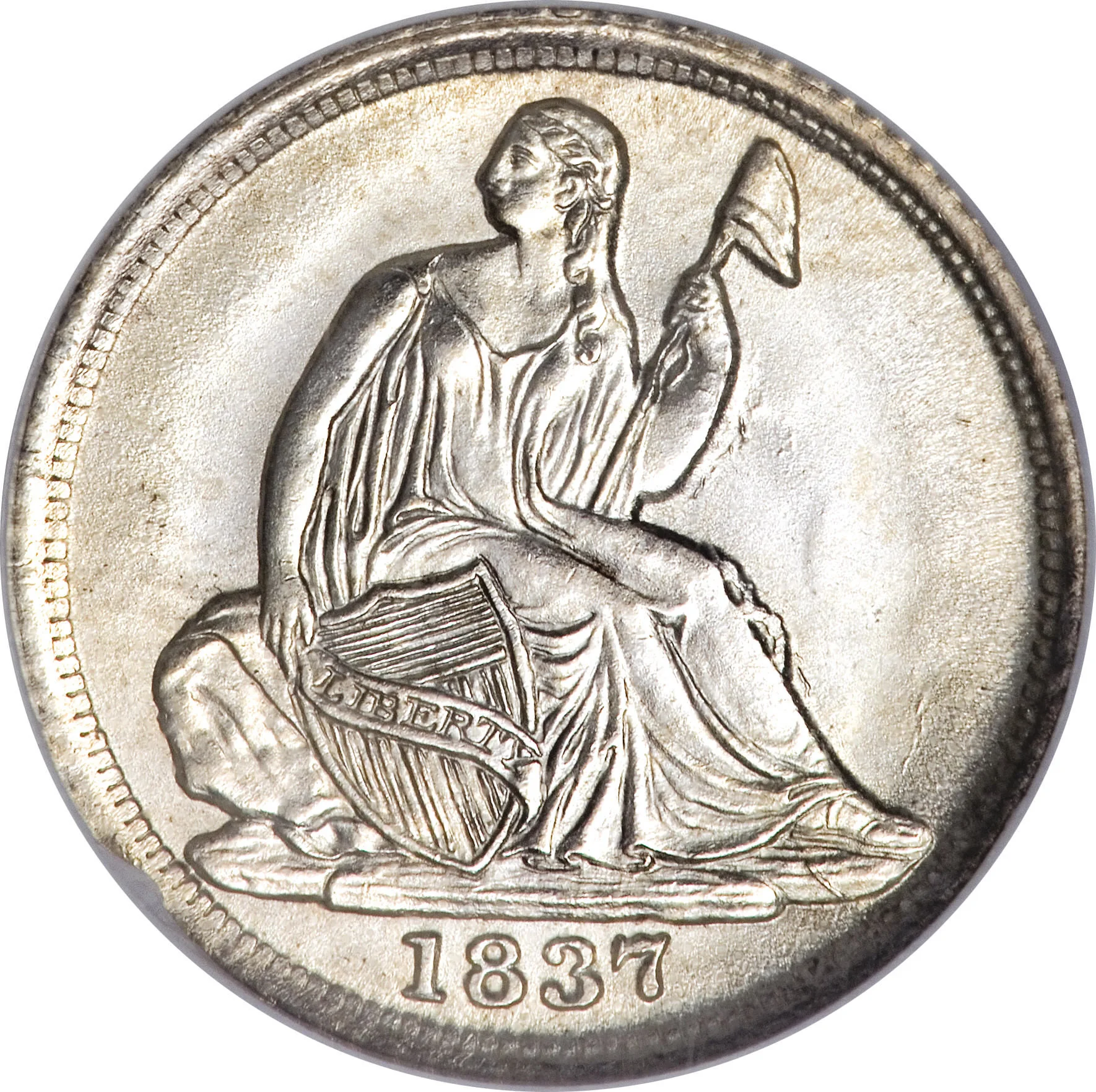
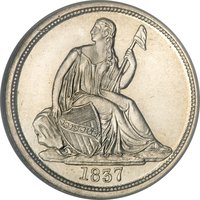
Obverse
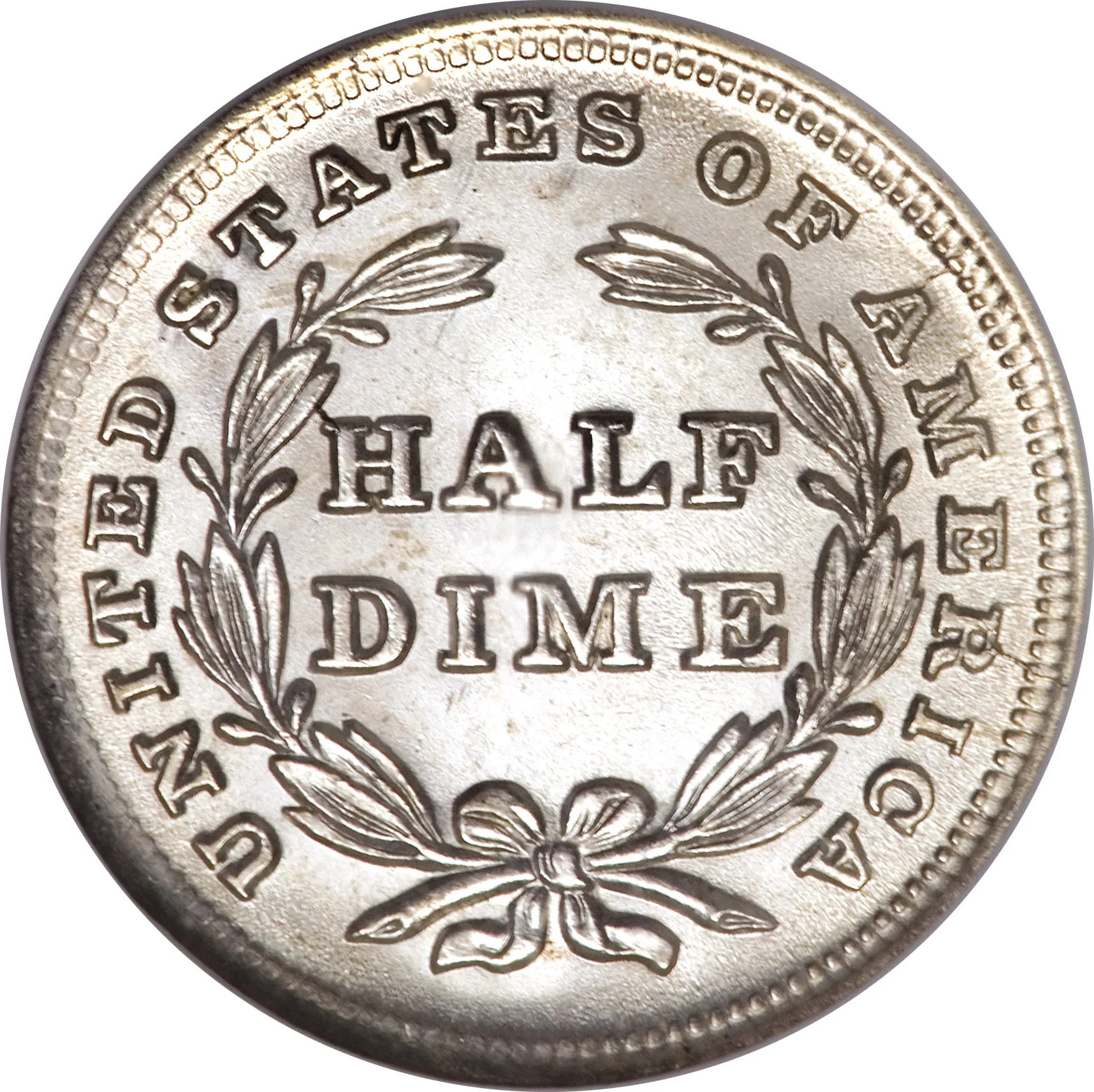
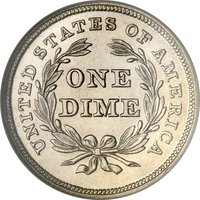
Reverse
Description:
Wreath's worth
Inscription:
UNITED STATES OF AMERICA
HALF
DIME
HALF
DIME
Script: Latin
Engraver: Christian Gobrecht
Edge
Reeded
Mintings
| Year | Mint Mark | Mintage | Quality | Collection |
|---|---|---|---|---|
| 1837 | — | 1,405,000 | ||
| 1838 | O | 70,000 |
Historical background
The United States in 1837 stood at the precipice of a major financial crisis, the Panic of 1837, which was deeply rooted in the contentious monetary policies of the preceding decade. President Andrew Jackson’s war against the Second Bank of the United States was central to the situation. Convinced the Bank was a corrupt monopoly that favored elites, Jackson vetoed its recharter in 1832 and subsequently withdrew federal deposits, redistributing them to state-chartered "pet banks." This effectively dissolved the central regulating institution of the nation's currency, leaving a fragmented and unstable banking system.
The currency landscape became chaotic and inflationary. With no central bank to impose discipline, state banks rapidly expanded, issuing a flood of paper banknotes with little specie (gold or silver) to back them. This expansion was further fueled by a massive speculative boom in western lands, financed by easy credit from these banks. Meanwhile, Jackson’s own policies exacerbated the instability. His 1836 "Specie Circular" required payment for public lands to be made in gold or silver, abruptly draining coin from Eastern banks and causing a sharp contraction in credit just as the economy was overheating.
By early 1837, the unsustainable situation collapsed. Foreign investors, concerned about the soundness of American finance, began demanding specie payments. American banks, holding insufficient reserves, were forced to suspend specie payments altogether in May 1837, triggering widespread panic. The nation was plunged into a deep depression characterized by bank failures, collapsed businesses, soaring unemployment, and a crisis of confidence in the very concept of paper money. Thus, the currency situation of 1837 was one of profound dislocation, directly resulting from the destruction of the central bank and the unchecked speculation it enabled.
The currency landscape became chaotic and inflationary. With no central bank to impose discipline, state banks rapidly expanded, issuing a flood of paper banknotes with little specie (gold or silver) to back them. This expansion was further fueled by a massive speculative boom in western lands, financed by easy credit from these banks. Meanwhile, Jackson’s own policies exacerbated the instability. His 1836 "Specie Circular" required payment for public lands to be made in gold or silver, abruptly draining coin from Eastern banks and causing a sharp contraction in credit just as the economy was overheating.
By early 1837, the unsustainable situation collapsed. Foreign investors, concerned about the soundness of American finance, began demanding specie payments. American banks, holding insufficient reserves, were forced to suspend specie payments altogether in May 1837, triggering widespread panic. The nation was plunged into a deep depression characterized by bank failures, collapsed businesses, soaring unemployment, and a crisis of confidence in the very concept of paper money. Thus, the currency situation of 1837 was one of profound dislocation, directly resulting from the destruction of the central bank and the unchecked speculation it enabled.
🌟 Limited