

¼ real – Peru
Add to wishlist
Peru
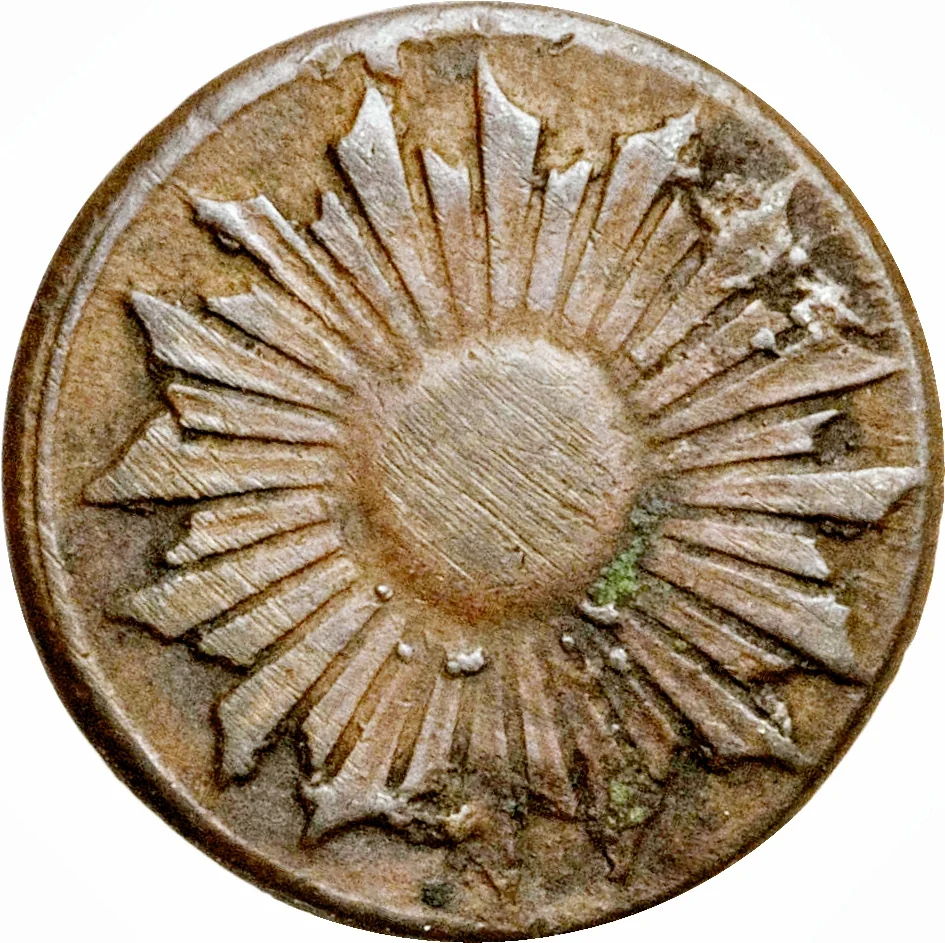
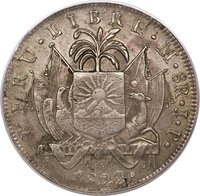
Obverse
Description:
Sun.
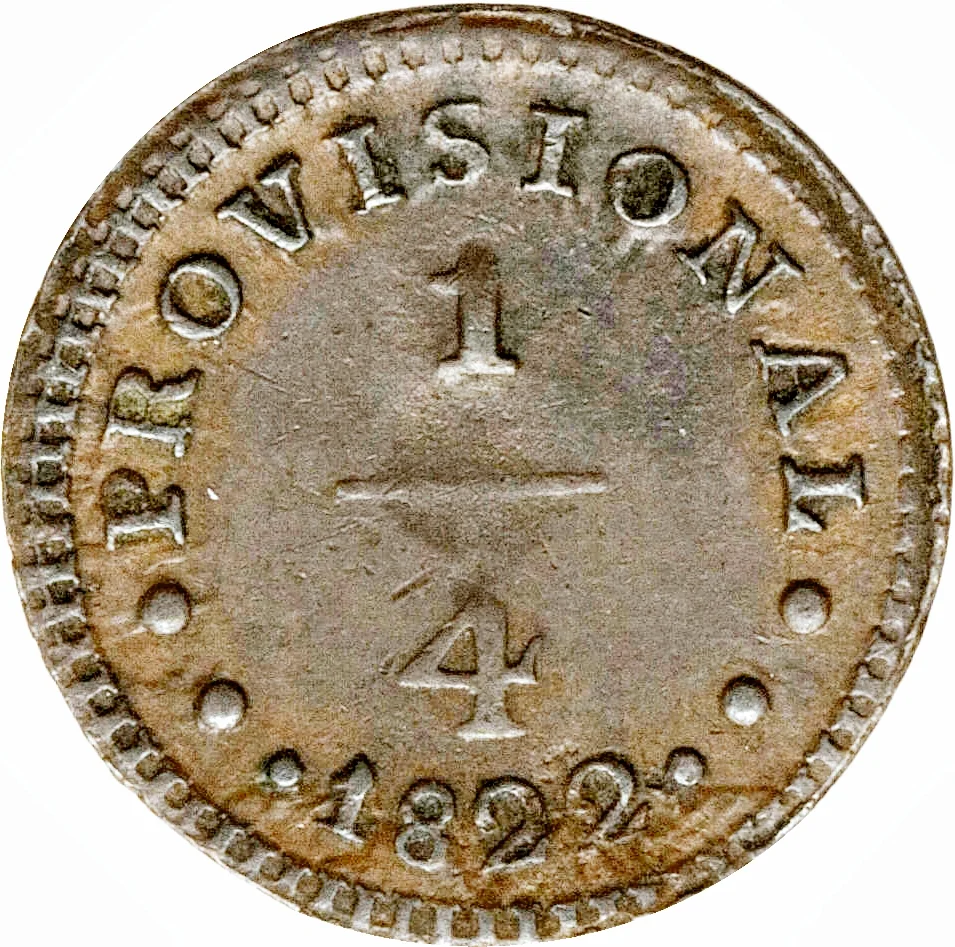
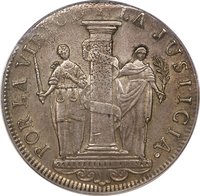
Reverse
Edge
Plain
Mintings
| Year | Mint Mark | Mintage | Quality | Collection |
|---|---|---|---|---|
| 1822 | — | — |
Historical background
In 1822, Peru’s currency situation was chaotic and deeply symptomatic of its turbulent transition from Spanish colony to independent republic. Following General José de San Martín’s declaration of independence in 1821, the new state inherited a fractured economy, a depleted treasury, and a complex monetary system still dominated by Spanish colonial coinage. The most common circulating coins were the silver peso or real de a ocho (eight-real piece) and the gold escudo, but these were in short supply due to the economic disruption of the wars of independence, which had crippled mining—Peru’s primary source of precious metals. This scarcity of hard currency severely hampered government finances and everyday commerce.
Facing a financial crisis, the nascent government under San Martín resorted to issuing paper money to fund the ongoing war against remaining royalist forces. These treasury notes, known as billetes fiscales or papel moneda, were among the first paper currencies issued in Peru. However, they were not backed by silver or gold reserves and were essentially forced loans on the populace. Public confidence in this fiat money was extremely low from the outset, leading to rapid depreciation. The notes traded at a steep discount to silver coin, creating a dual-system where goods had one price in paper and a much higher, but stable, price in precious metal.
This monetary instability exacerbated inflation and economic hardship, undermining the legitimacy of the new state. The situation was further complicated by the circulation of coins from various Spanish mints, as well as counterfeits and clipped coins, which eroded trust in all mediums of exchange. Ultimately, the currency chaos of 1822 reflected the profound challenges of building a sovereign nation amidst ongoing military conflict, setting a precedent of fiscal weakness that would plague Peru for much of its early republican period.
Facing a financial crisis, the nascent government under San Martín resorted to issuing paper money to fund the ongoing war against remaining royalist forces. These treasury notes, known as billetes fiscales or papel moneda, were among the first paper currencies issued in Peru. However, they were not backed by silver or gold reserves and were essentially forced loans on the populace. Public confidence in this fiat money was extremely low from the outset, leading to rapid depreciation. The notes traded at a steep discount to silver coin, creating a dual-system where goods had one price in paper and a much higher, but stable, price in precious metal.
This monetary instability exacerbated inflation and economic hardship, undermining the legitimacy of the new state. The situation was further complicated by the circulation of coins from various Spanish mints, as well as counterfeits and clipped coins, which eroded trust in all mediums of exchange. Ultimately, the currency chaos of 1822 reflected the profound challenges of building a sovereign nation amidst ongoing military conflict, setting a precedent of fiscal weakness that would plague Peru for much of its early republican period.
💎 Very Rare