

1 Onza – Mexico
Non-circulating coins
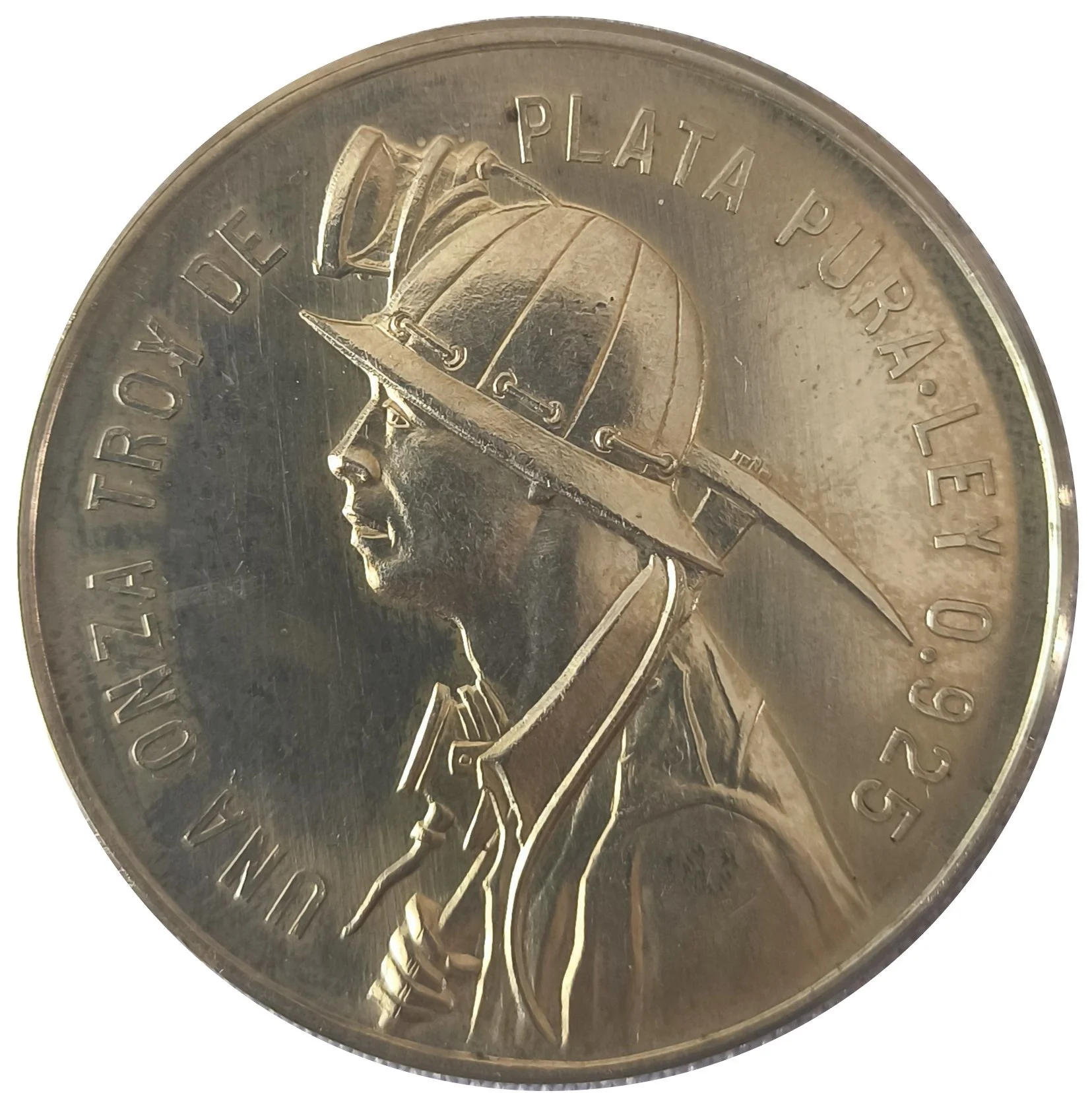
Commemoration: First Mineral Resources Convention
Mexico
Obverse
Reverse
Description:
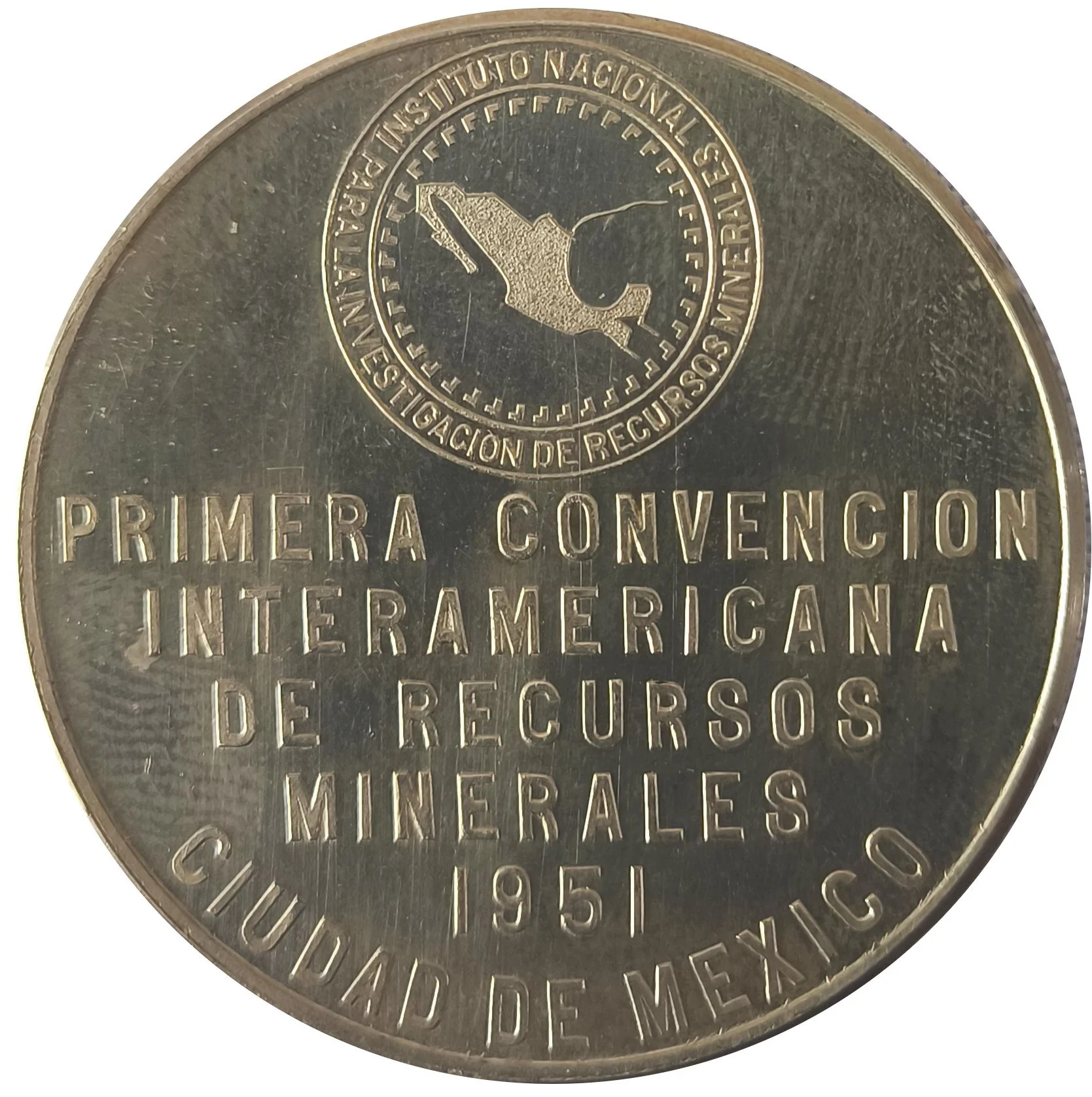
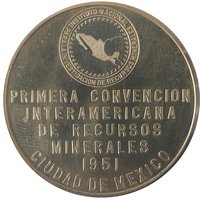
A Mexican map seal, encircled by the event, year, location, and legend.
Inscription:
INSTITUTO NACIONAL PARA LA INVESTIGACION DE RECURSOS MINERALES.
PRIMERA CONVENCION INTERAMERICANA DE RECURSOS MINERALES
1951
CIUDAD DE MEXICO
PRIMERA CONVENCION INTERAMERICANA DE RECURSOS MINERALES
1951
CIUDAD DE MEXICO
Translation:
National Institute for the Investigation of Mineral Resources.
First Inter-American Convention on Mineral Resources
1951
Mexico City
First Inter-American Convention on Mineral Resources
1951
Mexico City
Script: Latin
Language: Spanish
Edge
Mintings
| Year | Mint Mark | Mintage | Quality | Collection |
|---|---|---|---|---|
| 1951 | — | 1,519 |
Historical background
In 1951, Mexico's currency situation was characterized by a period of relative stability under the Bretton Woods system, but with underlying pressures rooted in the country's rapid industrialization drive. The Mexican peso was pegged to the U.S. dollar at a fixed rate of 8.65 pesos per dollar, a parity established in 1949 and maintained through the Central Bank's management of foreign reserves. This stability was a point of pride for the administration of President Miguel Alemán (1946-1952), supporting a climate of confidence for both domestic investment and foreign capital, which was seen as crucial for the development of infrastructure and industry.
However, this fixed exchange rate existed alongside persistent, though moderate, inflation and a growing demand for imports of capital goods and machinery. Mexico's economic strategy, known as "stabilizing development," prioritized industrial growth over strict price stability, leading to a gradual erosion of the peso's purchasing power domestically. While the currency's external value was firmly anchored, its internal value was slowly declining. This created a subtle overvaluation of the peso, which began to discourage agricultural exports and encouraged spending on imports, applying a slow but steady drain on the country's dollar reserves.
Consequently, 1951 represented a calm before a gathering storm. The policies of the Alemán sexenio had fueled growth through substantial public spending and credit expansion, setting the stage for the balance of payments crises that would challenge the next administration. The fixed parity of 8.65, while a symbol of stability at the time, would come under severe pressure in the latter half of the 1950s, leading to the first major devaluation of the peso in decades in 1954. Thus, the currency situation in 1951 was one of managed equilibrium, masking the structural tensions between a fixed exchange rate and an inflationary, import-heavy development model.
However, this fixed exchange rate existed alongside persistent, though moderate, inflation and a growing demand for imports of capital goods and machinery. Mexico's economic strategy, known as "stabilizing development," prioritized industrial growth over strict price stability, leading to a gradual erosion of the peso's purchasing power domestically. While the currency's external value was firmly anchored, its internal value was slowly declining. This created a subtle overvaluation of the peso, which began to discourage agricultural exports and encouraged spending on imports, applying a slow but steady drain on the country's dollar reserves.
Consequently, 1951 represented a calm before a gathering storm. The policies of the Alemán sexenio had fueled growth through substantial public spending and credit expansion, setting the stage for the balance of payments crises that would challenge the next administration. The fixed parity of 8.65, while a symbol of stability at the time, would come under severe pressure in the latter half of the 1950s, leading to the first major devaluation of the peso in decades in 1954. Thus, the currency situation in 1951 was one of managed equilibrium, masking the structural tensions between a fixed exchange rate and an inflationary, import-heavy development model.
✨ Legendary