

1 rial – Iran
Add to wishlist
Iran
Context
Material
Weight: 10.1 g
Silver Weight:: 10.10 g
Shape: Irregular round
Composition: Silver
Magnetic: No
Technique: Hammered
References
Numista: #465810
Value
Bullion value: $25.18
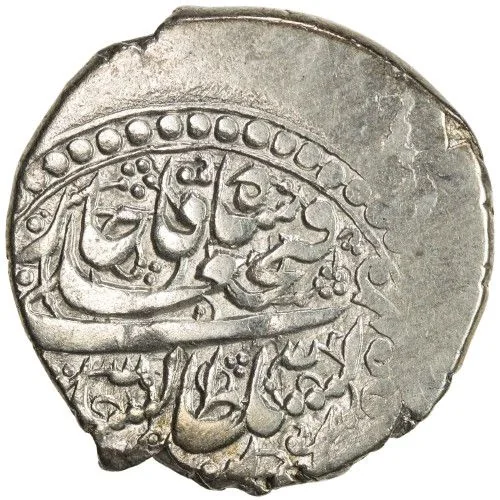
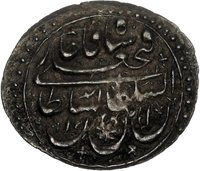
Obverse
Inscription:
السّلطان ابن السّلطان
فتحعلی شاه قاجار
فتحعلی شاه قاجار
Translation:
The Sultan, son of the Sultan, Fath-Ali Shah Qajar
Language: Arabic
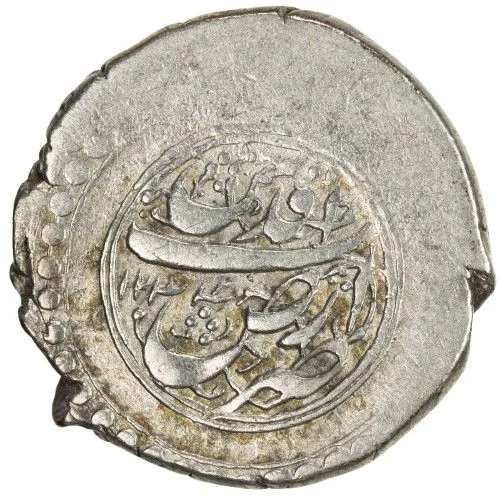
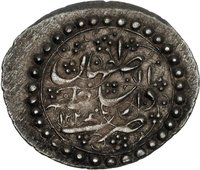
Reverse
Edge
Plain
Mints
| Name | Mark |
|---|---|
| Mashhad Muqaddas | مشهد |
Mintings
| Year | Mint Mark | Mintage | Quality | Collection |
|---|---|---|---|---|
| 1810 | — | — | ||
| 1812 | — | — | ||
| 1813 | — | — | ||
| 1814 | — | — | ||
| 1815 | — | — | ||
| 1819 | — | — |
Historical background
In 1810, Iran was under the rule of the Qajar dynasty, specifically Fath-Ali Shah Qajar. The country's monetary system was a complex and fragmented reflection of its decentralized political structure and struggling economy. The primary unit was the silver qiran (also spelled kran), but the currency landscape was a chaotic mix of domestic and foreign coins. Domestic minting was inconsistent, with provincial authorities and even local khans often issuing their own copper coins (fulus) for small-scale trade, leading to wide variations in weight, purity, and value from region to region.
This period was marked by severe currency depreciation and chronic shortages of specie (hard coin). Decades of war, territorial losses, and economic isolation had drained the treasury. Crucially, there was a massive outflow of silver to pay for imports—particularly European manufactured goods and Indian textiles—while exports like silk and carpets were insufficient to balance trade. This created a persistent trade deficit, physically depleting the nation's silver reserves. Consequently, the value of the copper fulus, on which the common people relied, plummeted dramatically against the silver qiran, causing inflation and hardship for the urban and rural poor.
Furthermore, a multitude of foreign silver coins, most notably the Russian ruble and the British Indian rupee, circulated widely, especially in border regions and major trading ports like Bushehr. These foreign currencies were often preferred in commerce due to their more reliable and standardized silver content, undermining confidence in the domestic coinage. The central government in Tehran had limited ability to impose a unified monetary policy, leaving Iran's early 19th-century economy hampered by a dysfunctional and unstable currency system that mirrored the state's broader administrative and fiscal weaknesses.
This period was marked by severe currency depreciation and chronic shortages of specie (hard coin). Decades of war, territorial losses, and economic isolation had drained the treasury. Crucially, there was a massive outflow of silver to pay for imports—particularly European manufactured goods and Indian textiles—while exports like silk and carpets were insufficient to balance trade. This created a persistent trade deficit, physically depleting the nation's silver reserves. Consequently, the value of the copper fulus, on which the common people relied, plummeted dramatically against the silver qiran, causing inflation and hardship for the urban and rural poor.
Furthermore, a multitude of foreign silver coins, most notably the Russian ruble and the British Indian rupee, circulated widely, especially in border regions and major trading ports like Bushehr. These foreign currencies were often preferred in commerce due to their more reliable and standardized silver content, undermining confidence in the domestic coinage. The central government in Tehran had limited ability to impose a unified monetary policy, leaving Iran's early 19th-century economy hampered by a dysfunctional and unstable currency system that mirrored the state's broader administrative and fiscal weaknesses.
✨ Legendary