

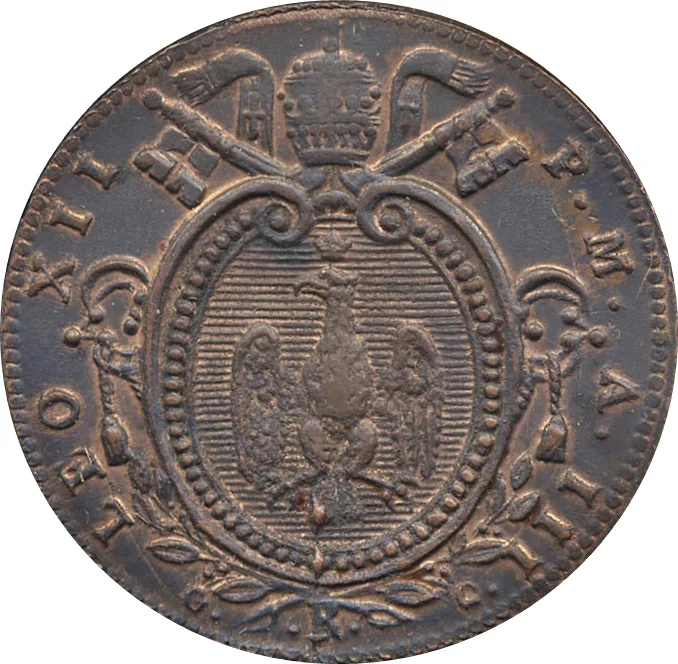
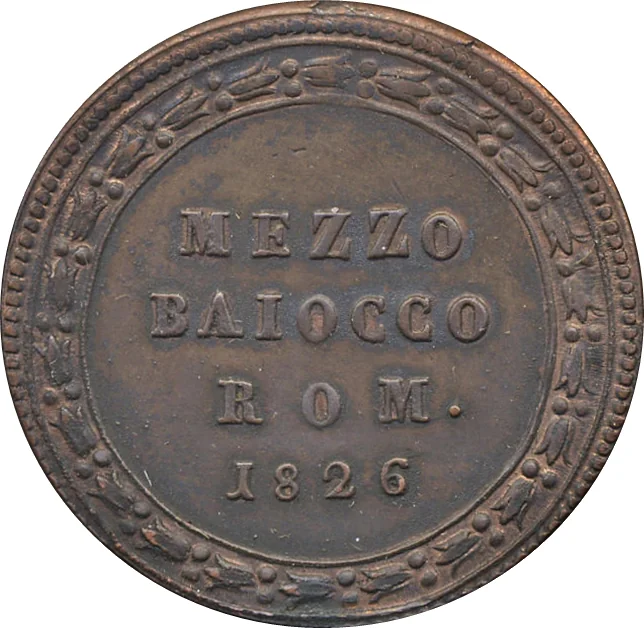
½ baiocco – Papal States
Add to wishlist
Vatican City
Context
Years: 1825–1826
Country: Vatican City
Issuer: Papal States
Ruler: Leo XII
Currency:
(1534—1835)
Demonetized: Yes
Material
References
KM: #
Numista: #46519
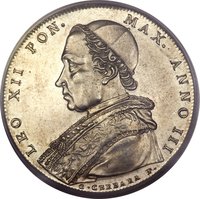
Obverse
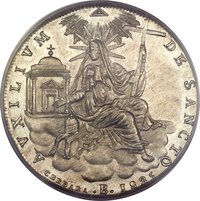
Reverse
Edge
Plain
Mintings
| Year | Mint Mark | Mintage | Quality | Collection |
|---|---|---|---|---|
| 1825 | IIR | — | ||
| 1826 | IIIR | — |
Historical background
In 1825, the Papal States' monetary system was a complex and fragmented relic of its medieval and early modern past, reflecting the temporal power's decentralized political structure. There was no single, unified Papal currency. Instead, the primary silver-based coin was the scudo (divided into 100 baiocchi), which circulated alongside a multitude of older regional and municipal coinages from cities like Bologna and Ancona. Furthermore, the Roman scudo itself had different values for coin (scudo di moneta) and account (scudo di cambio), creating confusion in commerce. This proliferation of coins of varying intrinsic values and exchange rates made trade cumbersome and facilitated widespread counterfeiting.
The broader financial context was one of severe strain. The Papal treasury, administered conservatively and often inefficiently, was burdened by the costs of maintaining the state's administration and a large clerical bureaucracy. Revenues from land taxes and customs were insufficient, leading to chronic budget deficits. While not experiencing hyperinflation, the state frequently resorted to manipulating the copper coinage (moneta erosa) used in everyday transactions by the poor, debasing its metal content to generate seigniorage revenue. This practice eroded public trust and effectively functioned as a regressive tax on the common people.
Consequently, the monetary situation in 1825 was symptomatic of the Papal States' broader economic stagnation and resistance to modernization. The lack of a uniform, trusted currency hindered internal trade and economic development, contrasting sharply with the more streamlined systems emerging in Northern Europe. This financial disarray, coupled with rigid governance, contributed to the growing discontent that would fuel unrest in the decades leading up to the Revolutions of 1848 and the eventual dissolution of the Papal States as a political entity.
The broader financial context was one of severe strain. The Papal treasury, administered conservatively and often inefficiently, was burdened by the costs of maintaining the state's administration and a large clerical bureaucracy. Revenues from land taxes and customs were insufficient, leading to chronic budget deficits. While not experiencing hyperinflation, the state frequently resorted to manipulating the copper coinage (moneta erosa) used in everyday transactions by the poor, debasing its metal content to generate seigniorage revenue. This practice eroded public trust and effectively functioned as a regressive tax on the common people.
Consequently, the monetary situation in 1825 was symptomatic of the Papal States' broader economic stagnation and resistance to modernization. The lack of a uniform, trusted currency hindered internal trade and economic development, contrasting sharply with the more streamlined systems emerging in Northern Europe. This financial disarray, coupled with rigid governance, contributed to the growing discontent that would fuel unrest in the decades leading up to the Revolutions of 1848 and the eventual dissolution of the Papal States as a political entity.
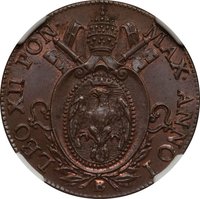
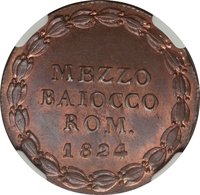
💎 Extremely Rare