

30000 Lira – Turkey
Non-circulating coins
Commemoration: International Year of the Scout
Turkey
Context

Material
References
KM: #Click to copy to clipboard961
Numista: #46515
Value
Exchange value: 30000 TRL
Bullion value: $2440.34
Inflation-adjusted value: 18282569613.30 TRL
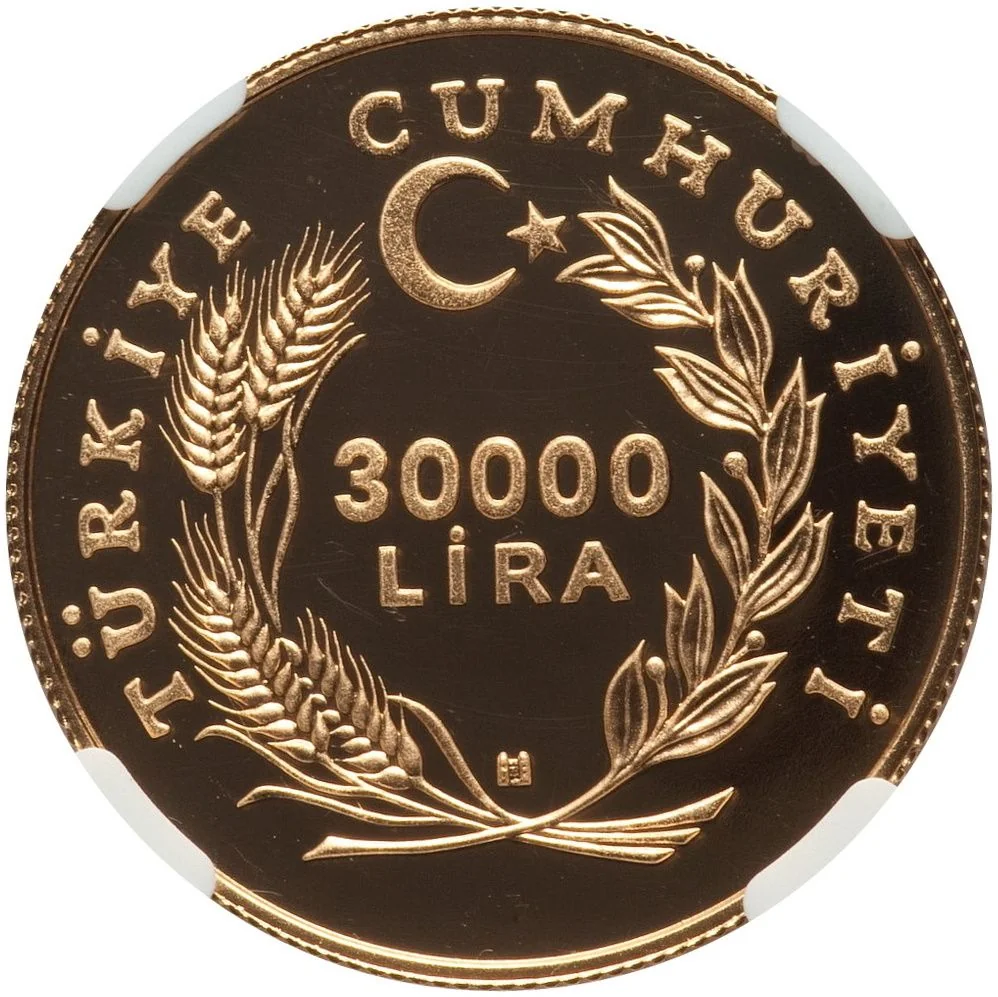
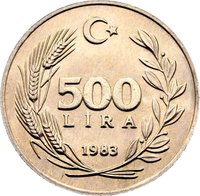
Obverse
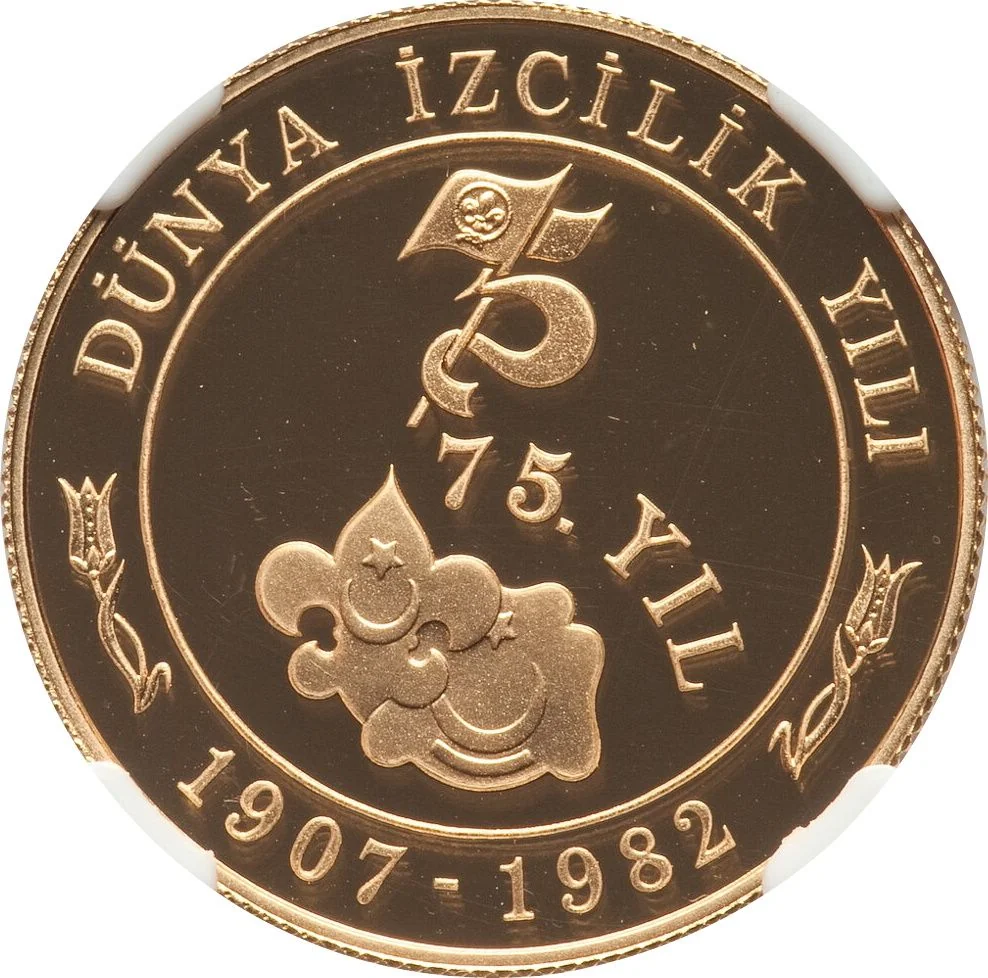
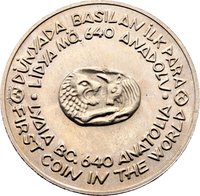
Reverse
Edge
Mints
| Name | Mark |
|---|---|
| Tower Mint | — |
Mintings
| Year | Mint Mark | Mintage | Quality | Collection |
|---|---|---|---|---|
| 1982 | — | 167 | Proof |
Historical background
In 1982, Turkey was in the midst of a profound economic and political transition following the military coup of September 1980. The currency situation was characterized by severe instability, high inflation, and a heavily controlled exchange rate regime. The Turkish Lira (TL) was subject to significant devaluations, with an official rate that failed to keep pace with rampant inflation, which hovered around 30-40% annually. This created a thriving black market for foreign currency, particularly US dollars, as citizens and businesses sought a safe haven from the lira's rapidly eroding purchasing power.
The economic backdrop was one of deep crisis, stemming from the late 1970s, which had featured oil shocks, chronic current account deficits, and foreign debt shortages. The post-coup government, alongside technocrats from institutions like the IMF and World Bank, implemented a stringent stabilization program in January 1980 aimed at shifting from an import-substitution industrialization model to an export-oriented one. A critical component was a deliberate, managed devaluation of the lira to boost export competitiveness. However, by 1982, the benefits were still emerging, and the economy remained under strict control, with interest rates and capital flows heavily regulated by the state.
Constitutionally, 1982 was significant as the new constitution drafted under military oversight was approved by referendum, centralizing authority and providing a legal framework for the economic restructuring. The currency's value was not freely determined by the market but was set by the Central Bank of the Republic of Turkey, which periodically announced large devaluations. This environment of controlled devaluation, high inflation, and limited convertibility defined the lira's situation, setting the stage for the more liberalizing reforms, including greater exchange rate flexibility, that would follow in the mid-1980s under Prime Minister Turgut Özal.
The economic backdrop was one of deep crisis, stemming from the late 1970s, which had featured oil shocks, chronic current account deficits, and foreign debt shortages. The post-coup government, alongside technocrats from institutions like the IMF and World Bank, implemented a stringent stabilization program in January 1980 aimed at shifting from an import-substitution industrialization model to an export-oriented one. A critical component was a deliberate, managed devaluation of the lira to boost export competitiveness. However, by 1982, the benefits were still emerging, and the economy remained under strict control, with interest rates and capital flows heavily regulated by the state.
Constitutionally, 1982 was significant as the new constitution drafted under military oversight was approved by referendum, centralizing authority and providing a legal framework for the economic restructuring. The currency's value was not freely determined by the market but was set by the Central Bank of the Republic of Turkey, which periodically announced large devaluations. This environment of controlled devaluation, high inflation, and limited convertibility defined the lira's situation, setting the stage for the more liberalizing reforms, including greater exchange rate flexibility, that would follow in the mid-1980s under Prime Minister Turgut Özal.
✨ Legendary