

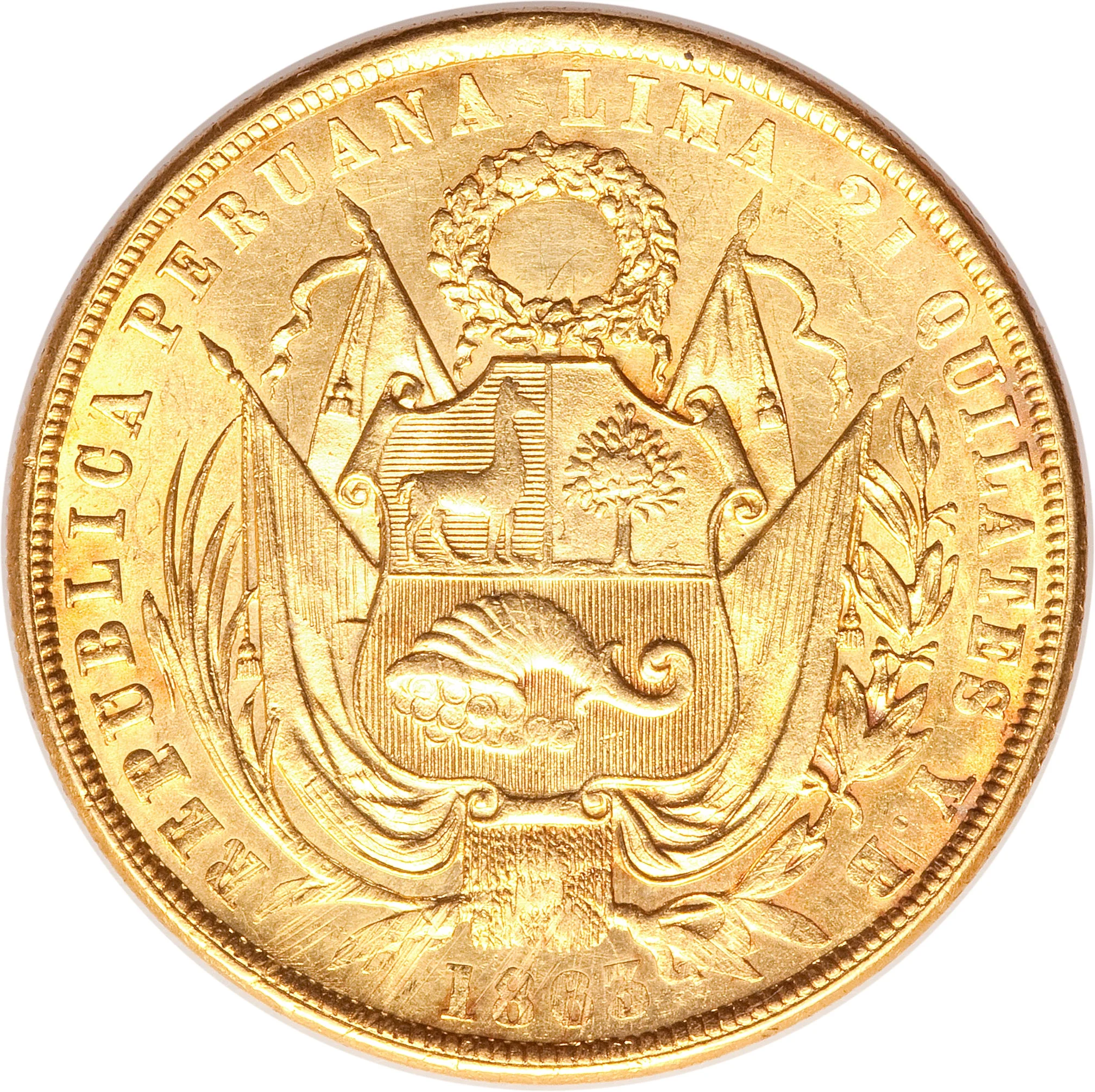
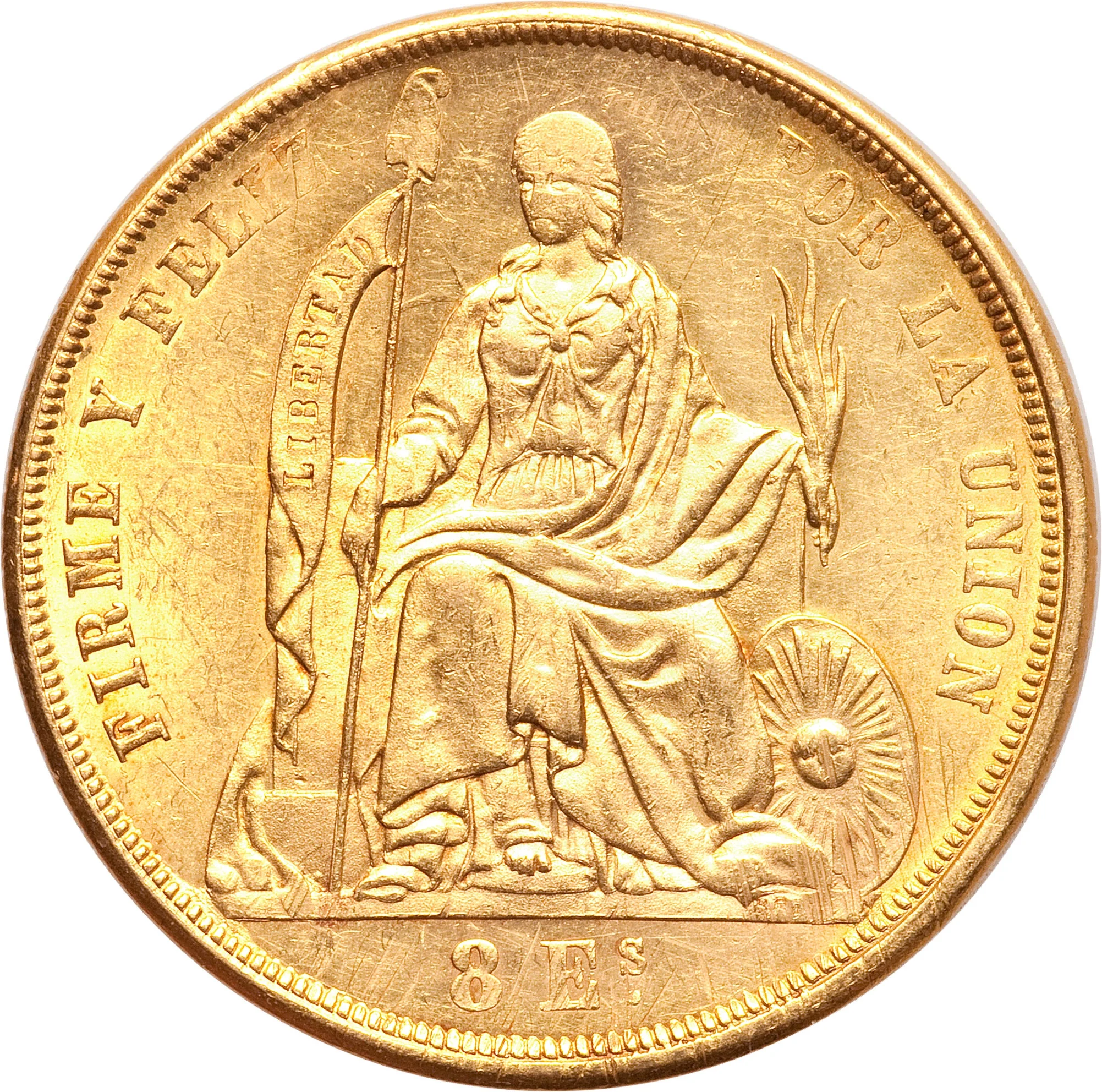
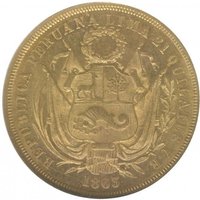
Obverse
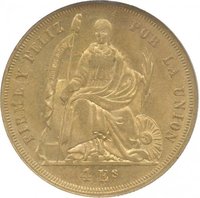
Reverse
Edge
Mints
| Name | Mark |
|---|---|
| Lima | — |
Mintings
| Year | Mint Mark | Mintage | Quality | Collection |
|---|---|---|---|---|
| 1862 | YB | — | ||
| 1863 | YB | — |
Historical background
In 1862, Peru's currency situation was characterized by a fragmented and complex system, a legacy of the early post-independence period. The official currency was the sol, introduced in the 1860 monetary law, which aimed to establish a decimal-based, silver standard. However, this new system coexisted with a plethora of older coins still in circulation, including Spanish colonial reales, Bolivian and other South American coins, and even French francs and British sovereigns from international trade. This multiplicity created significant challenges for commerce, as merchants and the state constantly had to calculate exchange rates between different metallic contents, leading to inefficiency and confusion.
The underlying economic context was one of growing guano-driven prosperity, which provided the state with substantial revenue. This boom financed large infrastructure projects and government spending, but it also increased the money supply through the import of foreign coins and the minting of new Peruvian currency. Notably, the period saw the issuance of the first Peruvian gold coins (libra peruana de oro) alongside the silver sol, reflecting the state's increased wealth but further complicating the bimetallic system. The abundance of specie, however, did not translate into a stable or unified monetary system, as the value of coins was ultimately tied to their intrinsic metal content rather than a robust centralized banking authority.
Consequently, the government of President Ramón Castilla and his successors recognized the need for reform. The 1862-1863 period was a transitional phase where the legal framework for a modern national currency was in place, but the practical reality was a disjointed circulation of multiple coinages. Efforts to establish a national bank (the Banco de la Emisión would be attempted later in the decade) were nascent, meaning the country lacked a paper currency or a central institution to regulate credit and unify the monetary environment. Thus, Peru in 1862 was caught between a lucrative export boom and the arduous task of building the financial institutions necessary for a modern economy.
The underlying economic context was one of growing guano-driven prosperity, which provided the state with substantial revenue. This boom financed large infrastructure projects and government spending, but it also increased the money supply through the import of foreign coins and the minting of new Peruvian currency. Notably, the period saw the issuance of the first Peruvian gold coins (libra peruana de oro) alongside the silver sol, reflecting the state's increased wealth but further complicating the bimetallic system. The abundance of specie, however, did not translate into a stable or unified monetary system, as the value of coins was ultimately tied to their intrinsic metal content rather than a robust centralized banking authority.
Consequently, the government of President Ramón Castilla and his successors recognized the need for reform. The 1862-1863 period was a transitional phase where the legal framework for a modern national currency was in place, but the practical reality was a disjointed circulation of multiple coinages. Efforts to establish a national bank (the Banco de la Emisión would be attempted later in the decade) were nascent, meaning the country lacked a paper currency or a central institution to regulate credit and unify the monetary environment. Thus, Peru in 1862 was caught between a lucrative export boom and the arduous task of building the financial institutions necessary for a modern economy.
💎 Extremely Rare