

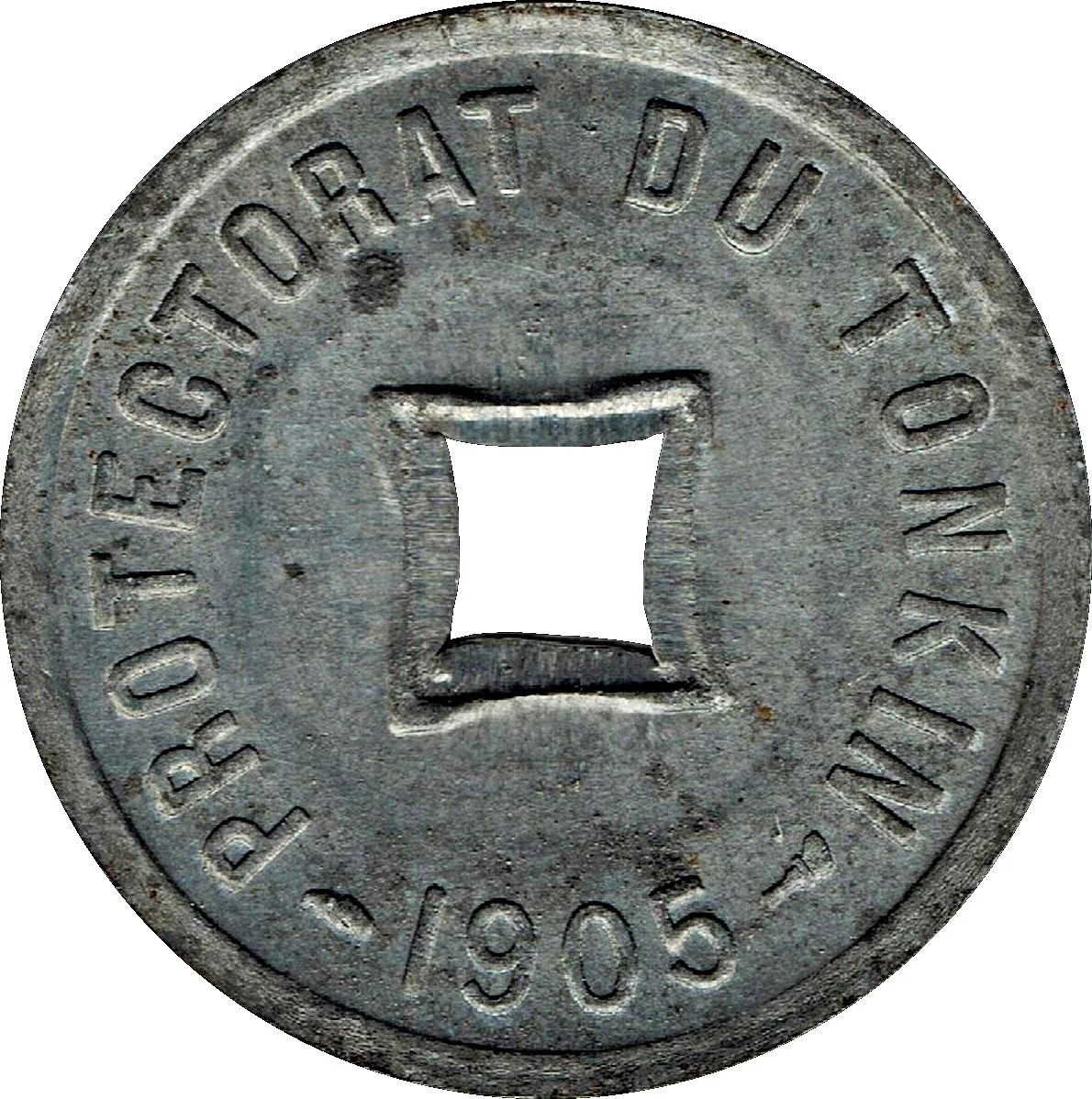
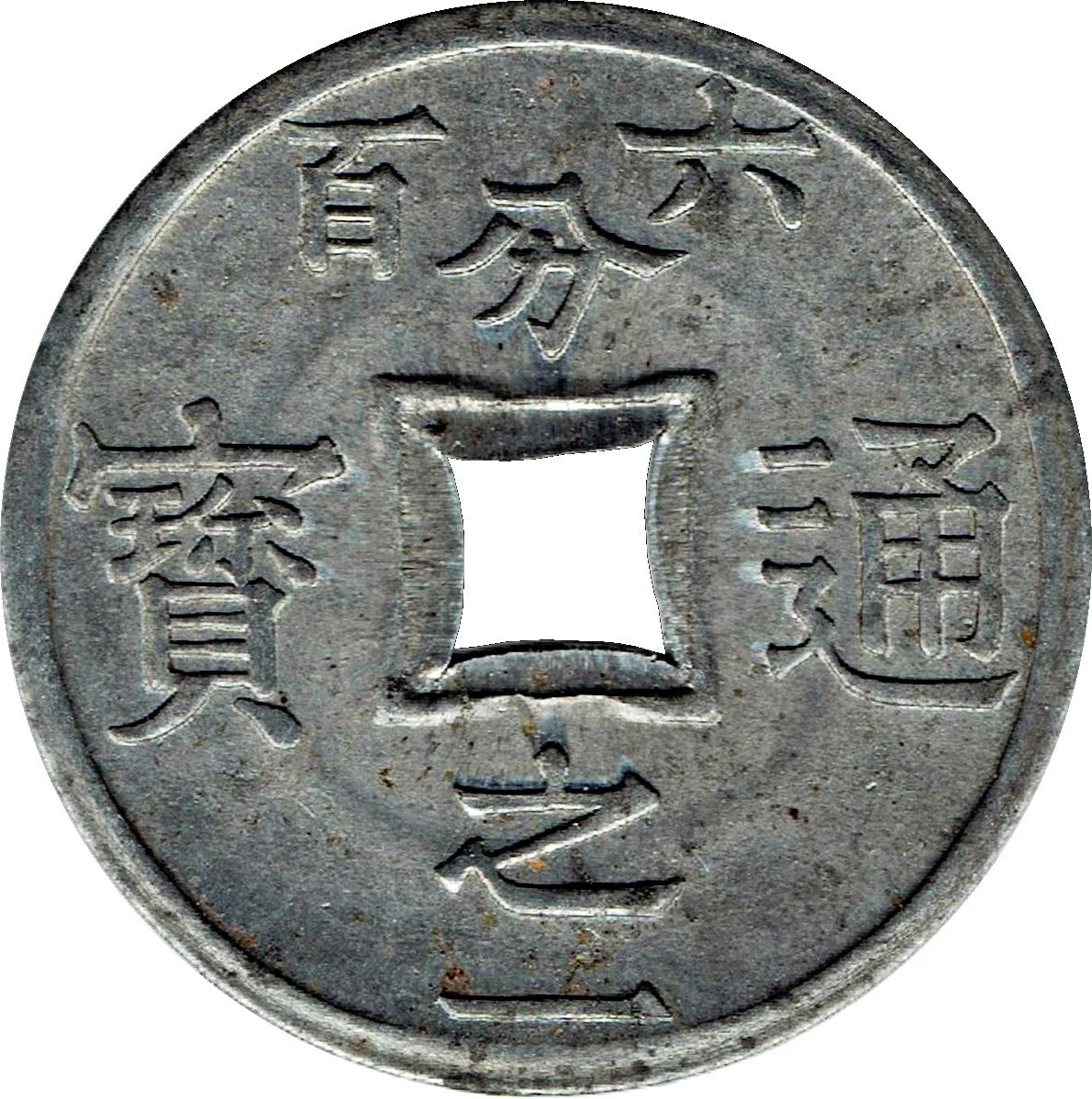
1⁄600 piastre – Tonkin
Add to wishlist
Vietnam
Context
Material
Diameter: 25 mm
Weight: 2.1 g
Thickness: 0.9 mm
Shape: Round with a square hole
Composition: Zinc
Magnetic: No
Technique: Milled
Alignment: Coin alignment
flip
References
KM: #
Numista: #4637
Value
Exchange value: 1⁄600 ICFP
Obverse
Reverse
Description:
Seven Chinese characters encircle the hole.
Inscription:
百分六
寶通
之
一
寶通
之
一
Translation:
Six percent
of
Baotong
of
Baotong
Scripts: Chinese (traditional, regular script)
Language: Chinese
Edge
Plain
Mints
| Name | Mark |
|---|---|
| Monnaie de Paris | — |
Mintings
| Year | Mint Mark | Mintage | Quality | Collection |
|---|---|---|---|---|
| 1905 | — | 60,000,000 |
Historical background
In 1905, Tonkin, as part of French Indochina, operated under a complex and imposed colonial monetary system. The official currency was the French Indochinese Piastre (ICPi), introduced by the Banque de l'Indochine in 1885. This silver-based piastre was not tied to the French franc but to the value of silver on the international market, giving it a high value relative to regional currencies. Its primary purpose was to facilitate French trade and administrative control, effectively integrating Tonkin into the French economic sphere while severing its traditional monetary links with China.
Locally, however, the monetary reality was fragmented. Alongside the piastre, a plethora of older currencies remained in widespread circulation, particularly in rural areas and daily small-scale transactions. These included zinc and copper-alloy sapèques (cash coins) of varying origins, as well as Mexican and Spanish silver dollars that had historically dominated regional trade. This created a dual-system where large government and commercial dealings used the piastre, while the populace navigated a confusing array of coins with fluctuating exchange rates, often to their disadvantage when converting to the colonial currency.
The situation was a source of economic strain and reflected colonial priorities. The Banque de l'Indochine held a monopoly on issuing the piastre, generating significant profit through seigniorage. For the Vietnamese population, the system often meant de facto devaluation of their holdings in traditional coinage and increased difficulty in paying taxes, which were demanded in piastres. Thus, the currency landscape of 1905 Tonkin was not merely a financial framework but a tangible instrument of colonial power, economic extraction, and social disruption.
Locally, however, the monetary reality was fragmented. Alongside the piastre, a plethora of older currencies remained in widespread circulation, particularly in rural areas and daily small-scale transactions. These included zinc and copper-alloy sapèques (cash coins) of varying origins, as well as Mexican and Spanish silver dollars that had historically dominated regional trade. This created a dual-system where large government and commercial dealings used the piastre, while the populace navigated a confusing array of coins with fluctuating exchange rates, often to their disadvantage when converting to the colonial currency.
The situation was a source of economic strain and reflected colonial priorities. The Banque de l'Indochine held a monopoly on issuing the piastre, generating significant profit through seigniorage. For the Vietnamese population, the system often meant de facto devaluation of their holdings in traditional coinage and increased difficulty in paying taxes, which were demanded in piastres. Thus, the currency landscape of 1905 Tonkin was not merely a financial framework but a tangible instrument of colonial power, economic extraction, and social disruption.
🌱 Fairly Common