

10 euro (Benedictine Abbey in Hronský Beňadik) – Slovakia
Add to wishlist
Non-circulating coins
Commemoration: 950th Anniversary of the Establishment of the Benedictine Abbey in Hronský Beňadik
Slovakia
Context
Year: 2025
Issuer: Slovakia
Issuing organization: National Bank of Slovakia
Period:
(since 1993)
Currency:
(since 2009)
Total mintage: 15,600
Material
References
KM: #
Numista: #463437
Value
Exchange value: 10 EUR
Bullion value: $39.43
Obverse
Description:
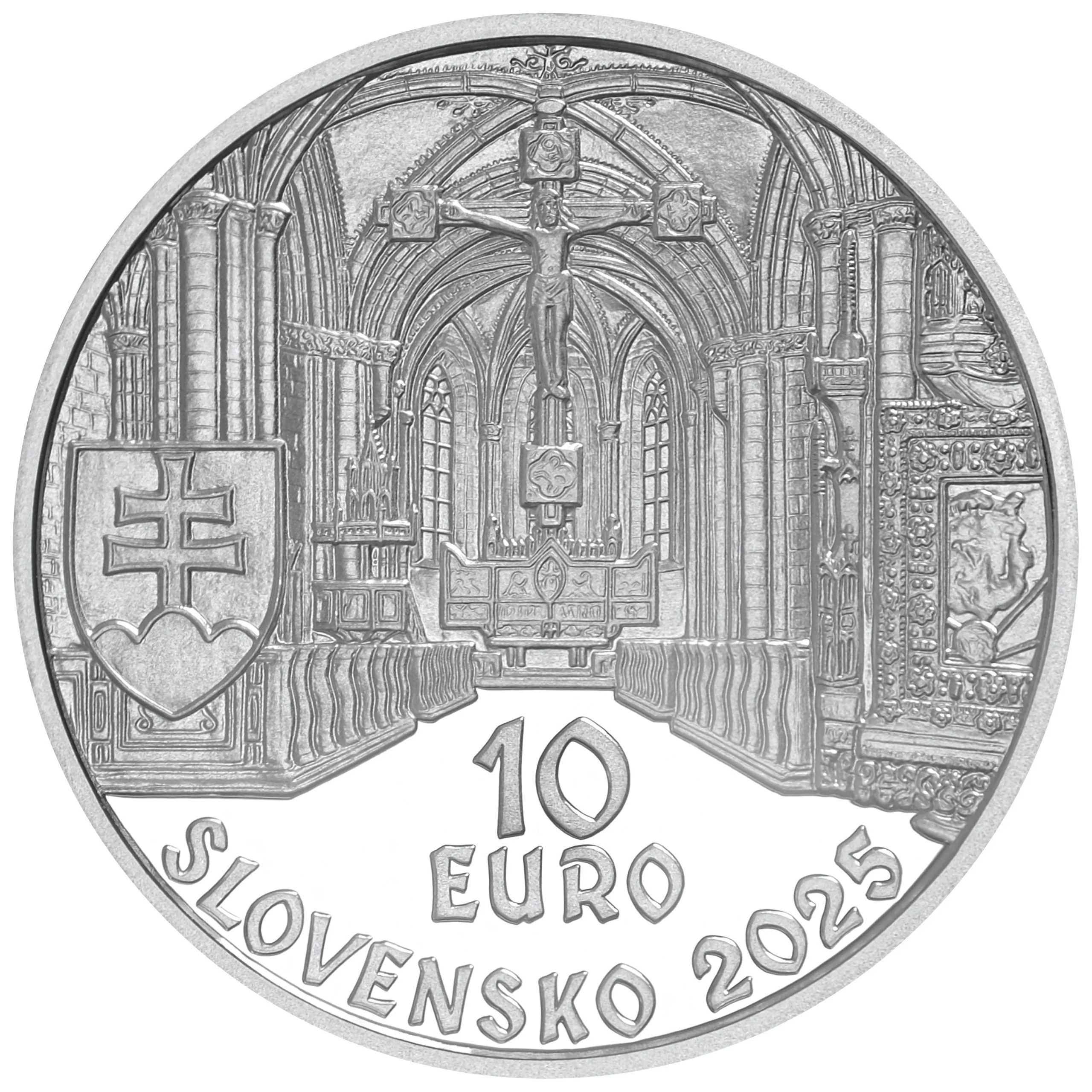
The obverse shows the abbey church's Gothic nave with a central crucifix. The relic of Christ's Blood is on the right, and the Slovak coat of arms is on the left. "SLOVENSKO 2025" is at the bottom, with "10" and "EURO" above it.
Inscription:
10
EURO
SLOVENSKO 2025
EURO
SLOVENSKO 2025
Translation:
10
EURO
SLOVAKIA 2025
EURO
SLOVAKIA 2025
Script: Latin
Engraver: Dalibor Schmidt
Designer: Tomáš Lamač
Reverse
Description:
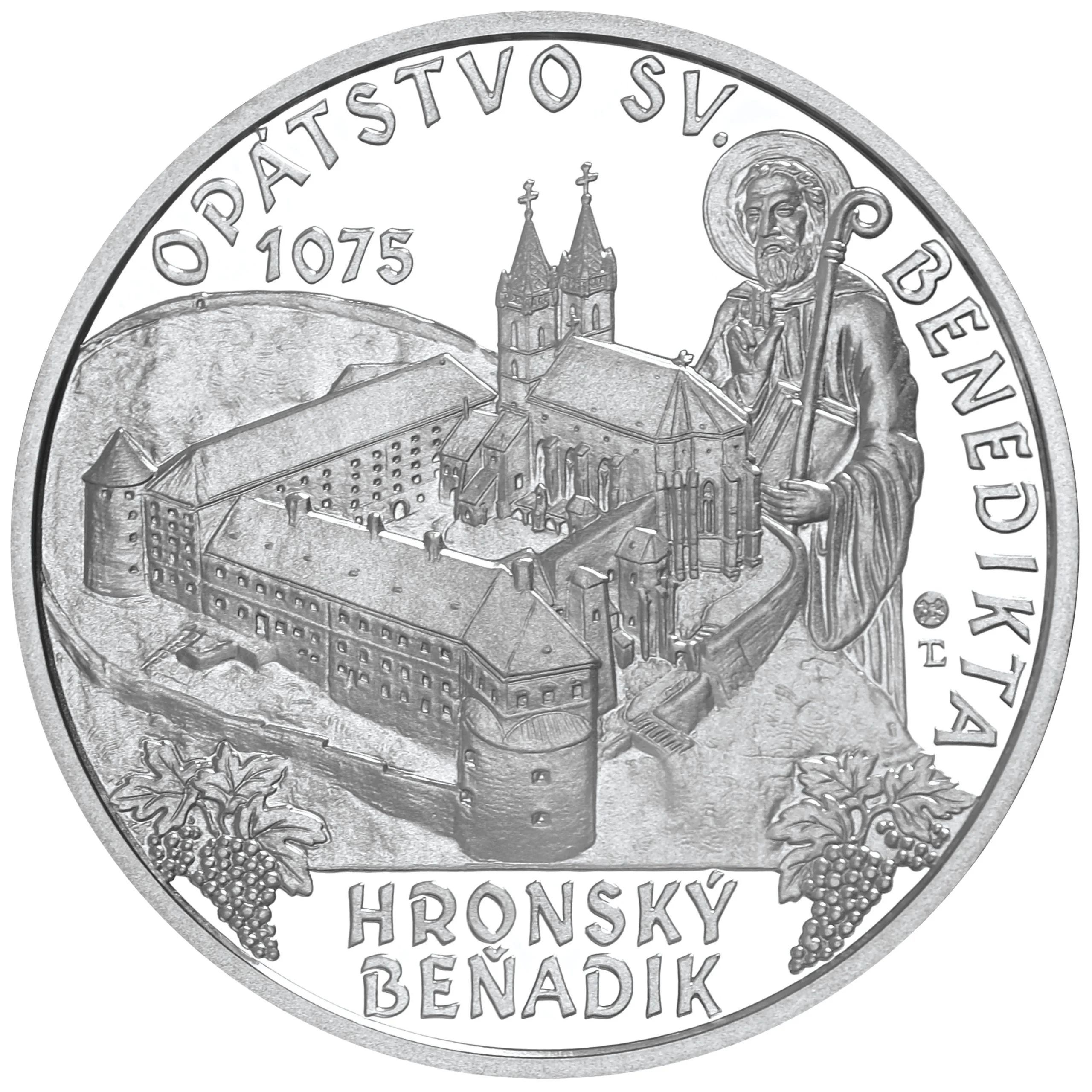
The reverse depicts the fortified abbey from above, with St Benedict to the right. The inscription "OPÁTSTVO SV. BENEDIKTA" curves along the top and right edge, with the year "1075" at upper left. "HRONSKÝ BEŇADIK" appears at bottom, flanked by grapes. The Kremnica Mint mark "MK" and designer Tomáš Lamač's initials "TL" are at lower right.
Inscription:
OPÁTSTVO SV. BENEDIKTA
1075
TL
HRONSKÝ BEŇADIK
1075
TL
HRONSKÝ BEŇADIK
Translation:
Abbey of St. Benedict
1075
TL
Hronský Beňadik
1075
TL
Hronský Beňadik
Script: Latin
Engraver: Dalibor Schmidt
Designer: Tomáš Lamač
Edge
Lettered
Legend:
• ORA ET LABORA – CRUX SACRA SIT MIHI LUX
Mints
| Name | Mark |
|---|---|
| Kremnica | (MK) |
Mintings
| Year | Mint Mark | Mintage | Quality | Collection |
|---|---|---|---|---|
| 2025 | MK | 4,900 | ||
| 2025 | MK | 10,700 | Proof |
Historical background
In 2025, Slovakia remains a committed member of the Eurozone, with the euro (EUR) as its sole legal tender since its adoption in 2009. The currency situation is characterized by stability and full integration into the European Central Bank's (ECB) monetary policy framework. This provides Slovakia with low transaction costs for trade within the bloc, protection against speculative currency attacks, and historically low borrowing rates. However, this also means the National Bank of Slovakia (NBS) has ceded control over interest rate and monetary policy to the Frankfurt-based ECB, which sets policy for the entire currency union, sometimes creating tensions when the economic cycle of the core Eurozone differs from Slovakia's needs.
The primary domestic focus regarding currency in 2025 revolves around managing inflation and its socioeconomic impact. Following the post-pandemic and energy crisis spikes, the ECB's restrictive monetary policy has successfully cooled inflation, but Slovakia's rate often remains slightly above the Eurozone average due to stronger domestic demand and wage growth. Consequently, the key discussions in Bratislava are fiscal, not monetary, centered on government budgets, energy subsidies, and measures to mitigate the cost-of-living pressures that are amplified by the single currency's uniform interest rate environment.
Looking forward, Slovakia's currency situation is inextricably linked to broader European debates. As a member of the "euro periphery," it has a vested interest in the ongoing evolution of the Eurozone's architecture, including discussions on deeper banking and capital markets unions. Domestically, there is little to no political appetite for exiting the euro, which is seen as a cornerstone of the country's economic and geopolitical identity. The main challenges for 2025 and beyond involve enhancing economic convergence with wealthier EU partners and leveraging the stability of the euro to attract investment, particularly in the automotive and technology sectors, while navigating the constraints of a one-size-fits-all monetary policy.
The primary domestic focus regarding currency in 2025 revolves around managing inflation and its socioeconomic impact. Following the post-pandemic and energy crisis spikes, the ECB's restrictive monetary policy has successfully cooled inflation, but Slovakia's rate often remains slightly above the Eurozone average due to stronger domestic demand and wage growth. Consequently, the key discussions in Bratislava are fiscal, not monetary, centered on government budgets, energy subsidies, and measures to mitigate the cost-of-living pressures that are amplified by the single currency's uniform interest rate environment.
Looking forward, Slovakia's currency situation is inextricably linked to broader European debates. As a member of the "euro periphery," it has a vested interest in the ongoing evolution of the Eurozone's architecture, including discussions on deeper banking and capital markets unions. Domestically, there is little to no political appetite for exiting the euro, which is seen as a cornerstone of the country's economic and geopolitical identity. The main challenges for 2025 and beyond involve enhancing economic convergence with wealthier EU partners and leveraging the stability of the euro to attract investment, particularly in the automotive and technology sectors, while navigating the constraints of a one-size-fits-all monetary policy.
💎 Extremely Rare