

3 Euro – Italy
Non-circulating coins
Commemoration: XXV Olympic Winter Games Milan Cortina 2026
Italy
Context
Material
Diameter: 38.61 mm
Weight: 31.1 g
Silver weight: 31.07 g
Shape: Round
Composition: 99.9% Silver
Standard: Silver ounce
Magnetic: No
References
Numista: #463144
Value
Exchange value: 3 EUR = $3.54
Bullion value: $87.89
Inflation-adjusted value: 3.01 EUR
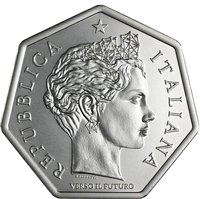
Obverse
Description:
Official logo of the XXV Winter Olympics and the Winter Olympic Committee emblem, arched above with "MILANO CORTINA 2026". Periphery reads "REPUBBLICA ITALIANA" and issue year "2024".
Inscription:
REPUBBLICA ITALIANA
MILANO CORTINA 2026
2024
MILANO CORTINA 2026
2024
Translation:
Italian Republic
Milan Cortina 2026
2024
Milan Cortina 2026
2024
Script: Latin
Language: Italian
Engraver: Silvia Petrassi
Reverse
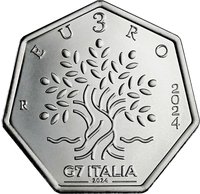
Description:
The XXV Olympic Winter Games mascot is centered, with "3 EURO" above its tail and the Rome Mint mark "R" below. Along the right edge is "GIOCHI OLIMPICI INVERNALI DI MILANO CORTINA 2026", with "ITALIA 2026" on the left. At the bottom is the modeler's signature, "S. P. MOD." for Silvia Petrassi.
Inscription:
3 EURO
R
GIOCHI OLIMPICI INVERNALI DI MILANO CORTINA 2026
ITALIA 2026
S. P. MOD.
R
GIOCHI OLIMPICI INVERNALI DI MILANO CORTINA 2026
ITALIA 2026
S. P. MOD.
Translation:
3 EURO
R
WINTER OLYMPIC GAMES OF MILANO CORTINA 2026
ITALY 2026
S. P. MOD.
R
WINTER OLYMPIC GAMES OF MILANO CORTINA 2026
ITALY 2026
S. P. MOD.
Script: Latin
Language: Italian
Engraver: Silvia Petrassi
Edge
Reeded
Mints
| Name | Mark |
|---|---|
| Rome | R |
Mintings
| Year | Mint Mark | Mintage | Quality | Collection |
|---|---|---|---|---|
| 2024 | R | 3,000 | BU |
Historical background
In 2024, Italy's currency situation remains firmly within the framework of the Eurozone, using the euro (€) as its sole legal tender. The country's monetary policy is set by the European Central Bank (ECB), which has been navigating a challenging period of high inflation. Throughout 2023 and into 2024, the ECB pursued a series of interest rate hikes to combat rising prices, a policy that has significantly impacted Italy due to its high public debt, which exceeds 140% of GDP. The higher borrowing costs have increased the state's debt-servicing expenses, putting pressure on the national budget and creating tension between Rome's fiscal needs and the ECB's inflation-focused mandate.
Domestically, the currency debate often surfaces in political discourse, with fringe voices occasionally questioning euro membership. However, mainstream political parties and the public largely support remaining in the single currency, recognizing its stability benefits despite the constraints. The more pressing financial concern is the spread between Italian and German 10-year government bonds (the BTP-Bund spread), a key indicator of market confidence. While manageable in early 2024, this spread remains a sensitive barometer of investor perception regarding Italy's economic resilience and fiscal discipline within the euro framework.
Looking ahead, Italy's currency stability in 2024 is intertwined with its broader economic performance and EU relations. The government, led by Prime Minister Giorgia Meloni, is focused on managing debt through growth initiatives linked to the EU's post-pandemic Recovery and Resilience Fund (PNRR). The successful implementation of these reforms is crucial for strengthening the economy and, by extension, reinforcing confidence in Italy's position within the Eurozone. Therefore, the "currency situation" is less about the euro itself and more about Italy's ability to sustain growth and fiscal stability under the common currency's rules.
Domestically, the currency debate often surfaces in political discourse, with fringe voices occasionally questioning euro membership. However, mainstream political parties and the public largely support remaining in the single currency, recognizing its stability benefits despite the constraints. The more pressing financial concern is the spread between Italian and German 10-year government bonds (the BTP-Bund spread), a key indicator of market confidence. While manageable in early 2024, this spread remains a sensitive barometer of investor perception regarding Italy's economic resilience and fiscal discipline within the euro framework.
Looking ahead, Italy's currency stability in 2024 is intertwined with its broader economic performance and EU relations. The government, led by Prime Minister Giorgia Meloni, is focused on managing debt through growth initiatives linked to the EU's post-pandemic Recovery and Resilience Fund (PNRR). The successful implementation of these reforms is crucial for strengthening the economy and, by extension, reinforcing confidence in Italy's position within the Eurozone. Therefore, the "currency situation" is less about the euro itself and more about Italy's ability to sustain growth and fiscal stability under the common currency's rules.


✨ Legendary