

1 kuna (Kuna Currency) – Croatia
Add to wishlist
Circulating commemorative coins
Commemoration: 5th anniversary of Kuna Currency
Croatia
Obverse
Description:
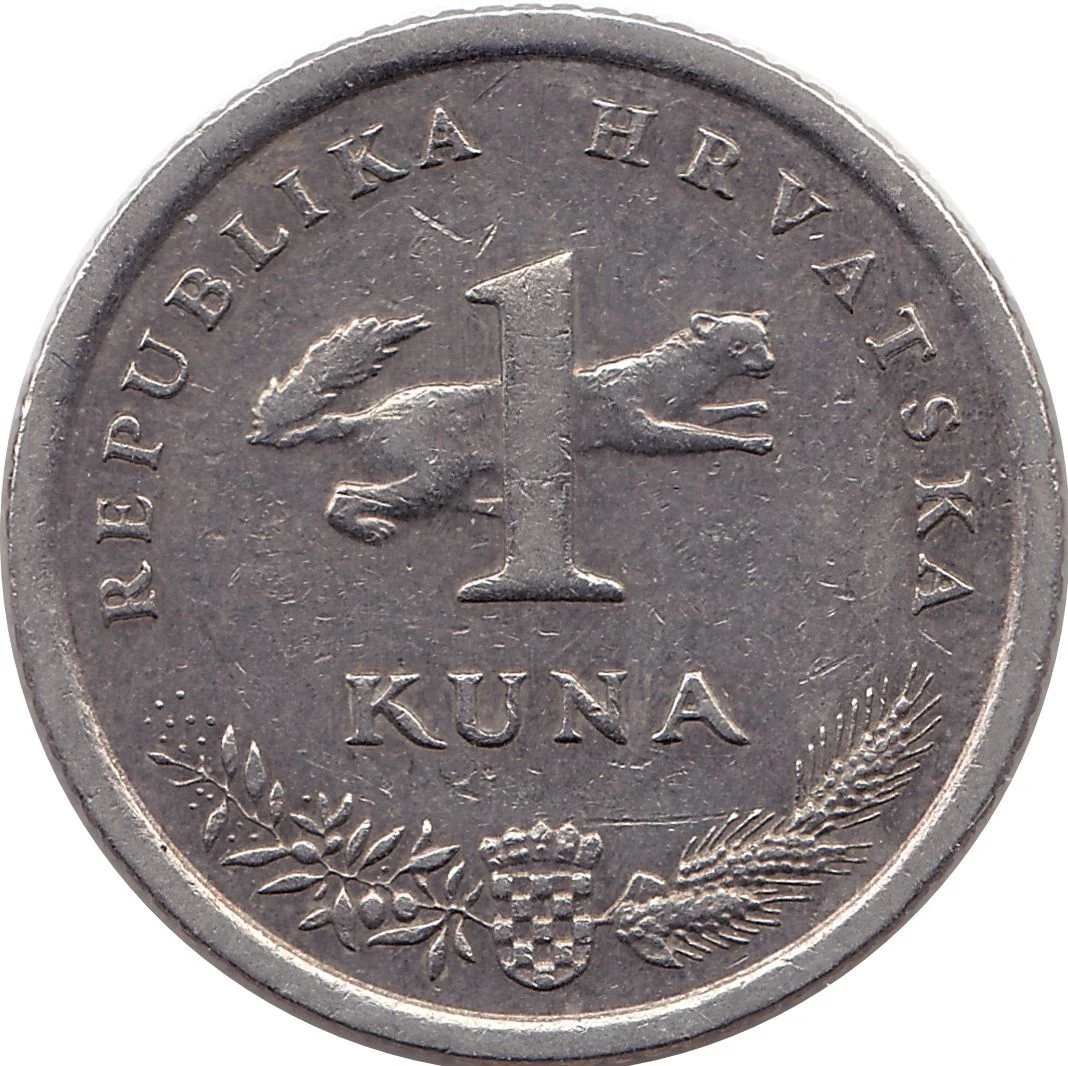
A right-running marten with its numeral value, "KUNA" below, Croatia's name above, and the national arms flanked by wheat and an olive branch.
Inscription:
REPUBLIKA HRVATSKA
1
KUNA
1
KUNA
Translation:
REPUBLIC OF CROATIA
1
Kuna
1
Kuna
Script: Latin
Language: Croatian
Engraver: Kuzma Kovačić
Reverse
Description:
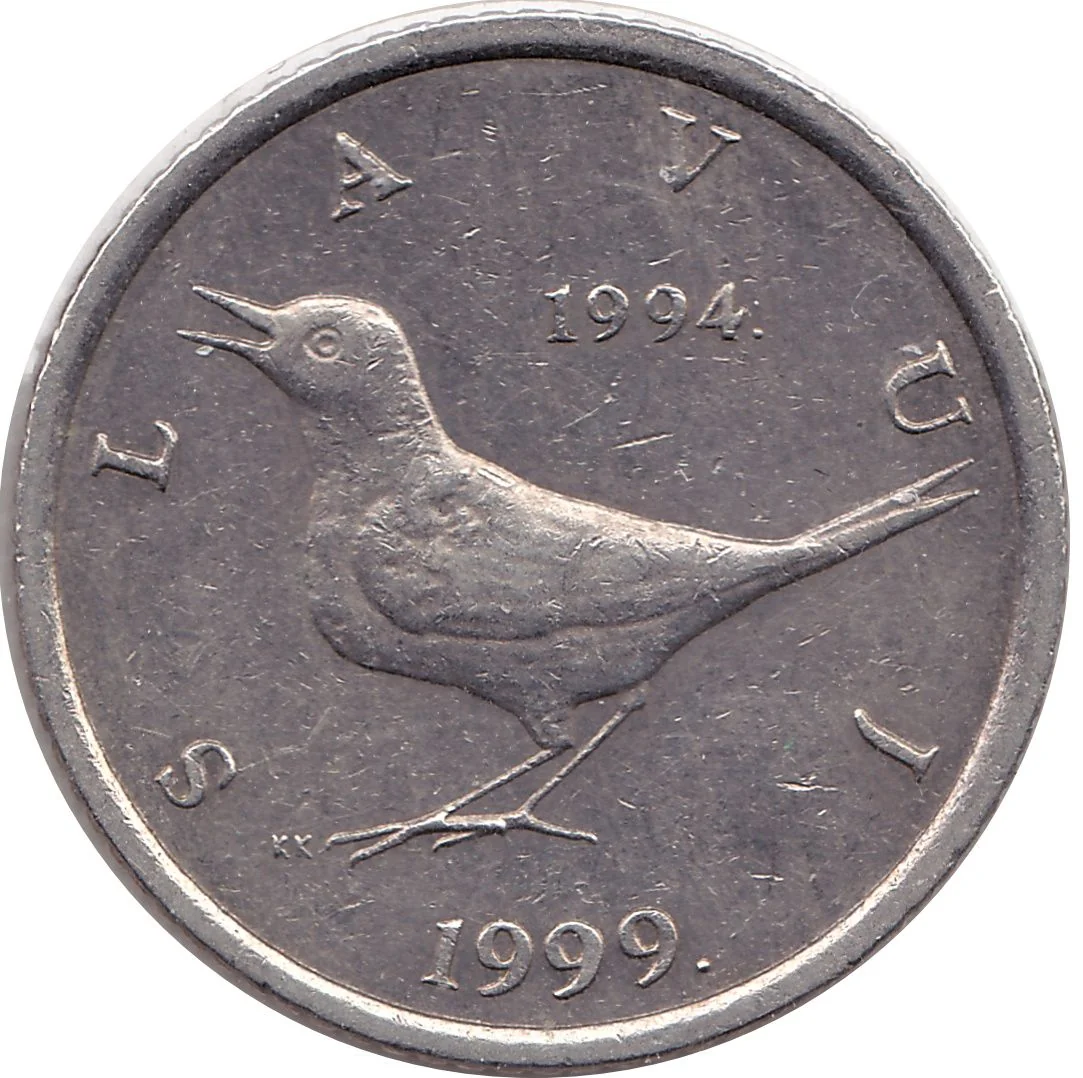
A left-facing nightingale, its name around the edge, with the date and engraver's signature near its foot.
Inscription:
SLAVUJ
1994.
KK
1999.
1994.
KK
1999.
Translation:
Nightingale
1994.
KK
1999.
1994.
KK
1999.
Script: Latin
Language: Serbian
Engraver: Kuzma Kovačić
Edge
Reeded (86 grooves)
Mints
| Name | Mark |
|---|---|
| Croatian Mint | — |
Mintings
| Year | Mint Mark | Mintage | Quality | Collection |
|---|---|---|---|---|
| 1999 | — | 2,000 | Proof | |
| 1999 | — | 27,000,000 |
Historical background
In 1999, Croatia was in a period of post-war economic stabilization and transition, operating under a managed floating exchange rate regime. The national currency, the Croatian kuna (HRK), had been introduced in 1994 to replace the temporary Croatian dinar and to solidify monetary independence following the Homeland War. The Croatian National Bank (CNB) played a dominant role, actively intervening in the foreign exchange market to maintain relative stability and curb excessive volatility. The primary focus was on achieving price stability and building international reserves, with the kuna's value loosely influenced by a reference to the Deutsche Mark, the anchor currency of the era.
The macroeconomic context was challenging, marked by the legacy of war, a high share of public spending, and the ongoing process of privatization. Inflation, which had been hyperinflationary in the early 1990s, was brought under control to a moderate level (approximately 4% in 1999), but this stability was carefully managed and somewhat fragile. The currency regime aimed to foster confidence and facilitate the reconstruction of the banking sector, which had been heavily damaged. However, the economy remained highly euroized, with a significant portion of savings and loans denominated in foreign currency, particularly Deutsche Marks, reflecting lingering public distrust in the domestic currency.
This period set the stage for Croatia's deeper integration into the European economic sphere. The stability of the kuna in 1999, amidst regional uncertainties like the Kosovo War, was considered a success for the CNB. The policies of that year contributed to laying the groundwork for the liberalization of the capital account in the early 2000s and the eventual long-term strategic goal of adopting the euro, a process that would culminate over two decades later in 2023. The managed float of 1999 was thus a transitional phase, balancing the need for internal stability with the external pressures of an economy in recovery.
The macroeconomic context was challenging, marked by the legacy of war, a high share of public spending, and the ongoing process of privatization. Inflation, which had been hyperinflationary in the early 1990s, was brought under control to a moderate level (approximately 4% in 1999), but this stability was carefully managed and somewhat fragile. The currency regime aimed to foster confidence and facilitate the reconstruction of the banking sector, which had been heavily damaged. However, the economy remained highly euroized, with a significant portion of savings and loans denominated in foreign currency, particularly Deutsche Marks, reflecting lingering public distrust in the domestic currency.
This period set the stage for Croatia's deeper integration into the European economic sphere. The stability of the kuna in 1999, amidst regional uncertainties like the Kosovo War, was considered a success for the CNB. The policies of that year contributed to laying the groundwork for the liberalization of the capital account in the early 2000s and the eventual long-term strategic goal of adopting the euro, a process that would culminate over two decades later in 2023. The managed float of 1999 was thus a transitional phase, balancing the need for internal stability with the external pressures of an economy in recovery.
🌱 Very Common