

500 zlotys – Poland
Add to wishlist
Non-circulating coins
Commemoration: Soccer World Cup 1986
Poland
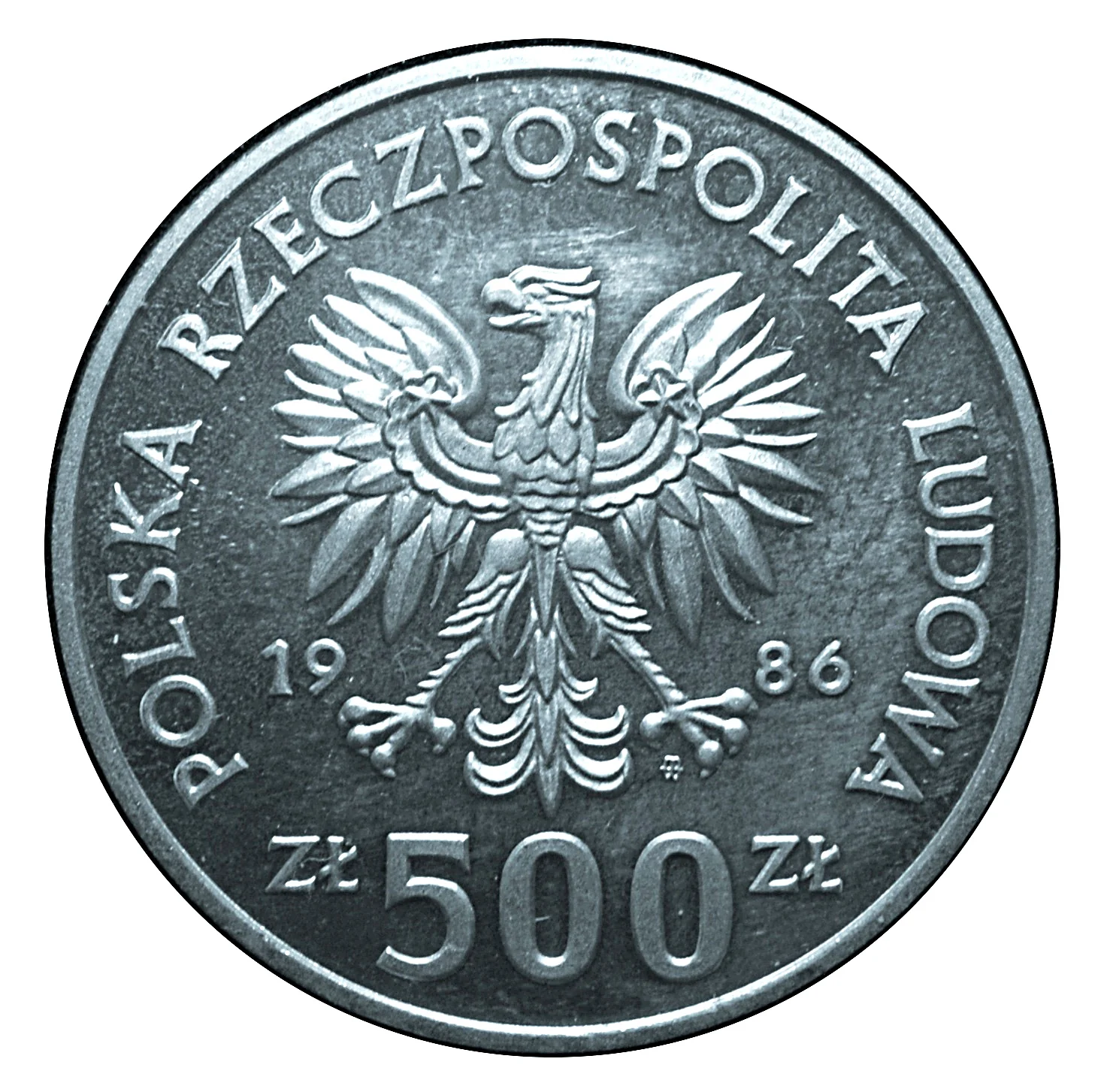
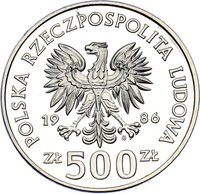
Obverse
Description:
Communist-era Polish emblem.
Inscription:
POLSKA RZECZPOSPOLITA LUDOWA
19 86
mw
ZŁ 500 ZŁ
19 86
mw
ZŁ 500 ZŁ
Translation:
PEOPLE'S REPUBLIC OF POLAND
19 86
mw
500 ZŁ ZŁ
19 86
mw
500 ZŁ ZŁ
Script: Latin
Language: Polish
Engraver: Stanisława Wątróbska-Frindt
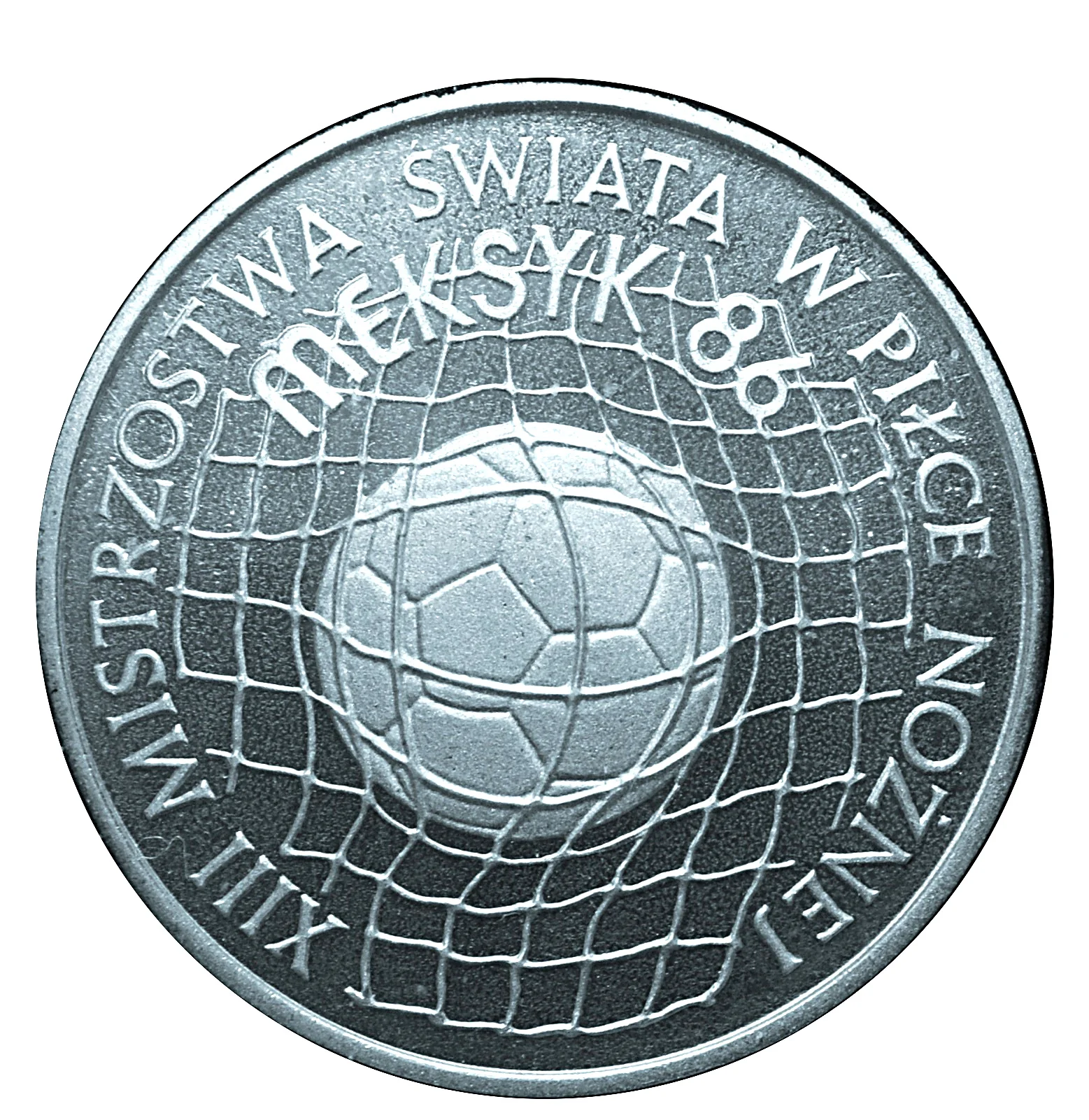
Reverse
Description:
Goal scored.
Inscription:
XIII MISTRZOSTWA ŚWIATA W PIŁCE NOŻNEJ
MEKSYK 86
MEKSYK 86
Translation:
XIII WORLD CHAMPIONSHIPS IN FOOTBALL
MEXICO 86
MEXICO 86
Script: Latin
Language: Polish
Engraver: Ewa Tyc-Karpińska
Edge
Plain
Mints
| Name | Mark |
|---|---|
| Mint of Poland | (MW) |
Mintings
| Year | Mint Mark | Mintage | Quality | Collection |
|---|---|---|---|---|
| 1986 | MW | 15,500 | Proof |
Historical background
In 1986, Poland's currency situation was a direct reflection of the deep crisis of the centrally planned economy under the communist regime. The official currency, the złoty (PLN), was non-convertible and artificially overvalued by the state, with an official exchange rate set at approximately 175 złoty to the US dollar. This rate, however, was a fiction used only for state accounting and limited official transactions, bearing no relation to the currency's actual value or the realities of the domestic economy. Severe shortages of basic goods, fueled by systemic inefficiencies and Western trade sanctions imposed after the 1981 martial law, created a vast black market where the true value of the złoty was determined.
Parallel to the official economy, a robust black market for foreign currency, especially US dollars and Deutsche Marks, thrived. This "bazaar economy" was essential for obtaining scarce goods, either through Pewex hard-currency shops (which sold imported and luxury items for dollars) or from illegal street vendors. Here, the exchange rate told the real story: one US dollar fetched between 400 and 600 złoty on the street, more than triple the official rate. This dollarization provided a lifeline for ordinary citizens and undermined state control, creating a two-tiered economic system where access to hard currency was the key to a better standard of living.
The government, led by General Wojciech Jaruzelski, was caught in a bind. Economic reforms were stalled, and the massive foreign debt inherited from the 1970s (exceeding $30 billion) consumed hard currency reserves needed for imports. While there were discussions within the regime about price reforms and a potential devaluation of the złoty to reflect its true value, any serious move risked triggering hyperinflation and social unrest. Consequently, 1986 represented a period of tense stagnation, with the dysfunctional currency system both a symptom and a cause of Poland's economic paralysis, setting the stage for the more radical reforms and hyperinflation that would follow later in the decade.
Parallel to the official economy, a robust black market for foreign currency, especially US dollars and Deutsche Marks, thrived. This "bazaar economy" was essential for obtaining scarce goods, either through Pewex hard-currency shops (which sold imported and luxury items for dollars) or from illegal street vendors. Here, the exchange rate told the real story: one US dollar fetched between 400 and 600 złoty on the street, more than triple the official rate. This dollarization provided a lifeline for ordinary citizens and undermined state control, creating a two-tiered economic system where access to hard currency was the key to a better standard of living.
The government, led by General Wojciech Jaruzelski, was caught in a bind. Economic reforms were stalled, and the massive foreign debt inherited from the 1970s (exceeding $30 billion) consumed hard currency reserves needed for imports. While there were discussions within the regime about price reforms and a potential devaluation of the złoty to reflect its true value, any serious move risked triggering hyperinflation and social unrest. Consequently, 1986 represented a period of tense stagnation, with the dysfunctional currency system both a symptom and a cause of Poland's economic paralysis, setting the stage for the more radical reforms and hyperinflation that would follow later in the decade.
💎 Very Rare