

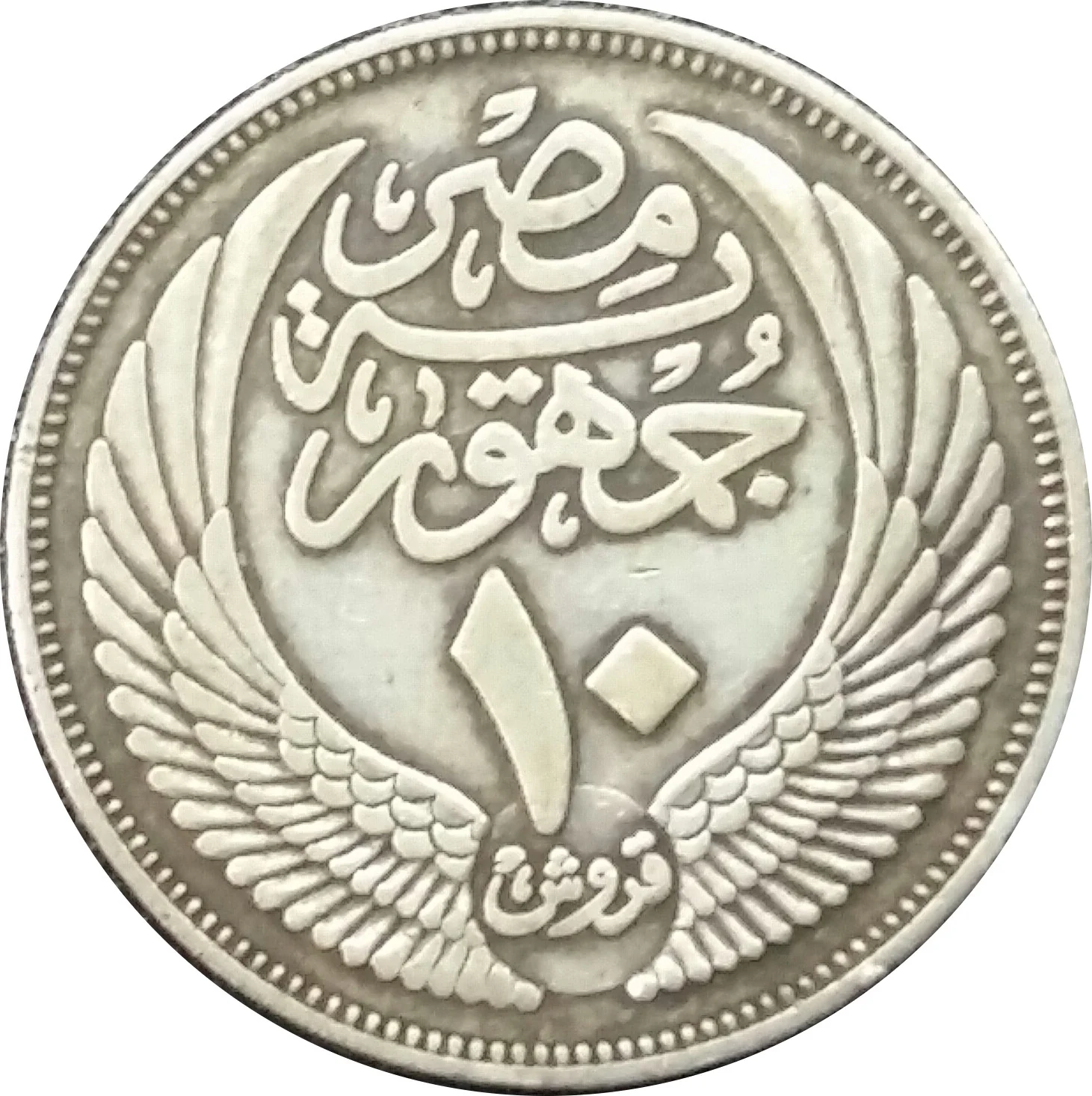
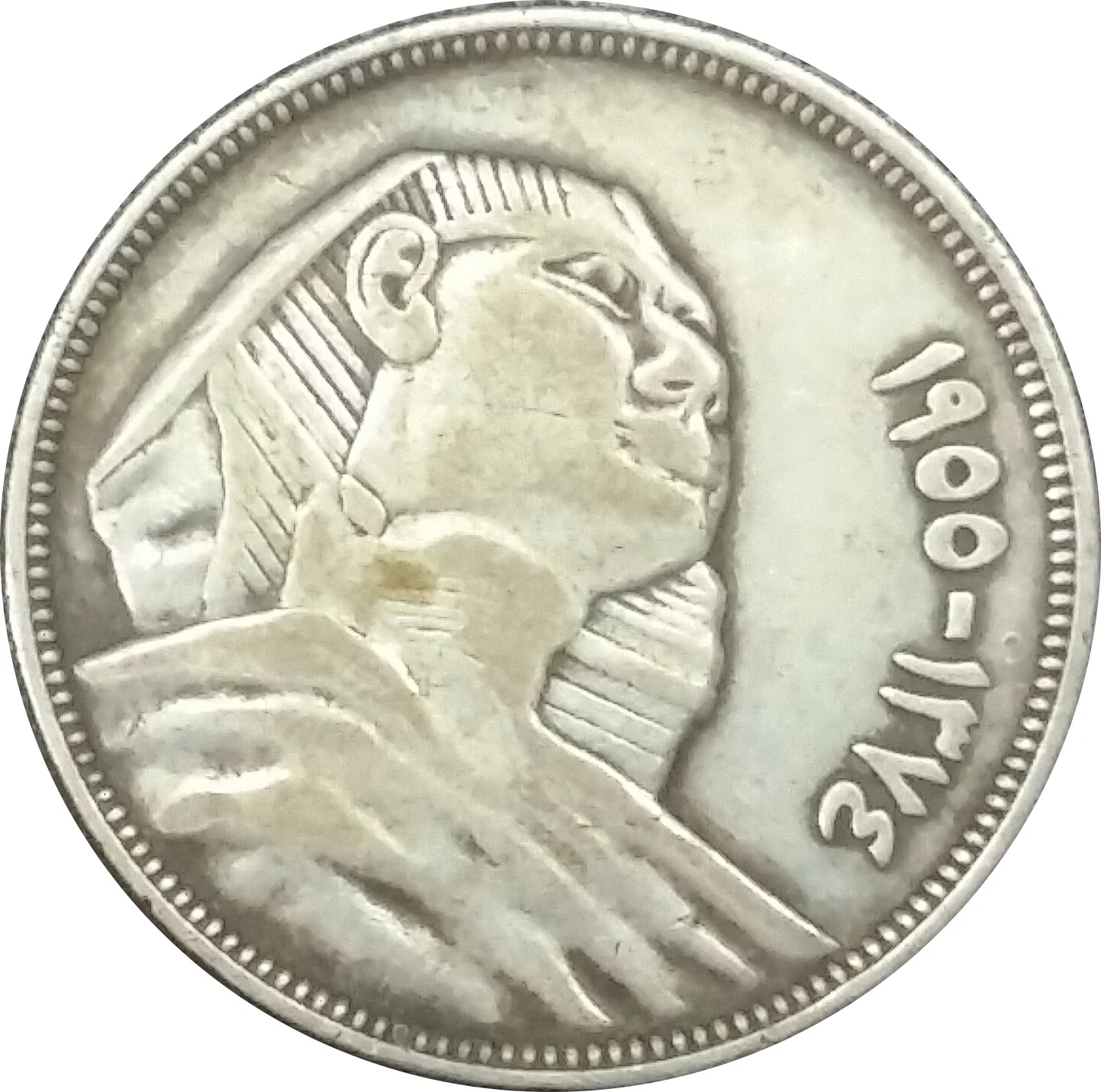
10 piastres – Egypt
Add to wishlist
Egypt
Context
Year: 1955
Islamic (Hijri) Year:: 1374
Issuer: Egypt
Period:
(1953—1958)
Currency:
(since 1916)
Demonetized: Yes
Total mintage: 2,535,000
Material
References
KM: #
Numista: #14824
Value
Exchange value: 0.10 EGP
Bullion value: $10.92
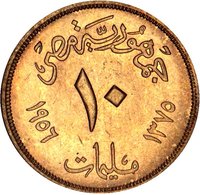
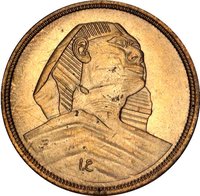
Obverse
Reverse
Edge
Categories
| Mythology> Fantastic animal |
Mints
| Name | Mark |
|---|---|
| Egyptian Mint Authority | — |
Mintings
| Year | Mint Mark | Mintage | Quality | Collection |
|---|---|---|---|---|
| 1955 | — | 2,535,000 |
Historical background
In 1955, Egypt’s currency situation was fundamentally shaped by the political and economic transformation following the 1952 Revolution. The new republican government, led by President Gamal Abdel Nasser, was pursuing an ambitious agenda of economic development, industrialization, and reduced foreign influence. This required significant state expenditure, which was financed in part through expansionary monetary policies. The Egyptian pound, though still officially pegged to sterling and considered relatively stable, faced underlying pressures from growing budget deficits and increased money supply to fund public projects and a large bureaucracy.
Externally, Egypt's currency stability was linked to its reserves in sterling, a legacy of its historical ties to the British Empire. However, political tensions, including the ongoing conflict with Israel and the Western refusal to finance the Aswan High Dam, strained Egypt's foreign exchange position. The government began diverting commerce away from traditional Western partners and towards the Soviet bloc, complicating currency management. While not yet in crisis, the reliance on volatile cotton export revenues and the commitment to costly national projects created a fragile balance, with reserves being carefully managed to avoid a devaluation.
Overall, the currency picture in 1955 was one of controlled tension. The Egyptian pound maintained its official parity, but the economic policies of the new nationalist regime were setting the stage for future challenges. The government's drive for economic sovereignty and military preparedness increasingly prioritized political goals over strict monetary orthodoxy, a trend that would culminate in the major economic nationalizations and more pronounced fiscal strains of the late 1950s and early 1960s.
Externally, Egypt's currency stability was linked to its reserves in sterling, a legacy of its historical ties to the British Empire. However, political tensions, including the ongoing conflict with Israel and the Western refusal to finance the Aswan High Dam, strained Egypt's foreign exchange position. The government began diverting commerce away from traditional Western partners and towards the Soviet bloc, complicating currency management. While not yet in crisis, the reliance on volatile cotton export revenues and the commitment to costly national projects created a fragile balance, with reserves being carefully managed to avoid a devaluation.
Overall, the currency picture in 1955 was one of controlled tension. The Egyptian pound maintained its official parity, but the economic policies of the new nationalist regime were setting the stage for future challenges. The government's drive for economic sovereignty and military preparedness increasingly prioritized political goals over strict monetary orthodoxy, a trend that would culminate in the major economic nationalizations and more pronounced fiscal strains of the late 1950s and early 1960s.
🌱 Fairly Common