

1 dollar (Accession of Manitoba) – Canada
Add to wishlist
Circulating commemorative coins
Commemoration: 100th Anniversary of the Accession of Manitoba
Canada
Context
Material
Diameter: 32.13 mm
Weight: 15.62 g
Thickness: 2.3 mm
Shape: Round
Composition: Nickel
Standard: Silver half ounce
Magnetic: Yes
Technique: Milled
Alignment: Medal alignment
flip
References
KM: #
Numista: #459
Value
Exchange value: 1 CAD
Inflation-adjusted value: 8.23 CAD
Obverse
Description:
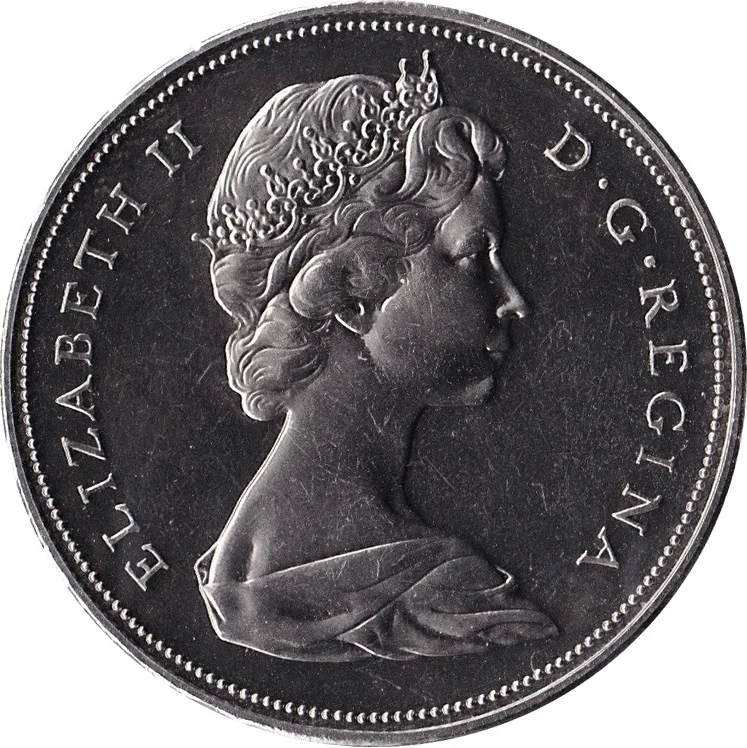
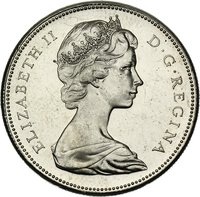
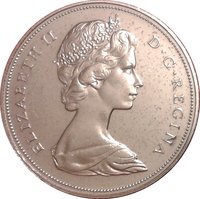
Bust of Queen Elizabeth II at age 37, wearing a tiara and facing right.
Inscription:
ELIZABETH II D·G·REGINA
Translation:
Elizabeth II, by the Grace of God, Queen
Script: Latin
Language: Latin
Engraver: Pactrick Brindley
Designer: Arnold Machin
Reverse
Description:
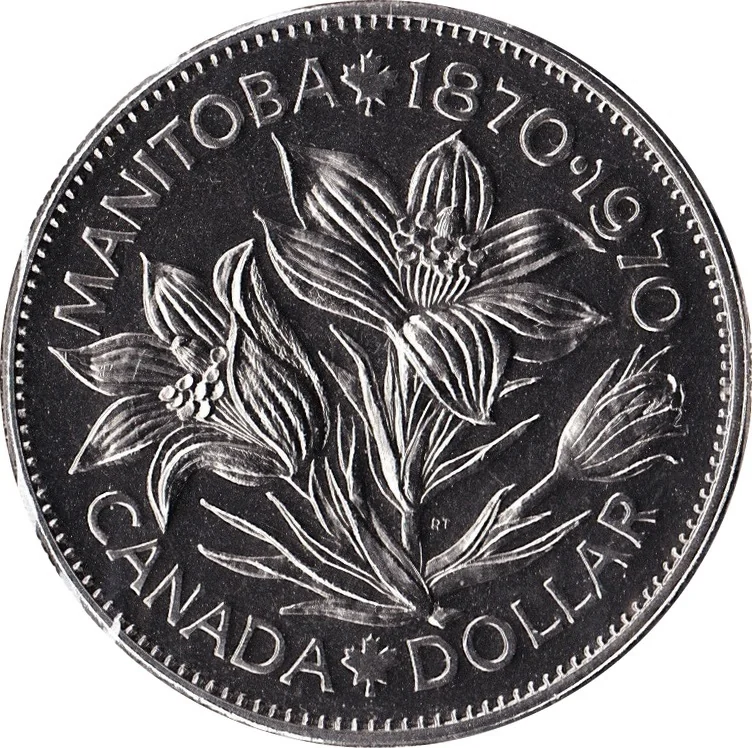
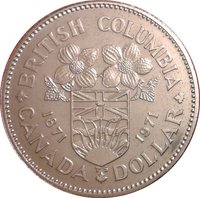
A prairie crocus encircled by "MANITOBA 1870-1970", with the country name left of the value.
Inscription:
MANITOBA 1870·1970
CANADA DOLLAR
RT
CANADA DOLLAR
RT
Script: Latin
Engraver: Walter Ott
Designer: Raymond Taylor
Edge
Reeded
Mints
| Name | Mark |
|---|---|
| Royal Canadian Mint of Ottawa | — |
Mintings
| Year | Mint Mark | Mintage | Quality | Collection |
|---|---|---|---|---|
| 1970 | — | 4,140,058 | ||
| 1970 | — | 349,120 | BU |
Historical background
In 1970, Canada's currency situation was defined by a pivotal shift away from the Bretton Woods system of fixed exchange rates. Since 1962, the Canadian dollar had been pegged at US$0.925, a rate maintained by the Bank of Canada through active intervention in foreign exchange markets. This fixed parity, however, was under growing strain due to divergent economic conditions between Canada and the United States, including higher inflation in Canada and significant speculative capital flows that challenged the sustainability of the peg.
Mounting pressures culminated on May 31, 1970, when the Canadian government, under Prime Minister Pierre Trudeau and Finance Minister Edgar Benson, made a historic decision to float the Canadian dollar. This move was prompted by a massive inflow of speculative capital betting on a revaluation, which threatened to exacerbate domestic inflation by expanding the money supply. By allowing the currency's value to be set by market forces, authorities aimed to regain control over domestic monetary policy and insulate the economy from destabilizing hot money flows.
The immediate result was a sharp appreciation, with the "loonie" (though not yet a coin) rising approximately 6% to near parity with the US dollar by the end of the year. This transition to a floating exchange rate was a landmark event, establishing a framework that has largely endured since. It granted the Bank of Canada greater independence to focus on domestic price stability, fundamentally reshaping Canada's approach to monetary policy and its integration into the global financial system for decades to come.
Mounting pressures culminated on May 31, 1970, when the Canadian government, under Prime Minister Pierre Trudeau and Finance Minister Edgar Benson, made a historic decision to float the Canadian dollar. This move was prompted by a massive inflow of speculative capital betting on a revaluation, which threatened to exacerbate domestic inflation by expanding the money supply. By allowing the currency's value to be set by market forces, authorities aimed to regain control over domestic monetary policy and insulate the economy from destabilizing hot money flows.
The immediate result was a sharp appreciation, with the "loonie" (though not yet a coin) rising approximately 6% to near parity with the US dollar by the end of the year. This transition to a floating exchange rate was a landmark event, establishing a framework that has largely endured since. It granted the Bank of Canada greater independence to focus on domestic price stability, fundamentally reshaping Canada's approach to monetary policy and its integration into the global financial system for decades to come.
🌱 Very Common