


5 cents (Castor canadensis as a Canadian symbol) – Canada
Add to wishlist
Non-circulating coins
Commemoration: The 50ᵗʰ anniversary of Castor canadensis becoming an official symbol of Canada
Canada
Context
Material

References
KM: #
Numista: #458329
Value
Exchange value: 0.05 CAD
Bullion value: $268.54
Inflation-adjusted value: 0.05 CAD
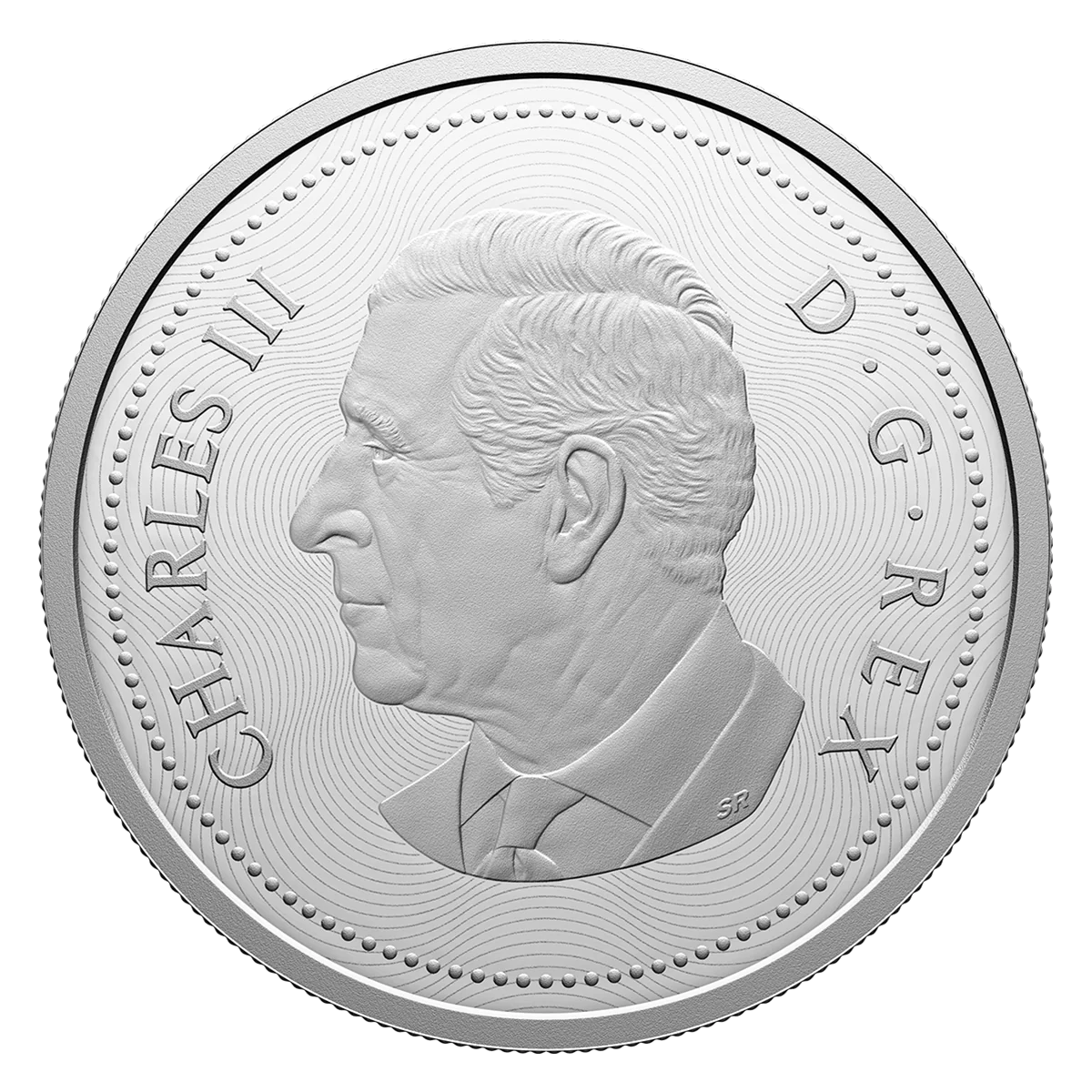
Obverse
Description:
A wave pattern appears on both the top plate and the obverse, featuring a left-facing portrait of the 74-year-old Charles III.
Inscription:
CHARLES III D·G·REX
SR
SR
Translation:
Charles III, by the Grace of God, King
Elizabeth II
Elizabeth II
Script: Latin
Designer: Steven Rosati
Reverse
Description:
This coin's reverse reimagines G. E. Kruger Gray's classic five-cent design in multiple layers. The top plate features "5 CENTS" and "CANADA," while cut-outs around the central beaver reveal engraved clouds, water, and the year "2025" on the surface beneath.
Inscription:
5 CENTS
CANADA
2025
K·G
CANADA
2025
K·G
Script: Latin
Designer: George Kruger Gray
Edge
Reeded
Mints
| Name | Mark |
|---|---|
| Royal Canadian Mint of Ottawa | — |
Mintings
| Year | Mint Mark | Mintage | Quality | Collection |
|---|---|---|---|---|
| 2025 | — | 1,650 | Proof |
Historical background
In 2025, Canada's currency landscape is defined by a cautious balancing act between persistent global headwinds and domestic resilience. The Canadian dollar continues to be significantly influenced by the monetary policy divergence between the Bank of Canada and the U.S. Federal Reserve. With inflation proving stickier than anticipated in key sectors like housing and services, the BoC maintained a "higher-for-longer" interest rate posture well into the year. This, coupled with sustained demand for Canadian energy and critical minerals, provided underlying support for the loonie, preventing a more dramatic depreciation against a robust U.S. dollar driven by America's own economic strength.
Domestically, the currency's value is a double-edged sword for the economy. A moderately weaker Canadian dollar has bolstered export-oriented industries, providing a tailwind for manufacturers and resource exporters in a slowing global growth environment. However, it has also exacerbated import inflation, keeping consumer prices elevated and squeezing household purchasing power. This dynamic has complicated the Bank of Canada's path to its 2% inflation target and contributed to a continued cost-of-living crisis that dominates political discourse.
Looking forward, the primary risks to the currency are external. The loonie remains vulnerable to sudden shifts in global risk sentiment, commodity price volatility—particularly in oil and natural gas—and the pace of economic softening in major trading partners like China and the United States. While a gradual easing cycle by the BoC is anticipated late in the year, its timing and scale are carefully calibrated against Fed actions to avoid triggering a destabilizing currency plunge. Ultimately, the Canadian dollar in 2025 reflects an economy navigating a post-pandemic normalization that is proving more protracted and complex than initially hoped.
Domestically, the currency's value is a double-edged sword for the economy. A moderately weaker Canadian dollar has bolstered export-oriented industries, providing a tailwind for manufacturers and resource exporters in a slowing global growth environment. However, it has also exacerbated import inflation, keeping consumer prices elevated and squeezing household purchasing power. This dynamic has complicated the Bank of Canada's path to its 2% inflation target and contributed to a continued cost-of-living crisis that dominates political discourse.
Looking forward, the primary risks to the currency are external. The loonie remains vulnerable to sudden shifts in global risk sentiment, commodity price volatility—particularly in oil and natural gas—and the pace of economic softening in major trading partners like China and the United States. While a gradual easing cycle by the BoC is anticipated late in the year, its timing and scale are carefully calibrated against Fed actions to avoid triggering a destabilizing currency plunge. Ultimately, the Canadian dollar in 2025 reflects an economy navigating a post-pandemic normalization that is proving more protracted and complex than initially hoped.


✨ Legendary