

1 cent – United States
Add to wishlist
United States
Context
Year: 1859
Issuer: United States
Period:
(since 1776)
Currency:
(since 1785)
Total mintage: 36,400,000
Material
References
KM: #
Numista: #4567
Value
Exchange value: 0.01 USD = $0.01
Obverse
Description:
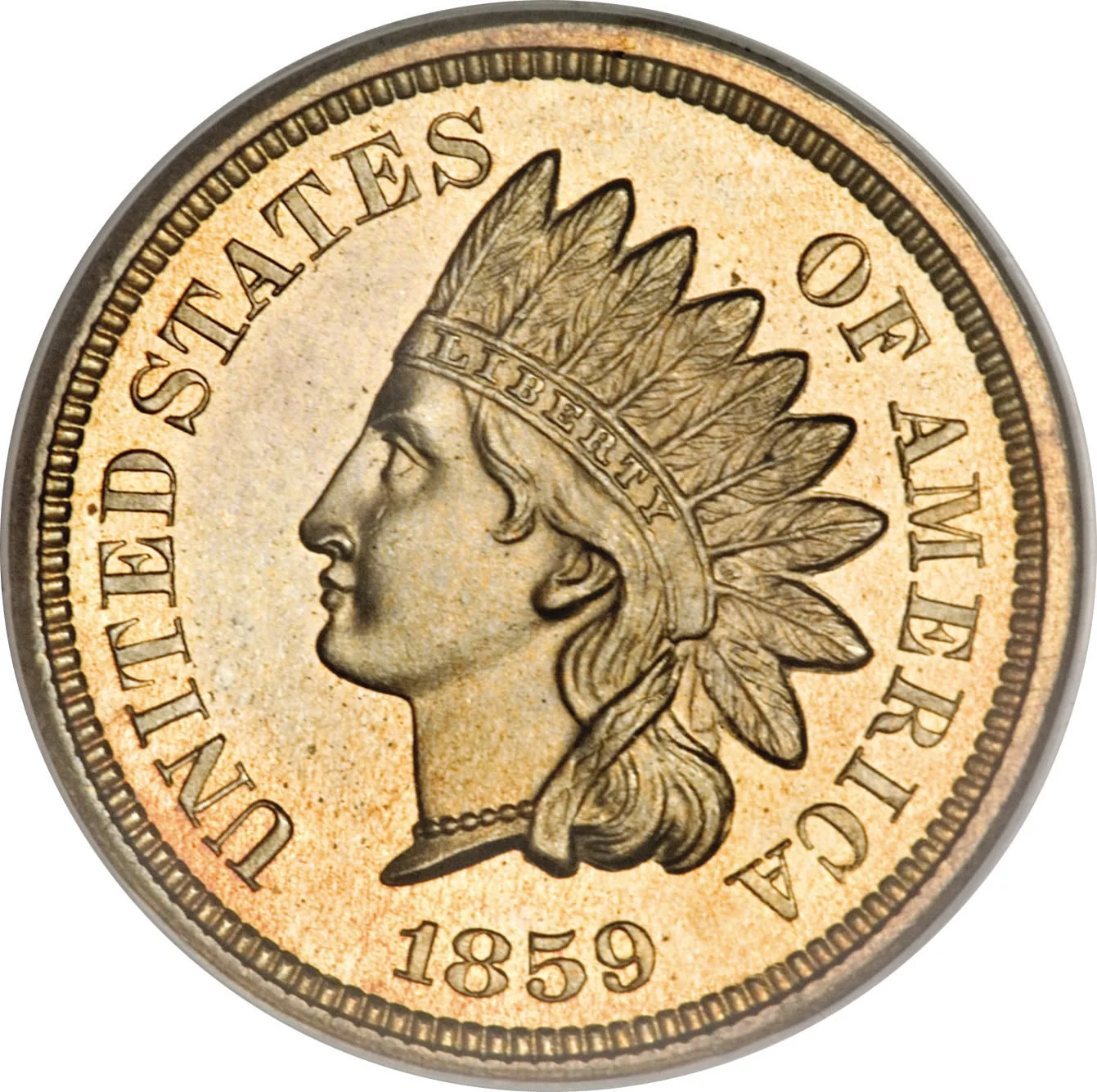
Liberty in a headdress with date below.
Inscription:
UNITED STATES OF AMERICA
LIBERTY
1859
LIBERTY
1859
Script: Latin
Engraver: James Barton Longacre
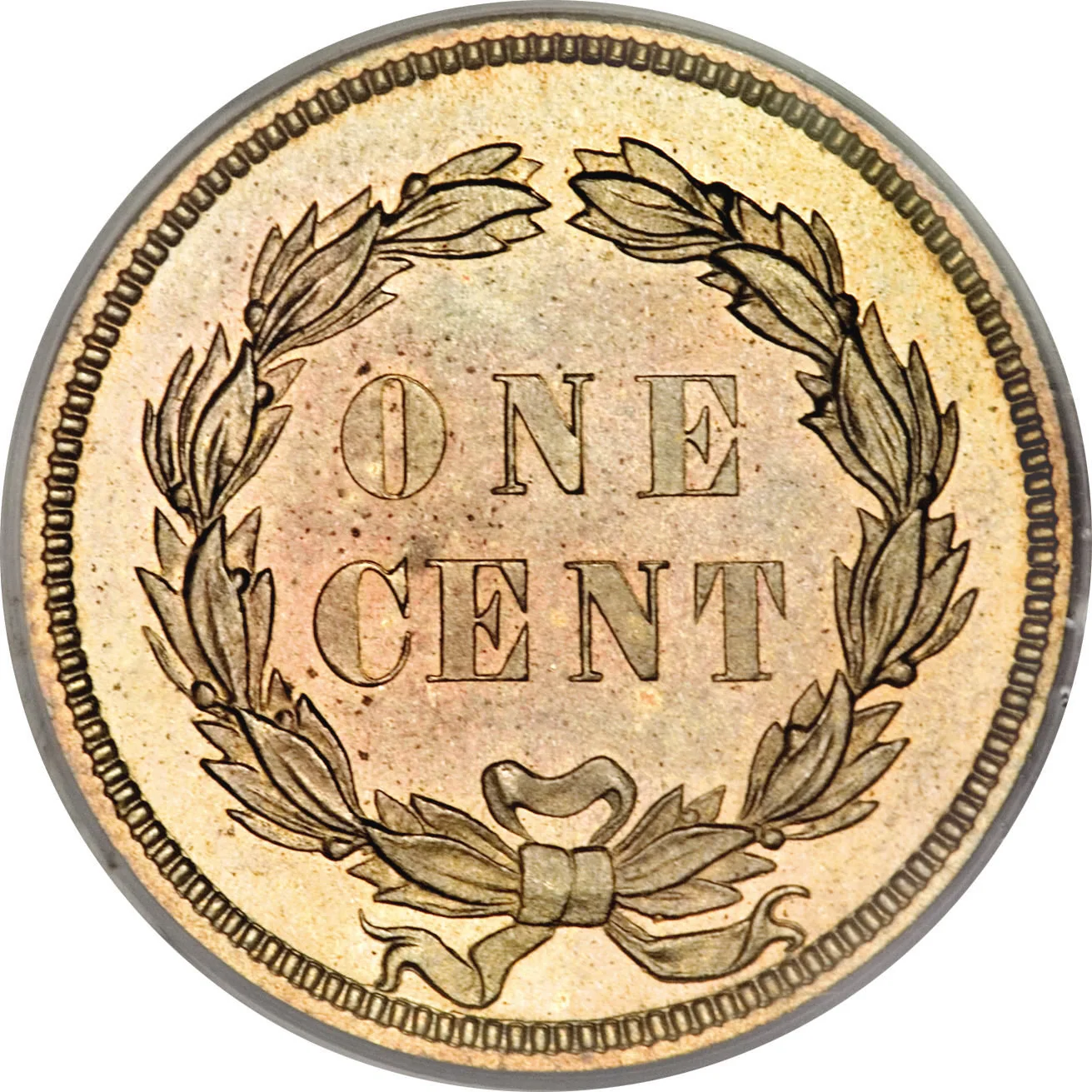
Reverse
Edge
Plain
Mints
| Name | Mark |
|---|---|
| United States Mint of Philadelphia | — |
Mintings
| Year | Mint Mark | Mintage | Quality | Collection |
|---|---|---|---|---|
| 1859 | — | 36,400,000 |
Historical background
In 1859, the United States operated under a disjointed and often chaotic monetary system, a patchwork of competing currencies that reflected the nation's deep sectional and economic divisions. The foundational framework was bimetallism, established by the Coinage Act of 1792, which defined the dollar in terms of both gold and silver at a fixed ratio of 15:1. However, the official mint ratio often diverged from global market values, causing the more undervalued metal to be exported, leaving the country effectively on a de facto gold standard by the late 1850s as silver coins became scarce in circulation.
Alongside federal coinage, a vast array of state-chartered bank notes constituted the primary medium for everyday transactions. Thousands of different banknotes, with varying degrees of reliability, circulated at fluctuating discounts based on the perceived solvency of the issuing bank. This system created significant friction in commerce, as merchants and citizens needed to consult "banknote detectors" to assess a note's true value, fostering widespread distrust and counterfeiting. Furthermore, the absence of a unified federal paper currency—the Treasury issued small amounts of "coins" and "Treasury notes" but not a true circulating currency—left a vacuum filled by this unstable private money.
This financial fragmentation occurred against the backdrop of escalating sectional crisis. The South, an agrarian economy, favored easy credit and soft money, while Northern industrialists and merchants generally advocated for a harder, gold-backed currency to ensure stable prices and international trade. The expiration of the charter for the Second Bank of the United States in 1836 had removed any central authority to regulate credit or currency supply. By 1859, the system was strained to its breaking point, a microcosm of the Union itself, and the looming secession crisis would soon force the federal government to finally create a national paper currency—the "greenback"—in 1862 to finance the Civil War.
Alongside federal coinage, a vast array of state-chartered bank notes constituted the primary medium for everyday transactions. Thousands of different banknotes, with varying degrees of reliability, circulated at fluctuating discounts based on the perceived solvency of the issuing bank. This system created significant friction in commerce, as merchants and citizens needed to consult "banknote detectors" to assess a note's true value, fostering widespread distrust and counterfeiting. Furthermore, the absence of a unified federal paper currency—the Treasury issued small amounts of "coins" and "Treasury notes" but not a true circulating currency—left a vacuum filled by this unstable private money.
This financial fragmentation occurred against the backdrop of escalating sectional crisis. The South, an agrarian economy, favored easy credit and soft money, while Northern industrialists and merchants generally advocated for a harder, gold-backed currency to ensure stable prices and international trade. The expiration of the charter for the Second Bank of the United States in 1836 had removed any central authority to regulate credit or currency supply. By 1859, the system was strained to its breaking point, a microcosm of the Union itself, and the looming secession crisis would soon force the federal government to finally create a national paper currency—the "greenback"—in 1862 to finance the Civil War.
🌱 Common