

3000 forint (Mór Jókai) – Hungary
Add to wishlist
Non-circulating coins
Commemoration: 200th Anniversary of the birth of Mór Jókai
Hungary
Context
Year: 2025
Issuer: Hungary
Issuing organization: Magyar Pénzverő
Period:
(since 1989)
Currency:
(since 1946)
Total mintage: 5,000
Material
Diameter: 38.61 mm
Weight: 30.8 g
Shape: Round
Composition: Copper-nickel (75% Copper)
Standard: Silver ounce
Technique: Milled
Alignment: Medal alignment
flip
References
KM: #
Numista: #456025
Value
Exchange value: 3000 HUF
Obverse
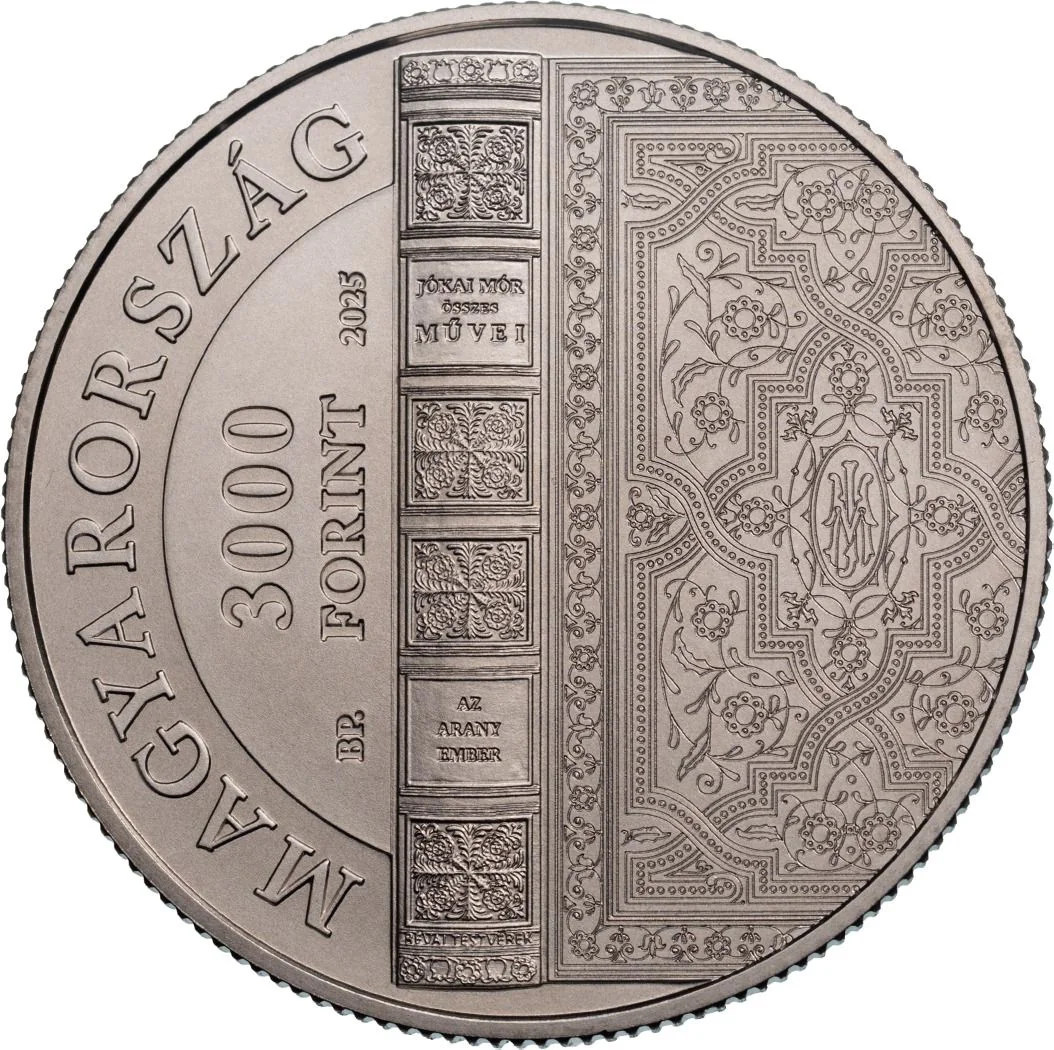
Description:
Book
Inscription:
MAGYARORSZÁG
3000
FORINT
2025
BP.
JÓKAI MÓR
ÖSSZES
MŰVEI
AZ
ARANY
EMBER
3000
FORINT
2025
BP.
JÓKAI MÓR
ÖSSZES
MŰVEI
AZ
ARANY
EMBER
Translation:
HUNGARY
3000
FORINT
2025
BUDAPEST
MÓR JÓKAI
COMPLETE
WORKS
THE
GOLDEN
MAN
3000
FORINT
2025
BUDAPEST
MÓR JÓKAI
COMPLETE
WORKS
THE
GOLDEN
MAN
Script: Latin
Language: Hungarian
Designer: Zoltán Kovács
Reverse
Description:
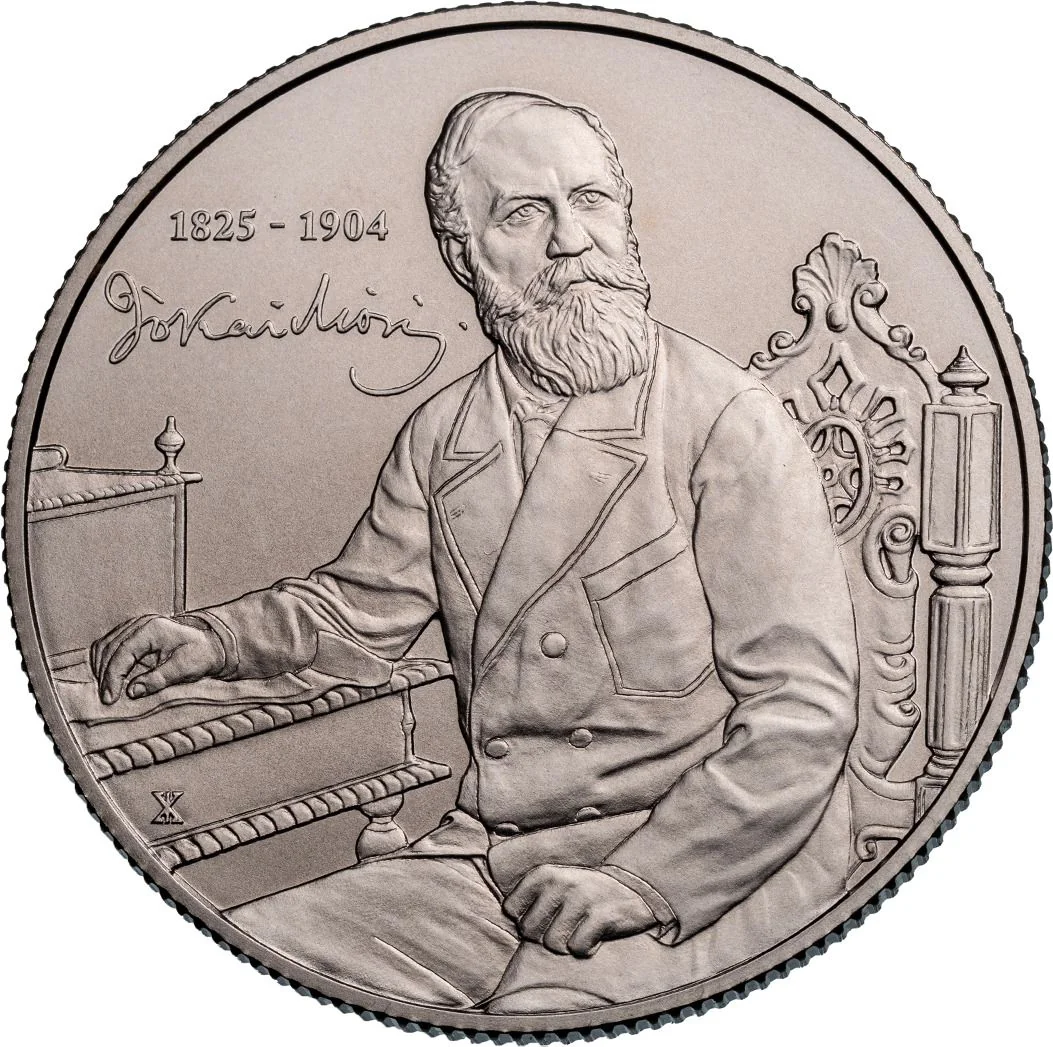
Portrait of Jókai seated.
Inscription:
1825-1904
Jókai Mór
Jókai Mór
Translation:
1825-1904
Mór Jókai
Mór Jókai
Scripts: Latin, Latin (cursive)
Language: Hungarian
Designer: Zoltán Kovács
Edge
Milled
Categories
| Event> Birth anniversary |
| Art> Literature |
Mints
| Name | Mark |
|---|---|
| Hungarian mint | BP. |
Mintings
| Year | Mint Mark | Mintage | Quality | Collection |
|---|---|---|---|---|
| 2025 | BP. | 5,000 |
Historical background
In 2025, Hungary's currency situation remains defined by the persistent vulnerability of the Hungarian Forint (HUF) and the ongoing policy challenges facing the National Bank of Hungary (MNB). The forint continues to be one of the most volatile currencies in the Central and Eastern European region, sensitive to shifts in global risk sentiment, changes in domestic fiscal policy, and the pace of disinflation. While the extreme inflationary spiral of 2022-2023 has subsided, the MNB's careful cycle of interest rate cuts has required constant calibration to avoid triggering a sharp sell-off of the forint, which would re-import inflation. The currency's stability is thus a fragile balancing act, heavily reliant on maintaining a positive real interest rate differential to attract portfolio investment.
The underlying pressure stems from fundamental economic concerns. Hungary's twin deficits—a high budget deficit and a current account deficit—persist, requiring substantial external financing. This structural reliance on foreign capital inflows leaves the forint exposed to external shocks and changes in investor confidence. Furthermore, the country's complex relationship with the European Union, particularly the ongoing suspension of cohesion funds over rule-of-law concerns, continues to cast a shadow, limiting a major source of investment and weighing on long-term economic sentiment. The forint, therefore, often acts as a barometer for geopolitical as well as economic news related to EU negotiations.
Looking ahead, the key themes for the remainder of 2025 will be the MNB's ability to continue its monetary easing cycle without destabilizing the exchange rate, and the government's progress in consolidating public finances to reduce the deficits. A successful conclusion to talks with the EU and the subsequent release of frozen funds would likely provide a significant, albeit potentially temporary, boost to the forint. However, in the absence of such a breakthrough, the currency is expected to remain under a "volatility watch," with the central bank prepared to use its substantial foreign exchange reserves and verbal interventions to smooth out excessive fluctuations, prioritizing stability over further aggressive rate cuts.
The underlying pressure stems from fundamental economic concerns. Hungary's twin deficits—a high budget deficit and a current account deficit—persist, requiring substantial external financing. This structural reliance on foreign capital inflows leaves the forint exposed to external shocks and changes in investor confidence. Furthermore, the country's complex relationship with the European Union, particularly the ongoing suspension of cohesion funds over rule-of-law concerns, continues to cast a shadow, limiting a major source of investment and weighing on long-term economic sentiment. The forint, therefore, often acts as a barometer for geopolitical as well as economic news related to EU negotiations.
Looking ahead, the key themes for the remainder of 2025 will be the MNB's ability to continue its monetary easing cycle without destabilizing the exchange rate, and the government's progress in consolidating public finances to reduce the deficits. A successful conclusion to talks with the EU and the subsequent release of frozen funds would likely provide a significant, albeit potentially temporary, boost to the forint. However, in the absence of such a breakthrough, the currency is expected to remain under a "volatility watch," with the central bank prepared to use its substantial foreign exchange reserves and verbal interventions to smooth out excessive fluctuations, prioritizing stability over further aggressive rate cuts.
💎 Extremely Rare