

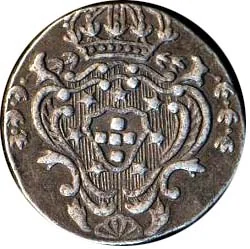
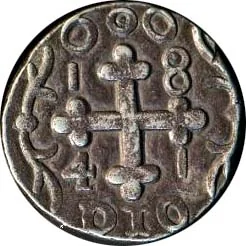
1 Rupia – Portuguese India
India
Context
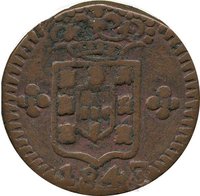
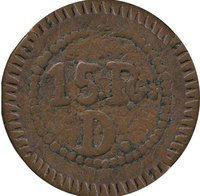
Year: 1841
Country: India 
Issuer: Portuguese India
Issuing organization: Casa da Moeda de Diu
Ruler: Mary II
Currency:
(1706—1880)
Demonetized: Yes
Material
Diameter: 22 mm
Weight: 7.8 g
Silver weight: 7.15 g
Shape: Irregular round
Composition: 91.7% Silver
Standard: Silver quarter ounce
Magnetic: No
Technique: Hammered
References
KM: #Click to copy to clipboard59
Numista: #45595
Value
Bullion value: $20.07
Mintings
| Year | Mint Mark | Mintage | Quality | Collection |
|---|---|---|---|---|
| 1841 | DIO | — |
Historical background
In 1841, the currency situation in Portuguese India was a complex and fragmented system, reflecting both its colonial status and its integration into regional trade networks. The official currency was the Portuguese Rupia (Indian Rupia), which was divided into 750 réis, aligning the colony's accounting with the metropole. However, this official system existed alongside a multitude of other coins that circulated widely due to Goa's historic role as a commercial hub. Most prominent were various silver rupees from neighbouring British India, particularly the coins of the Bombay Presidency, as well as older gold pagodas and silver cruzados from earlier Portuguese eras. This created a de facto multi-currency environment where exchange rates fluctuated based on the intrinsic silver content and market demand.
The primary challenge was a severe shortage of official Portuguese coinage, leading to a heavy reliance on foreign, especially British Indian, silver rupees for everyday transactions. This dependency undermined Portuguese monetary sovereignty and caused practical difficulties in governance and tax collection. Furthermore, the values of the many circulating coins were not fixed by a single authority but were often determined by local merchants and money-changers (sarafs), leading to inconsistency and potential for exploitation. The situation was further complicated by the circulation of worn, clipped, or counterfeit coins, which eroded trust in the monetary system.
Recognising these problems, the Portuguese administration in Goa had been attempting reform. The 1830s saw efforts to introduce a decimalised currency system and mint new coins, but these measures faced practical hurdles and limited success. Therefore, in 1841, the monetary landscape remained in a state of transition—officially governed by Portuguese law but practically dominated by the economic reality of British Indian currency and a legacy of older coins. This instability would persist until more decisive reforms were implemented later in the 19th century with the establishment of the Goa Rupia as a standard currency.
The primary challenge was a severe shortage of official Portuguese coinage, leading to a heavy reliance on foreign, especially British Indian, silver rupees for everyday transactions. This dependency undermined Portuguese monetary sovereignty and caused practical difficulties in governance and tax collection. Furthermore, the values of the many circulating coins were not fixed by a single authority but were often determined by local merchants and money-changers (sarafs), leading to inconsistency and potential for exploitation. The situation was further complicated by the circulation of worn, clipped, or counterfeit coins, which eroded trust in the monetary system.
Recognising these problems, the Portuguese administration in Goa had been attempting reform. The 1830s saw efforts to introduce a decimalised currency system and mint new coins, but these measures faced practical hurdles and limited success. Therefore, in 1841, the monetary landscape remained in a state of transition—officially governed by Portuguese law but practically dominated by the economic reality of British Indian currency and a legacy of older coins. This instability would persist until more decisive reforms were implemented later in the 19th century with the establishment of the Goa Rupia as a standard currency.
✨ Legendary