

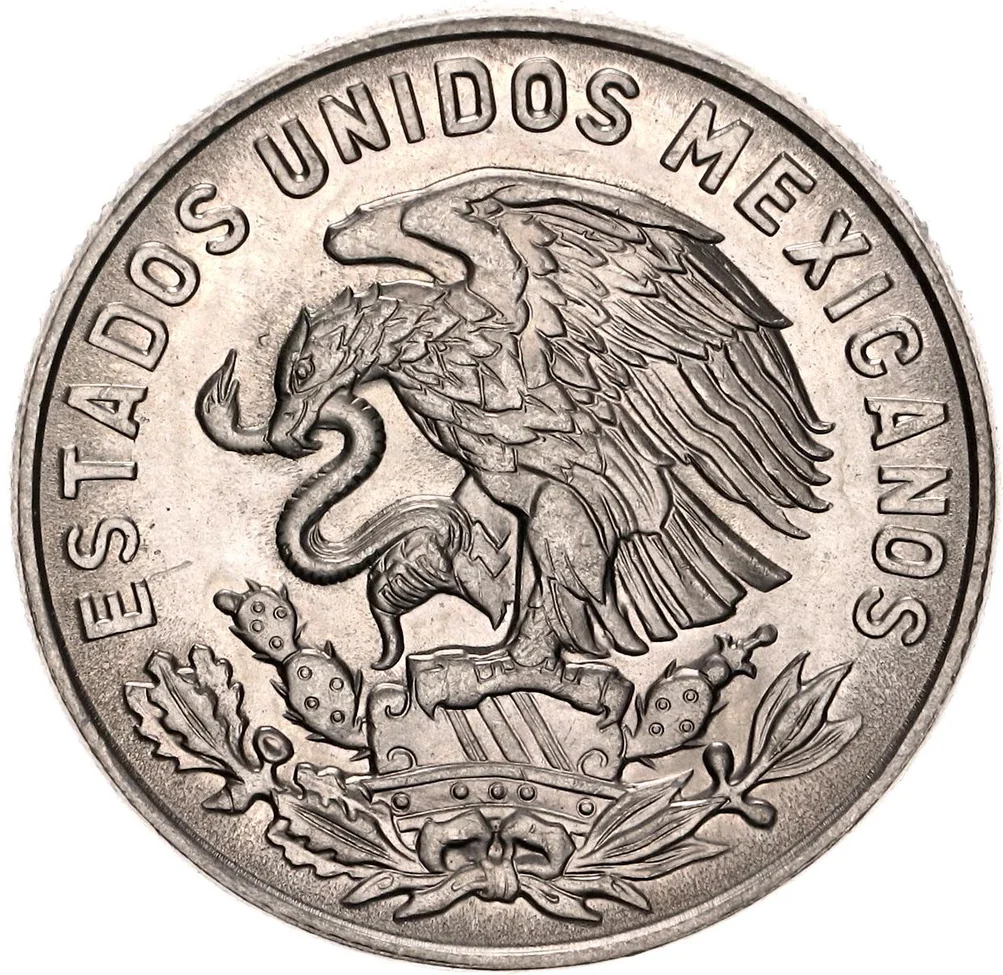
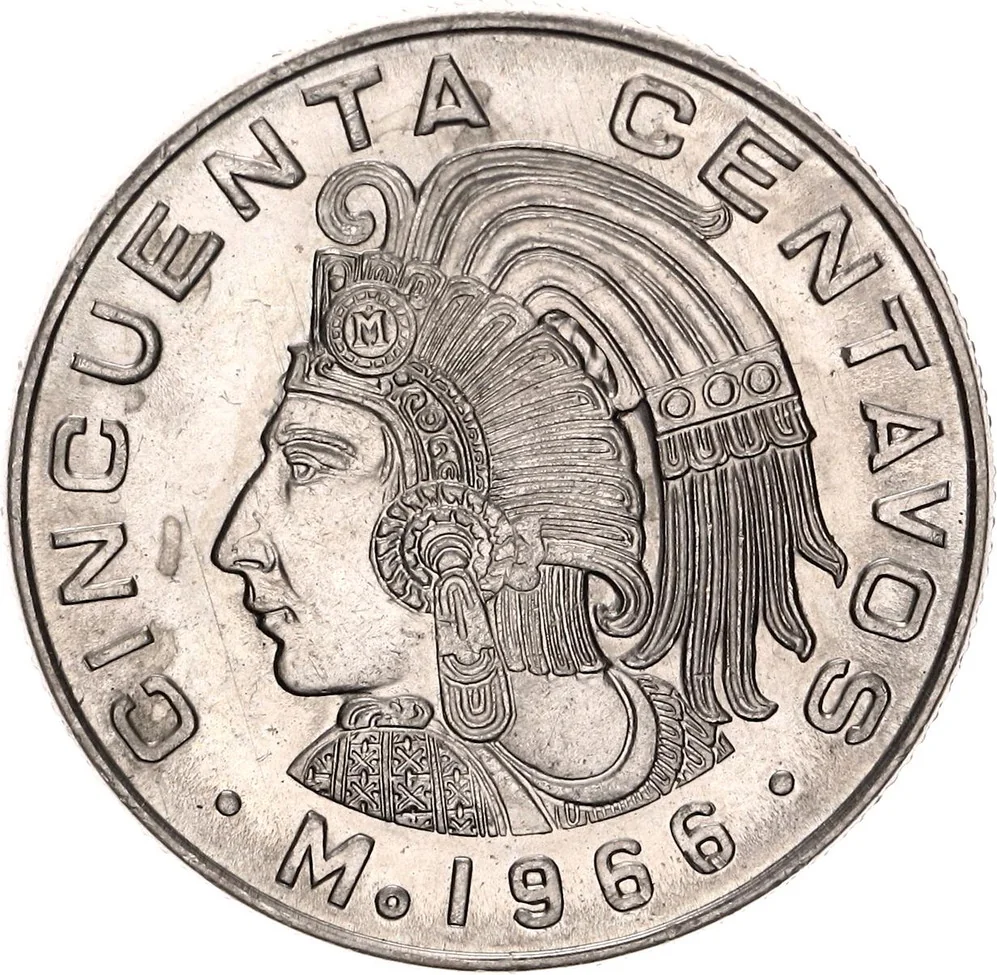
50 centavos – Mexico
Add to wishlist
Mexico
Context
Years: 1964–1969
Issuer: Mexico
Period:
(since 1823)
Currency:
(1863—1992)
Demonetized: Yes
Total mintage: 283,080,000
Material
References
KM: #
Numista: #1030
Value
Exchange value: 0.50 MXP
Inflation-adjusted value: 6871.35 MXP
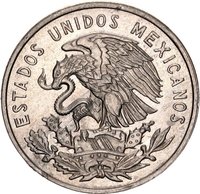
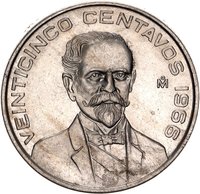
Obverse
Reverse
Edge
Reeded
Mints
| Name | Mark |
|---|---|
| Mexican Mint | Mo |
Mintings
Historical background
In 1964, Mexico’s currency situation was defined by the remarkable stability of the peso under the fixed exchange rate system established in 1954. Following a devaluation crisis a decade earlier, the government had pegged the peso at 12.50 to the U.S. dollar, a rate that became a cornerstone of the nation's "Desarrollo Estabilizador" (Stabilizing Development) economic model. This fixed parity, maintained through conservative fiscal policy and controlled deficit spending, fostered an era of low inflation, predictable prices, and strong foreign investment, fueling sustained industrial growth and a sense of national economic confidence.
However, this stability was underpinned by increasing structural pressures. The fixed exchange rate, while beneficial for import-oriented industrialization and middle-class consumption, began to overvalue the peso as Mexico's inflation gradually outpaced that of the United States. This made Mexican exports less competitive internationally and encouraged a growing import dependency. Furthermore, the model relied heavily on public spending in key sectors, leading to subtle but persistent budget deficits that were initially offset by foreign borrowing and rising tourism revenues, masking underlying vulnerabilities.
Thus, 1964 represented the apparent calm before a gathering storm. The year itself saw the end of President Adolfo López Mateos's term and the orderly transition to Gustavo Díaz Ordaz, with the 12.50 peso-dollar parity presented as a symbol of institutional strength and continuity. Yet, the very policies that guaranteed short-term stability—the rigid exchange rate and growing public debt—were slowly eroding the foundations of the model. The imbalances accumulating in 1964 would, within a decade, become unsustainable, ultimately leading to the painful devaluation of 1976 and the end of the peso's twenty-two-year fixed rate.
However, this stability was underpinned by increasing structural pressures. The fixed exchange rate, while beneficial for import-oriented industrialization and middle-class consumption, began to overvalue the peso as Mexico's inflation gradually outpaced that of the United States. This made Mexican exports less competitive internationally and encouraged a growing import dependency. Furthermore, the model relied heavily on public spending in key sectors, leading to subtle but persistent budget deficits that were initially offset by foreign borrowing and rising tourism revenues, masking underlying vulnerabilities.
Thus, 1964 represented the apparent calm before a gathering storm. The year itself saw the end of President Adolfo López Mateos's term and the orderly transition to Gustavo Díaz Ordaz, with the 12.50 peso-dollar parity presented as a symbol of institutional strength and continuity. Yet, the very policies that guaranteed short-term stability—the rigid exchange rate and growing public debt—were slowly eroding the foundations of the model. The imbalances accumulating in 1964 would, within a decade, become unsustainable, ultimately leading to the painful devaluation of 1976 and the end of the peso's twenty-two-year fixed rate.
🌱 Very Common