

5 hryven – Ukraine
Add to wishlist
Non-circulating coins
Commemoration: Foreign Intelligence Service of Ukraine
Ukraine
Context
Year: 2025
Issuer: Ukraine
Issuing organization: National Bank of Ukraine
Period:
(since 1991)
Currency:
(since 1996)
Total mintage: 75,000
Material
Diameter: 35 mm
Weight: 16.54 g
Shape: Round
Composition: Nickel brass
Magnetic: No
Technique: Milled
Alignment: Medal alignment
flip
References
KM: #
Numista: #453344
Value
Exchange value: 5 UAH
Obverse
Description:
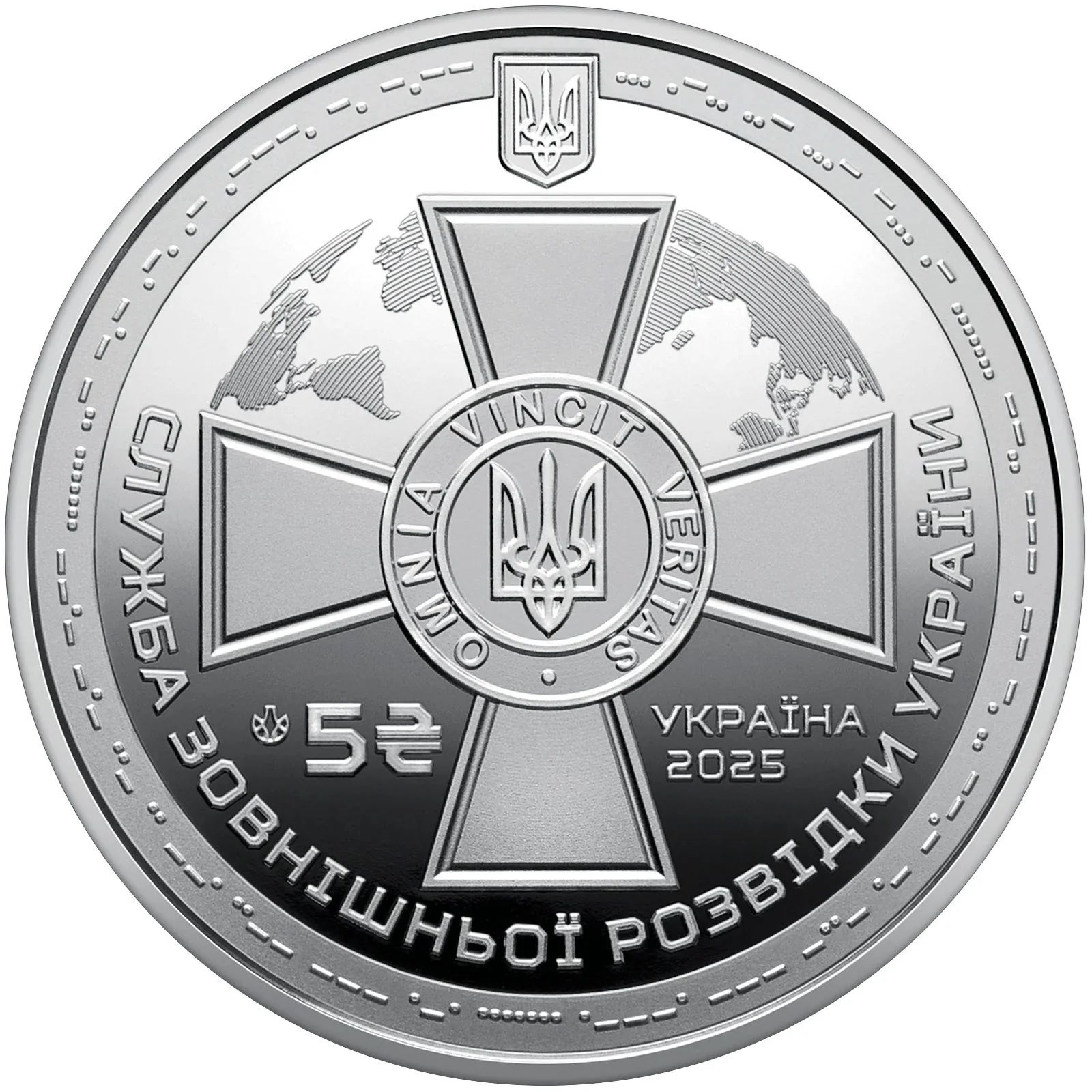
Around the coin’s perimeter, the agency’s first three words are repeated in Morse code and text: СЛУЖБА ЗОВНІШНЬОЇ РОЗВІДКИ УКРАЇНИ. The central cross, a key symbol of the service, features the trident of Volodymyr the Great, encircled by the Latin motto OMNIA VINCIT VERITAS. A world map outline around it represents the global reach of its intelligence work.
Inscription:
2025
5₴
OMNIA VINCIT VERITAS
СЛУЖБА ЗОВНІШНЬОЇ РОЗВІДКИ УКРАЇНИ УКРАЇНА
5₴
OMNIA VINCIT VERITAS
СЛУЖБА ЗОВНІШНЬОЇ РОЗВІДКИ УКРАЇНИ УКРАЇНА
Translation:
2025
5₴
TRUTH CONQUERS ALL
FOREIGN INTELLIGENCE SERVICE OF UKRAINE UKRAINE
5₴
TRUTH CONQUERS ALL
FOREIGN INTELLIGENCE SERVICE OF UKRAINE UKRAINE
Engraver: Volodymyr Demianenko
Designer: Serhii Bieliaiev
Reverse
Description:
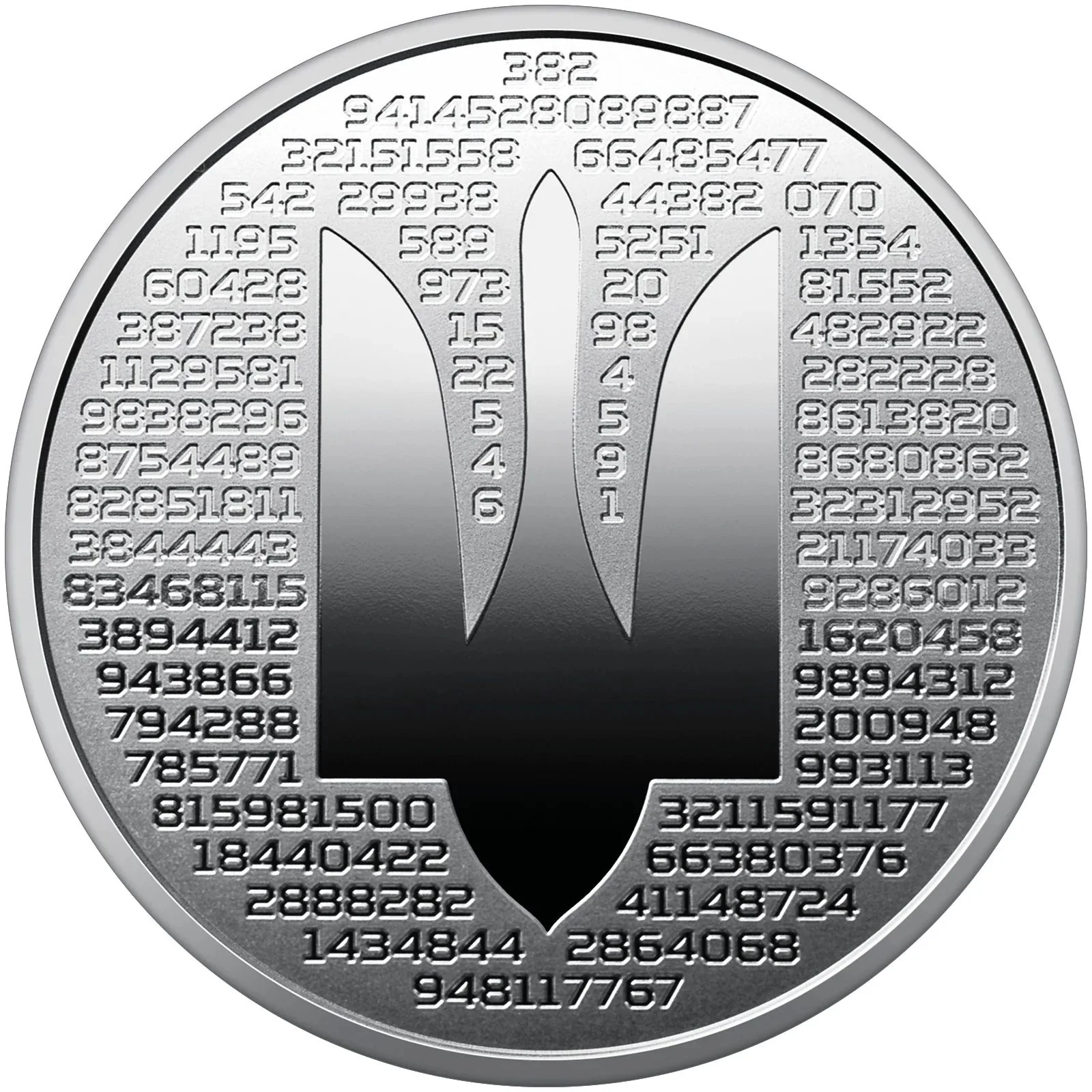
The reverse features a stylized trident encircled by encrypted words from a notable Ukrainian political figure.
Engraver: Volodymyr Demianenko
Designer: Serhii Bieliaiev
Edge
Reeded
Categories
| Map |
Mints
| Name | Mark |
|---|---|
| National Bank of Ukraine Banknote Printing and Minting Works | — |
Mintings
| Year | Mint Mark | Mintage | Quality | Collection |
|---|---|---|---|---|
| 2025 | — | 75,000 | Special Uncirculated |
Historical background
As of 2025, Ukraine's currency situation remains defined by a managed stability under extraordinary conditions. The National Bank of Ukraine (NBU) continues to maintain a fixed exchange rate regime, initially imposed after the full-scale invasion in 2022. The official hryvnia (UAH) rate has been pegged at approximately 36.57 to the US dollar, a level preserved through strict capital controls, mandatory surrender of export proceeds, and significant international financial support. This policy has successfully prevented a currency collapse and hyperinflation, providing a crucial anchor for the wartime economy by ensuring predictability for critical imports and government spending.
However, this stability comes at a cost and masks underlying pressures. The currency is fundamentally overvalued, sustained not by market forces but by administrative measures and foreign aid inflows from partners like the EU, IMF, and the United States. A large shadow currency market exists, where the hryvnia trades at a significant discount, reflecting pent-up devaluation pressure and restricted access to foreign exchange for many businesses and individuals. The economy's structure has shifted, with a massive budget deficit financed by money printing and external assistance, creating persistent inflationary risks that the NBU combats with high interest rates.
The outlook for the hryvnia is entirely contingent on the military and political trajectory of the war. Discussions about a future, gradual transition to a more flexible exchange rate are held in policy circles, but any such move is considered post-war medicine. For 2025, the priority remains unwavering monetary stability as a component of national defense. The currency's fate is therefore inextricably linked to the continuation of substantial external financing and the maintenance of strict controls, with the goal of preserving economic functionality until a return to peacetime conditions allows for deeper structural reforms.
However, this stability comes at a cost and masks underlying pressures. The currency is fundamentally overvalued, sustained not by market forces but by administrative measures and foreign aid inflows from partners like the EU, IMF, and the United States. A large shadow currency market exists, where the hryvnia trades at a significant discount, reflecting pent-up devaluation pressure and restricted access to foreign exchange for many businesses and individuals. The economy's structure has shifted, with a massive budget deficit financed by money printing and external assistance, creating persistent inflationary risks that the NBU combats with high interest rates.
The outlook for the hryvnia is entirely contingent on the military and political trajectory of the war. Discussions about a future, gradual transition to a more flexible exchange rate are held in policy circles, but any such move is considered post-war medicine. For 2025, the priority remains unwavering monetary stability as a component of national defense. The currency's fate is therefore inextricably linked to the continuation of substantial external financing and the maintenance of strict controls, with the goal of preserving economic functionality until a return to peacetime conditions allows for deeper structural reforms.
⭐ Rare