

5 Euro (Kyoto Protocol) – Italy
Non-circulating coins
Commemoration: 5th Anniversary of the Signature of the Kyoto Protocol
Italy
Context
Material
References
KM: #Click to copy to clipboard291
Numista: #45328
Value
Exchange value: 5 EUR = $5.91
Bullion value: $47.33
Inflation-adjusted value: 6.98 EUR
Obverse
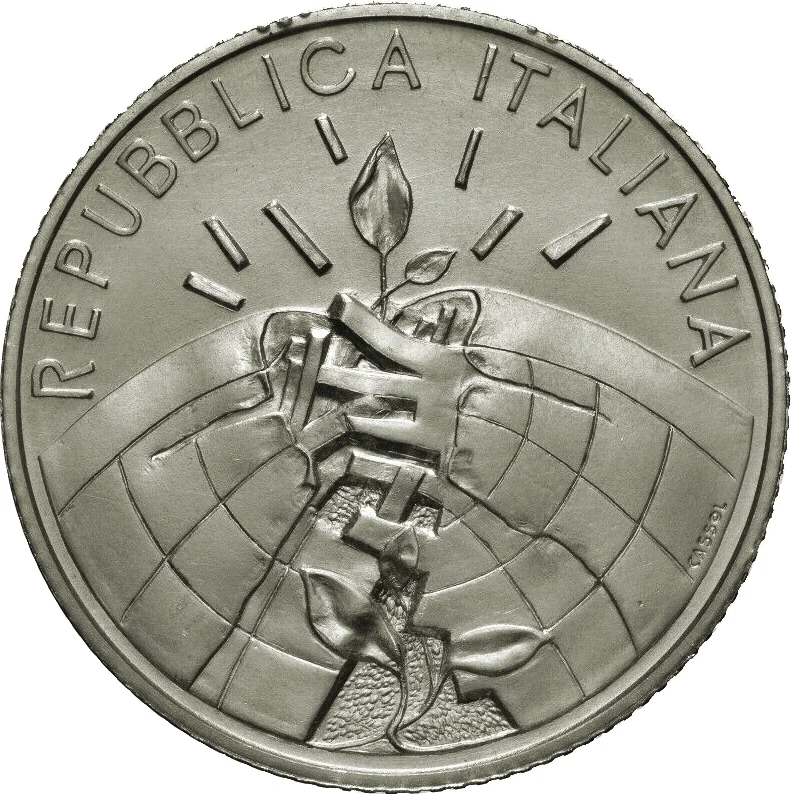
Description:
Earth fractures vertically, sprouting new plants—Nature's rebellion against atmospheric pollution.
Inscription:
REPUBBLICA ITALIANA
CASSOL
CASSOL
Translation:
Italian Republic
Cassol
Cassol
Script: Latin
Language: Italian
Engraver: Maria Angela Cassol
Reverse
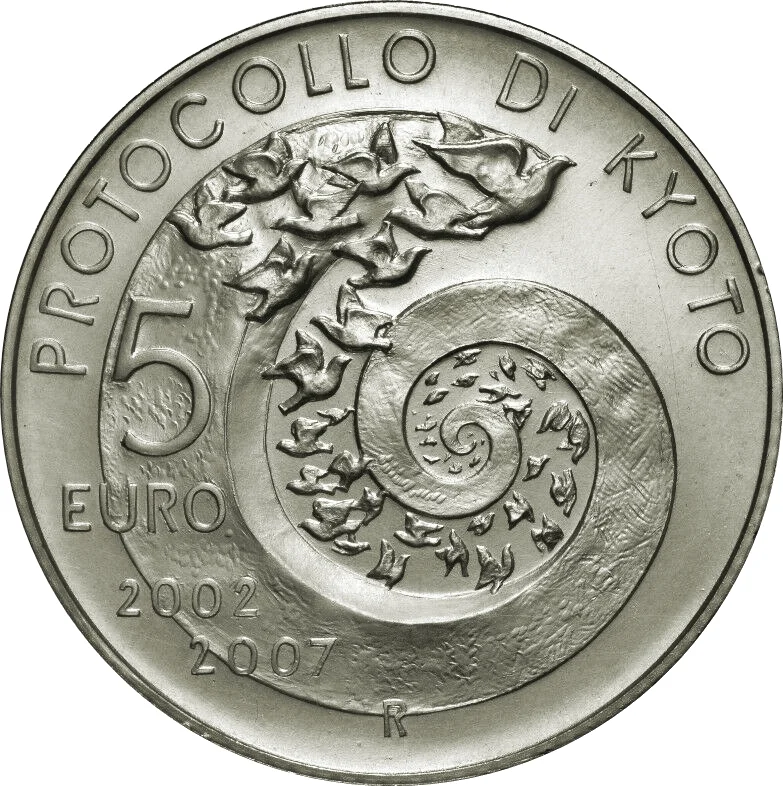
Description:
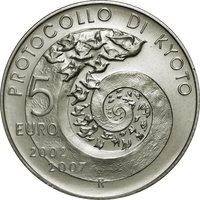
Clean air as a vital energy vortex, used by a storm of doves. The left side shows the value, anniversary dates, and mintmark.
Inscription:
PROTOCOLLO DI KYOTO
5 EURO
2002
2007
R
5 EURO
2002
2007
R
Translation:
Kyoto Protocol
5 Euro
2002
2007
R
5 Euro
2002
2007
R
Script: Latin
Language: Italian
Engraver: Maria Angela Cassol
Edge
Reeded
Mints
| Name | Mark |
|---|---|
| Rome | R |
Historical background
In 2007, Italy was a member of the Eurozone, having adopted the euro as its physical currency in 2002, replacing the historic lira. The country was therefore fully integrated into the European single currency system, with monetary policy set by the European Central Bank (ECB) in Frankfurt. This meant Italy had relinquished control over key levers like interest rates and currency devaluation, tools it had frequently used in the past to boost competitiveness. While the euro brought macroeconomic stability, lower inflation, and eliminated exchange rate risk within the EU, it also locked Italy into a monetary regime that some economists argued was ill-suited for its chronically low growth and high public debt.
The underlying economic context was one of significant strain, often described as a loss of competitiveness within the Eurozone. Italy's unit labor costs had risen faster than those of Germany and other northern European peers since the late 1990s, eroding its export appeal. This "productivity gap" was masked in the early 2000s by global growth, but by 2007, it was becoming a pressing concern. The country's public debt—the second highest in the Eurozone after Greece—remained stubbornly above 100% of GDP, constraining fiscal policy and leaving the government vulnerable to shifts in market sentiment.
Overall, the currency situation in 2007 was superficially stable but fraught with underlying vulnerabilities. The euro provided a shield against currency crises, but it also removed Italy's ability to independently adjust monetary policy to stimulate its stagnant economy. This tension between the rigid discipline of the common currency and Italy's specific structural weaknesses created a precarious equilibrium, making the country particularly exposed to the impending global financial storm that would erupt in 2008.
The underlying economic context was one of significant strain, often described as a loss of competitiveness within the Eurozone. Italy's unit labor costs had risen faster than those of Germany and other northern European peers since the late 1990s, eroding its export appeal. This "productivity gap" was masked in the early 2000s by global growth, but by 2007, it was becoming a pressing concern. The country's public debt—the second highest in the Eurozone after Greece—remained stubbornly above 100% of GDP, constraining fiscal policy and leaving the government vulnerable to shifts in market sentiment.
Overall, the currency situation in 2007 was superficially stable but fraught with underlying vulnerabilities. The euro provided a shield against currency crises, but it also removed Italy's ability to independently adjust monetary policy to stimulate its stagnant economy. This tension between the rigid discipline of the common currency and Italy's specific structural weaknesses created a precarious equilibrium, making the country particularly exposed to the impending global financial storm that would erupt in 2008.
💎 Very Rare