

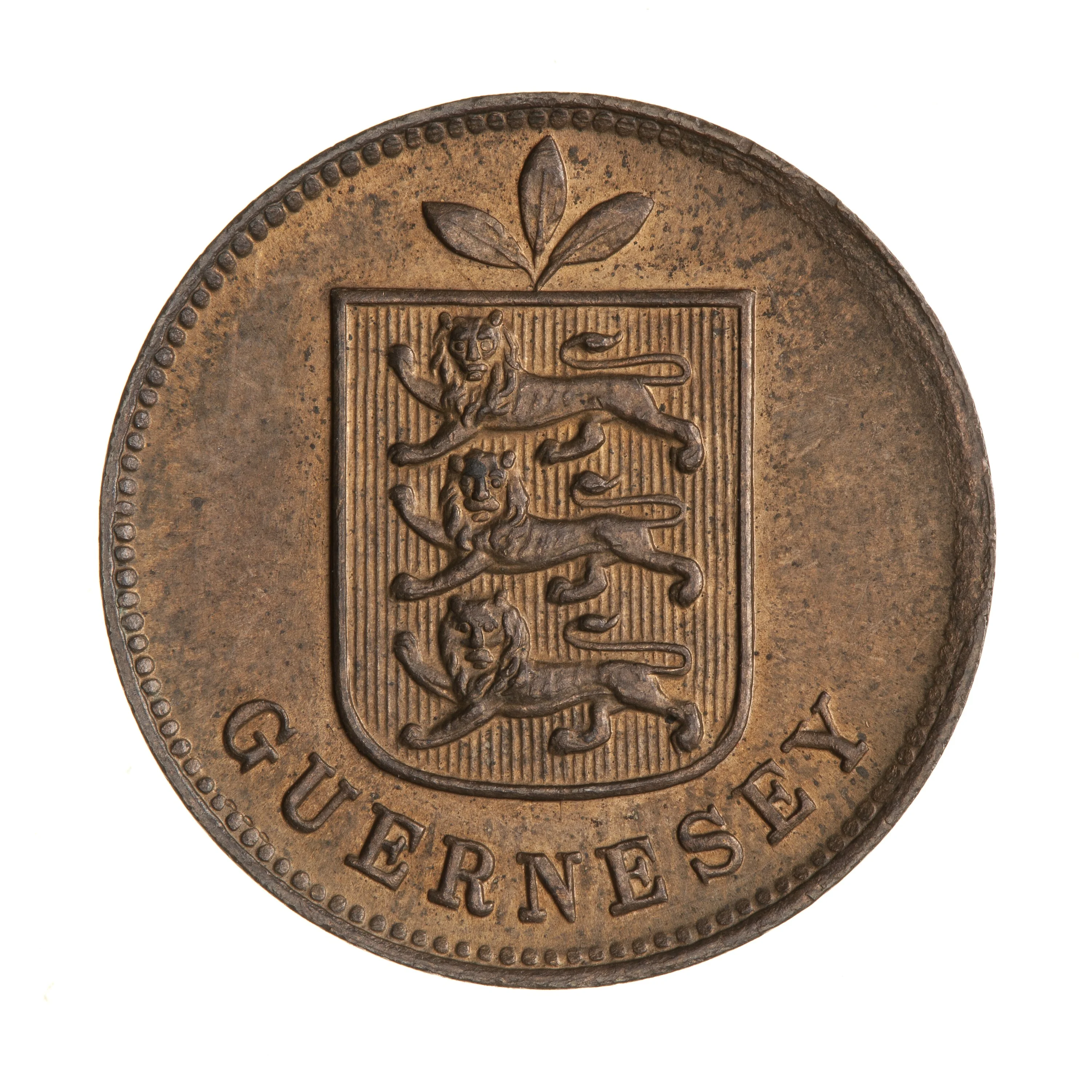
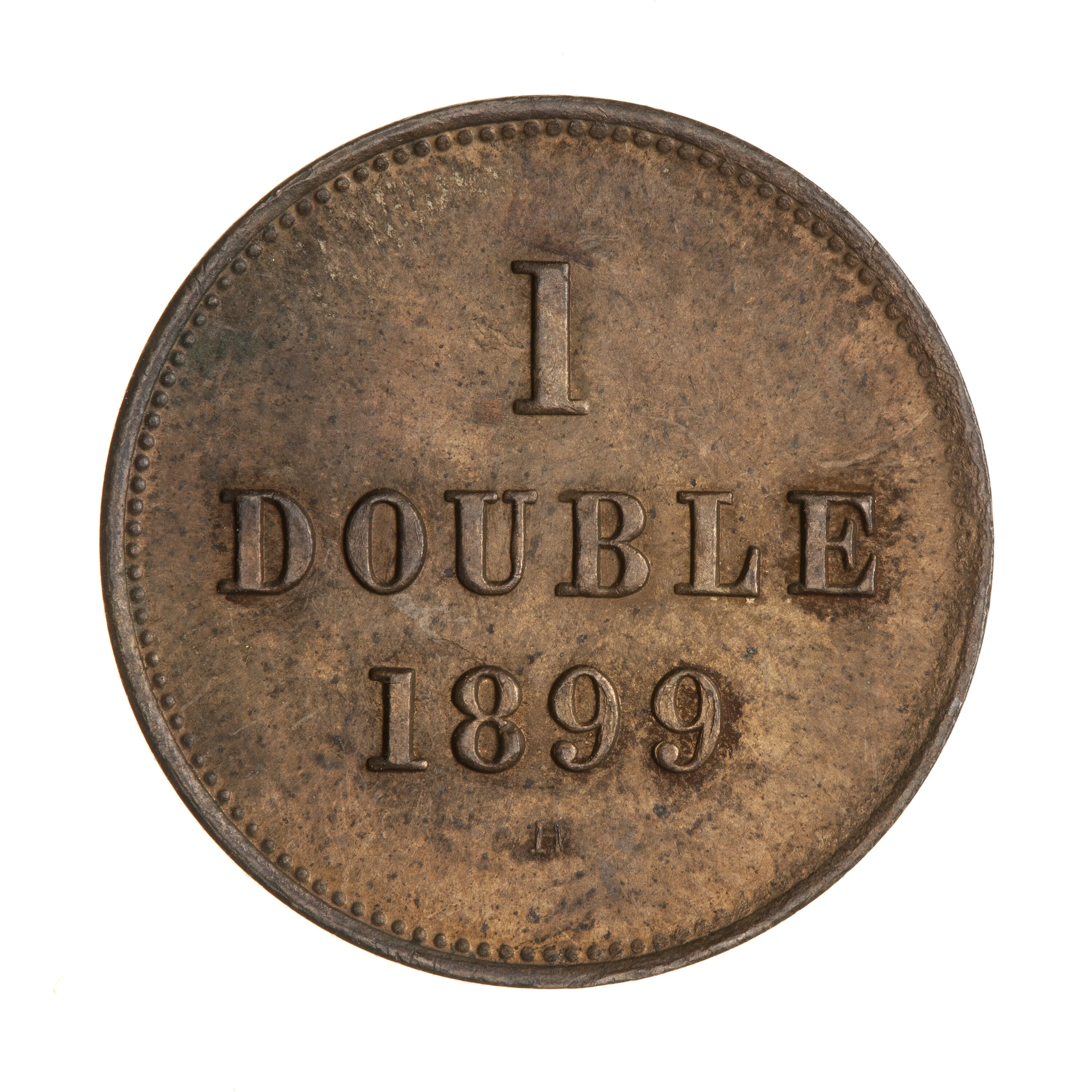
1 Double – Guernsey
Context
Years: 1868–1911
Country: British Crown dependencies
Issuer: Guernsey
Ruler: Edward VII
Currency:
(1808—1971)
Demonetized: Yes
Total mintage: 628,400
Material
References
KM: #Click to copy to clipboard10
Numista: #14768
Obverse
Reverse
Edge
Plain
Mints
| Name | Mark |
|---|---|
| Royal Mint (Tower Hill) | — |
| Heaton and Sons / The Mint Birmingham | H |
Mintings
Historical background
In 1868, Guernsey's currency situation was a complex and locally managed system, distinct from the mainland United Kingdom. While the British pound sterling was the official standard, the island's circulation was dominated by a mix of French gold and silver coins, alongside English gold sovereigns and banknotes from English and local banks. This practical bimetallism arose from Guernsey's historic trading links with Normandy and France, making French francs and louis d'or familiar and trusted mediums for daily commerce.
This period followed the pivotal 1860 "States Note" issue, where the States of Guernsey, to fund a public market building without borrowing, printed its own paper currency (£10,000 in £1 notes). These notes, which remained in circulation in 1868, were not legal tender but were accepted for payment to the States and successfully held their value. They represented a bold experiment in deficit financing through direct currency issuance, which stood in contrast to the metallic coinage circulating alongside them.
The situation was, however, on the cusp of change. The UK Coinage Act of 1870 would soon declare British currency the sole legal tender across the British Isles, aiming to standardise the monetary system. Therefore, in 1868, Guernsey operated a hybrid and increasingly anomalous system, blending English, French, and local paper currencies by custom and convenience, shortly before being formally integrated into the British sterling zone.
This period followed the pivotal 1860 "States Note" issue, where the States of Guernsey, to fund a public market building without borrowing, printed its own paper currency (£10,000 in £1 notes). These notes, which remained in circulation in 1868, were not legal tender but were accepted for payment to the States and successfully held their value. They represented a bold experiment in deficit financing through direct currency issuance, which stood in contrast to the metallic coinage circulating alongside them.
The situation was, however, on the cusp of change. The UK Coinage Act of 1870 would soon declare British currency the sole legal tender across the British Isles, aiming to standardise the monetary system. Therefore, in 1868, Guernsey operated a hybrid and increasingly anomalous system, blending English, French, and local paper currencies by custom and convenience, shortly before being formally integrated into the British sterling zone.
🌱 Common