

1 ruble (Romanov Dynasty) – Russian Empire
Add to wishlist
Circulating commemorative coins
Commemoration: 300th Anniversary of the Romanov Dynasty
Russia
Context
Year: 1913
Country: Russia
Issuer: Russian Empire
Ruler: Nicholas II
Currency:
(1700—1917)
Demonetization: 1917
Total mintage: 1,450,000
Material
References
Y: #
Numista: #14767
Value
Bullion value: $44.15
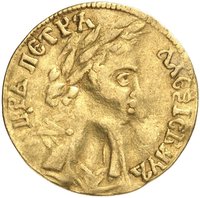
Obverse
Description:
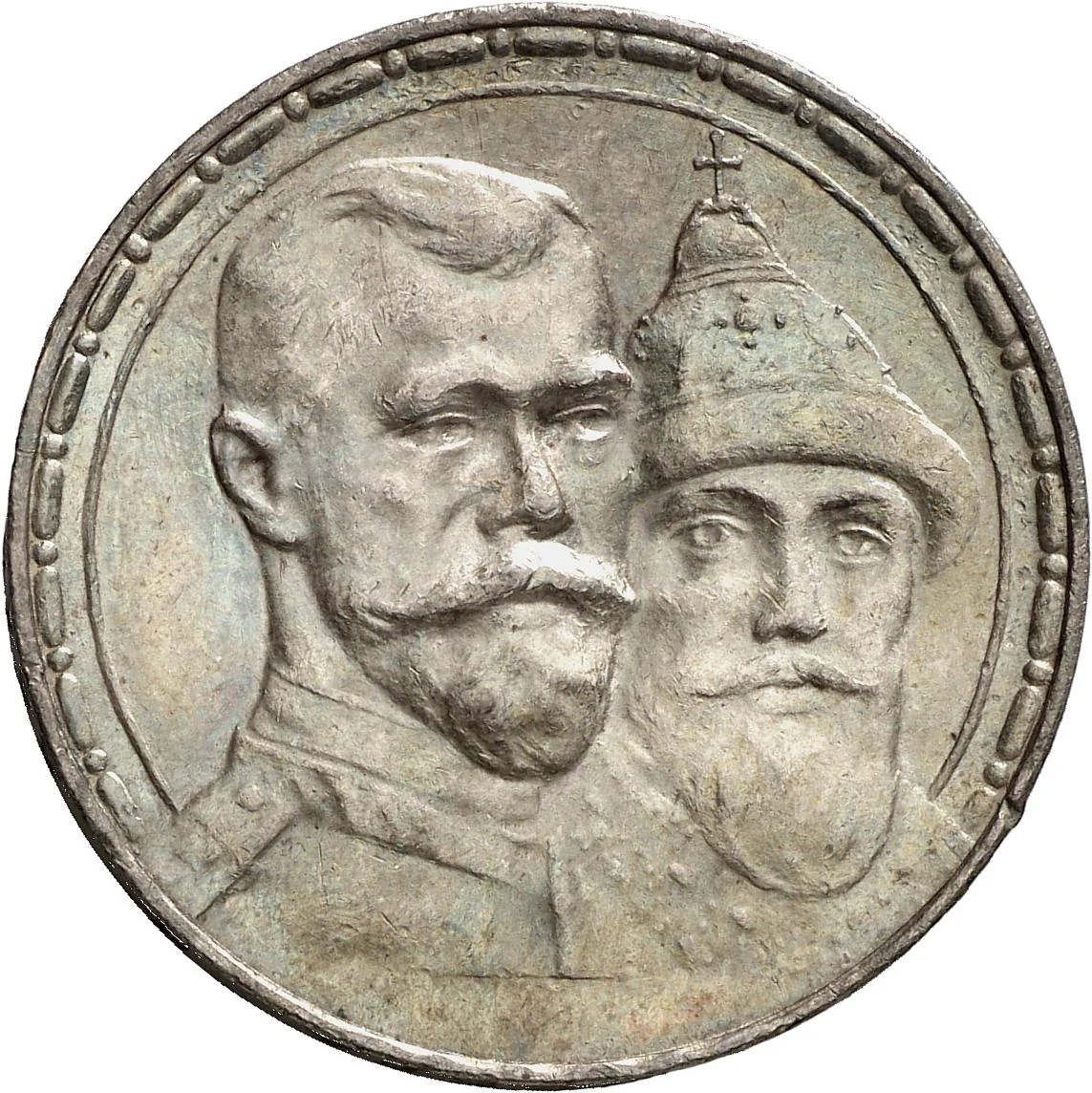
The obverse features portraits of Emperor Nicholas II in military uniform and Michael I in royal regalia, set within a circular Greek ornamental frame.
Engraver: M.A. Kerzin
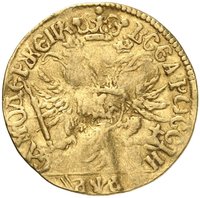
Reverse
Description:
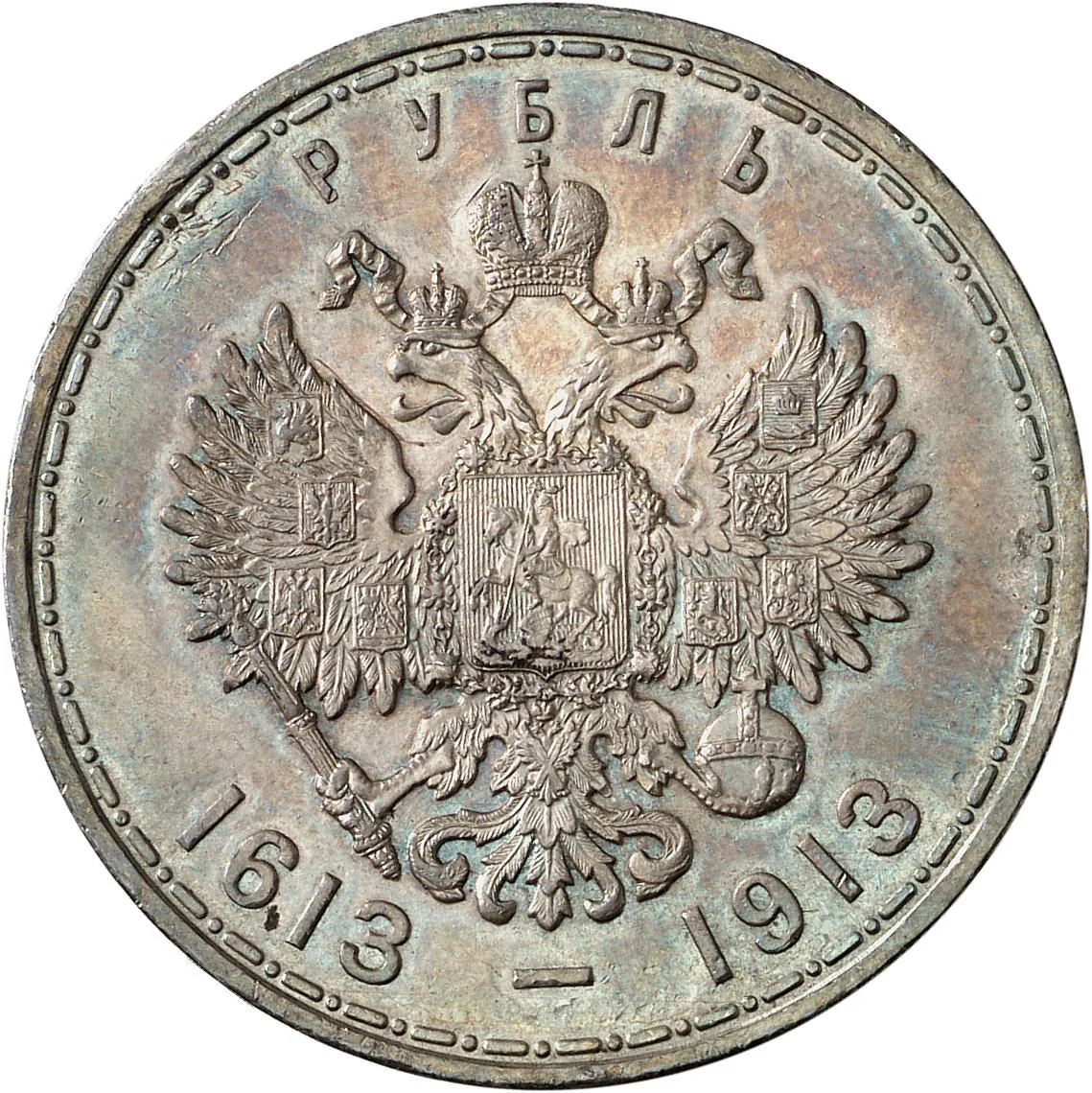
The Lesser Coat of Arms of the Russian Empire, surrounded by a Greek key pattern. Above is "ROUBLE," below the dual dates 1613-1913.
Inscription:
РУБЛЬ
1613 - 1913
1613 - 1913
Translation:
RUBLE
1613 - 1913
1613 - 1913
Script: Cyrillic
Language: Russian
Engraver: M.A. Kerzin
Edge
Smooth with inscription
Legend:
ЧИСТАГО СЕРЕБРА 4 ЗОЛОТНИКА 21 ДОЛЯ (В•С)
Translation:
Pure Silver 4 Zolotniks 21 Dolya (V•S)
Language: Russian
Categories
| Person> Monarch |
| Symbols> Coat of Arms |
Mints
| Name | Mark |
|---|---|
| Saint Petersburg | — |
Mintings
| Year | Mint Mark | Mintage | Quality | Collection |
|---|---|---|---|---|
| 1913 | — | 1,450,000 |
Historical background
In 1913, the currency of the Russian Empire, the gold ruble (zolotoy rubl), was a symbol of the state's late economic modernization and fiscal stability under Finance Minister Sergei Witte. Following his major monetary reform of 1897, Russia had moved from a chronically unstable paper currency to a firm gold standard. The ruble was pegged at 0.774235 grams of pure gold, making it fully convertible and a credible instrument for international trade and investment. This stability successfully attracted significant foreign capital, particularly from France and Britain, which was crucial for financing the empire's rapid industrialization in the decades leading up to World War I.
Despite this formal strength, the monetary system rested on a narrow and vulnerable foundation. The State Bank's gold reserves, while substantial, were heavily reliant on large foreign loans rather than a robust domestic accumulation of wealth through exports. Furthermore, the economy remained fundamentally dualistic: a modernizing industrial and financial sector in major cities coexisted with a vast, backward agrarian sector where the peasant majority had limited integration into the cash economy. This duality meant that the impressive macroeconomic indicators of 1913—a record budget, high gold reserves, and growing industrial output—masked deep-seated social inequalities and structural weaknesses.
Consequently, the pre-war currency's apparent solidity was more precarious than it seemed. The gold standard imposed strict monetary discipline, limiting the government's ability to use financial policy for social or economic development in the countryside. When the immense pressures of total war arrived in 1914, the Tsarist government quickly suspended gold convertibility to print paper money for military financing. This action, combined with the catastrophic economic disruptions of the war, rapidly unraveled the stability of 1913, leading to hyperinflation and the complete collapse of the imperial monetary system by 1917, paving the way for the financial chaos of the revolutionary period.
Despite this formal strength, the monetary system rested on a narrow and vulnerable foundation. The State Bank's gold reserves, while substantial, were heavily reliant on large foreign loans rather than a robust domestic accumulation of wealth through exports. Furthermore, the economy remained fundamentally dualistic: a modernizing industrial and financial sector in major cities coexisted with a vast, backward agrarian sector where the peasant majority had limited integration into the cash economy. This duality meant that the impressive macroeconomic indicators of 1913—a record budget, high gold reserves, and growing industrial output—masked deep-seated social inequalities and structural weaknesses.
Consequently, the pre-war currency's apparent solidity was more precarious than it seemed. The gold standard imposed strict monetary discipline, limiting the government's ability to use financial policy for social or economic development in the countryside. When the immense pressures of total war arrived in 1914, the Tsarist government quickly suspended gold convertibility to print paper money for military financing. This action, combined with the catastrophic economic disruptions of the war, rapidly unraveled the stability of 1913, leading to hyperinflation and the complete collapse of the imperial monetary system by 1917, paving the way for the financial chaos of the revolutionary period.
🌱 Fairly Common