

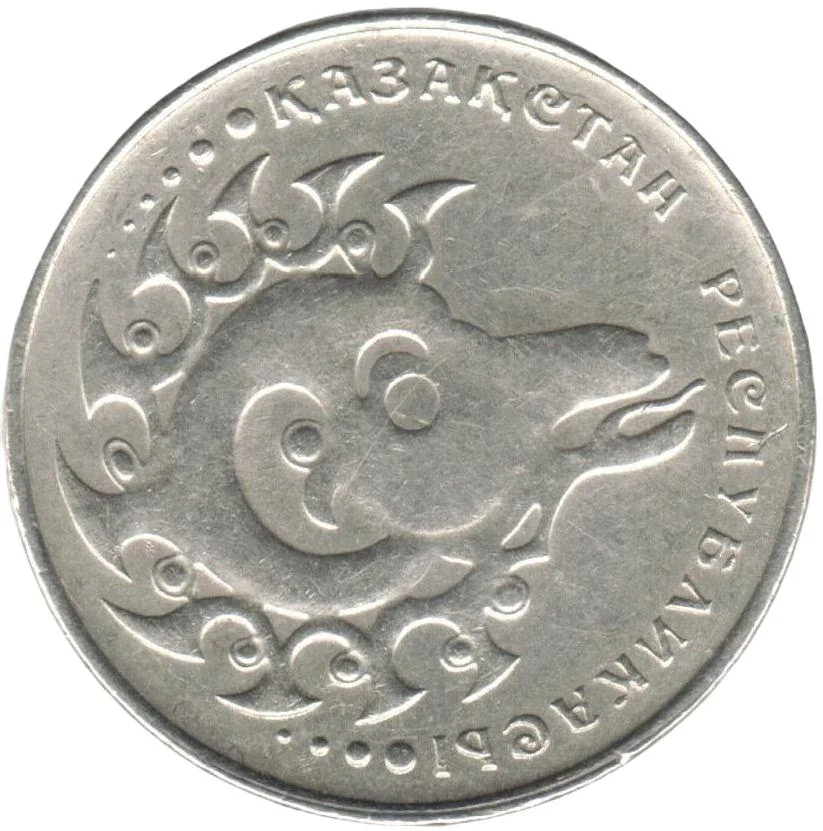
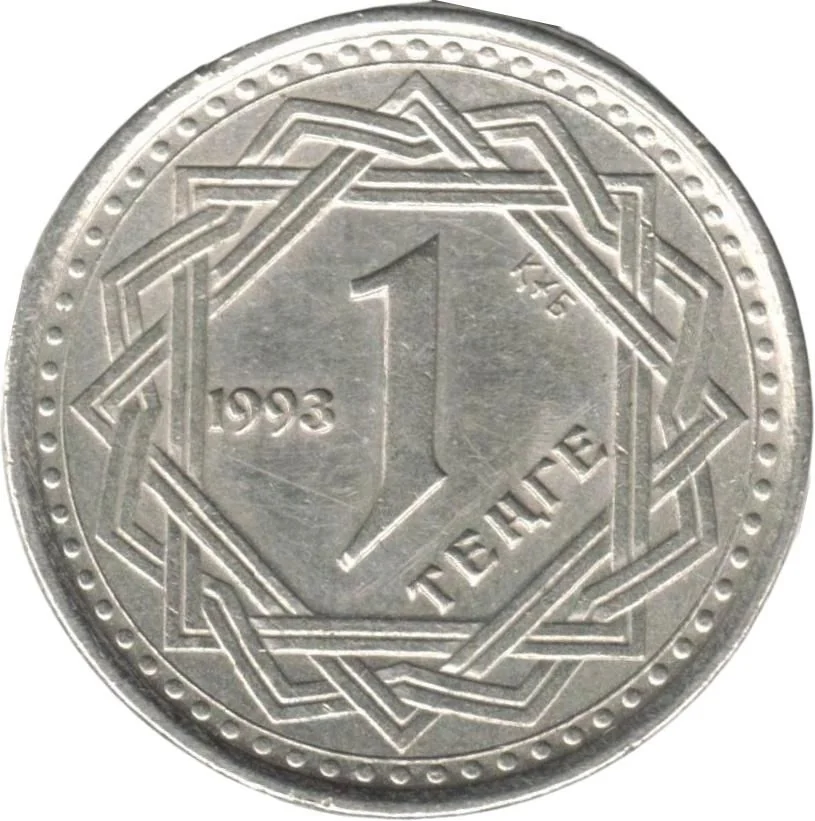
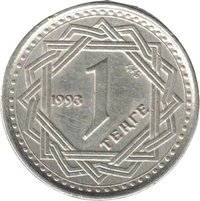
1 Tenge – Kazakhstan
Kazakhstan
Context
Years: 1992–1993
Issuer: Kazakhstan 
Period:
(since 1991)
Currency:
(since 1993)
Demonetization: 1 October 2001
Material
Diameter: 17.3 mm
Weight: 2.2 g
Shape: Round
Composition: Copper-nickel
Technique: Milled
Alignment: Medal alignment
flip
References
KM: #Click to copy to clipboard6
Numista: #4498
Value
Exchange value: 1 KZT
Obverse
Reverse
Edge
Plain
Mints
| Name | Mark |
|---|---|
| Kazakhstan Mint | (ҚҰБ) |
Mintings
| Year | Mint Mark | Mintage | Quality | Collection |
|---|---|---|---|---|
| 1992 | — | — | ||
| 1993 | — | — | ||
| 1993 | ҚҰБ | — |
Historical background
Following the dissolution of the Soviet Union in late 1991, Kazakhstan entered 1992 in a state of acute monetary crisis, still tethered to the collapsing Russian ruble zone. As the newly independent republic lacked its own currency, it was immediately vulnerable to the hyperinflation and cash shortages emanating from Moscow, where the Central Bank of Russia was printing rubles without restraint to finance deficits. This led to a devastating loss of monetary control within Kazakhstan, with inflation soaring to over 1,500% annually, wiping out savings and crippling economic activity as barter trade proliferated.
The situation was exacerbated by the "ruble corridor" policy, where other former Soviet republics freely issued credit rubles, flooding the Kazakh economy with currency it did not control. Kazakhstan became a dumping ground for these rubles, importing hyperinflation from its neighbors. Attempts to introduce a provisional currency, the tenge, were delayed throughout 1992 due to intense political pressure from Russia, which sought to maintain the ruble zone to preserve economic influence. Consequently, Kazakhstan spent the year in a monetary purgatory, suffering the worst effects of hyperinflation without the sovereign tools to combat it.
By the end of 1992, the untenable situation forced a decisive break. The final catalyst was Russia's sudden and unilateral exit from the ruble zone in July 1993, which would have left Kazakhstan without any legal tender. This propelled the Kazakh government to accelerate its preparations in secrecy. While the new national currency, the tenge, was not introduced until November 1993, the pivotal decisions and urgent groundwork to escape the catastrophic ruble zone were the defining features of Kazakhstan's currency struggle throughout 1992.
The situation was exacerbated by the "ruble corridor" policy, where other former Soviet republics freely issued credit rubles, flooding the Kazakh economy with currency it did not control. Kazakhstan became a dumping ground for these rubles, importing hyperinflation from its neighbors. Attempts to introduce a provisional currency, the tenge, were delayed throughout 1992 due to intense political pressure from Russia, which sought to maintain the ruble zone to preserve economic influence. Consequently, Kazakhstan spent the year in a monetary purgatory, suffering the worst effects of hyperinflation without the sovereign tools to combat it.
By the end of 1992, the untenable situation forced a decisive break. The final catalyst was Russia's sudden and unilateral exit from the ruble zone in July 1993, which would have left Kazakhstan without any legal tender. This propelled the Kazakh government to accelerate its preparations in secrecy. While the new national currency, the tenge, was not introduced until November 1993, the pivotal decisions and urgent groundwork to escape the catastrophic ruble zone were the defining features of Kazakhstan's currency struggle throughout 1992.
🌱 Common