

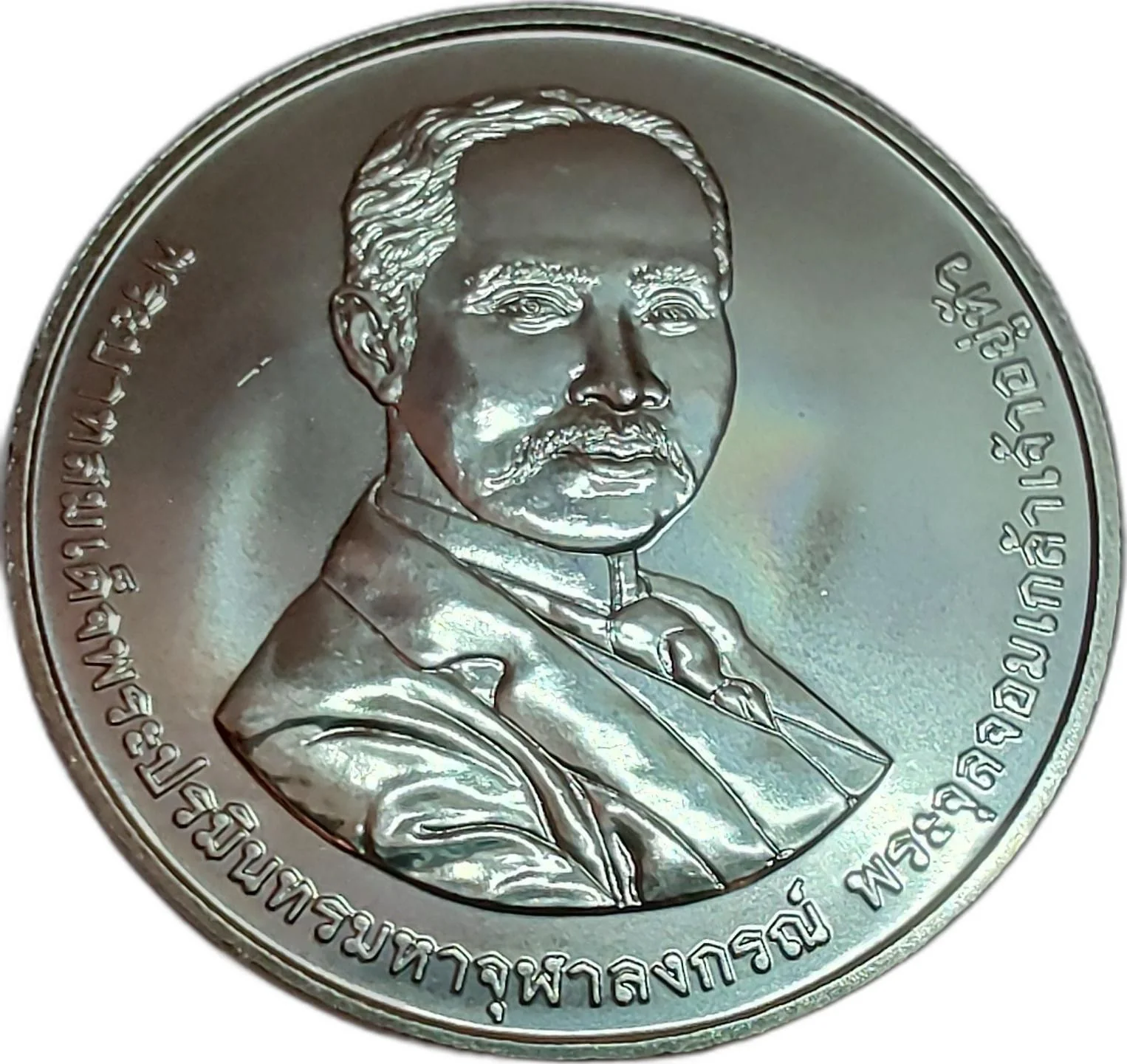

20 bahts (Customs Department) – Thailand
Add to wishlist
Circulating commemorative coins
Commemoration: 150th Anniversary of Customs Department
Thailand
Context
Material
Diameter: 32 mm
Weight: 15 g
Shape: Round
Composition: Copper-nickel (75% Copper)
Technique: Milled
Alignment: Medal alignment
flip

References
Numista: #449285
Value
Exchange value: 20 THB
Obverse
Reverse
Description:
The old Customs House in Bangkok, with the Customs Department symbol and a 150th-anniversary logo in the upper corners.
Inscription:
• ๑๕๐ ปี กรมศุลกากร ๔ กรกฎาคม ๒๕๖๗ •
150 ปี
กรมศุลกากร
๒๐ บาท ประเทศไทย
150 ปี
กรมศุลกากร
๒๐ บาท ประเทศไทย
Translation:
150 Years, Customs Department, 4 July 2024
150 Years
Customs Department
20 Baht, Thailand
150 Years
Customs Department
20 Baht, Thailand
Script: Thai
Language: Thai
Edge
Reeded.
Categories
| Building |
Mintings
| Year | Mint Mark | Mintage | Quality | Collection |
|---|---|---|---|---|
| 2024 | — | — |
Historical background
Thailand's currency situation in 2024 is defined by the persistent weakness of the Thai baht (THB), which has been one of Asia's worst-performing currencies. The baht has faced significant depreciation pressure, primarily driven by a stark divergence in monetary policy between the Bank of Thailand (BoT) and major global central banks, particularly the U.S. Federal Reserve. While the Fed maintained high interest rates to combat inflation, the BoT kept its benchmark rate relatively low, citing subdued domestic inflation and a fragile economic recovery. This interest rate differential spurred capital outflows as investors sought higher yields abroad, steadily weakening the baht against the U.S. dollar throughout the year.
This depreciation has presented a complex economic picture for Thailand. On one hand, it has provided a crucial boost to the vital tourism and export sectors, making Thailand a more affordable destination and its goods more competitive internationally. On the other hand, it has increased the cost of imports, particularly energy and raw materials, raising concerns about input costs for businesses and potential future consumer inflation. The weak baht also elevates the burden of foreign-denominated debt, a significant concern for both the government and private corporations that borrowed heavily in dollars during the era of low global rates.
Authorities have adopted a cautious and measured response. The Bank of Thailand has intervened intermittently to smooth excessive volatility in the currency market but has largely resisted aggressively defending any specific baht level, emphasizing the need to preserve foreign reserves. The government, meanwhile, has implemented fiscal stimulus measures aimed at strengthening the domestic economy to reduce reliance on external factors. The currency's trajectory for the remainder of 2024 is widely seen as hinging on the timing and pace of U.S. Federal Reserve rate cuts, which could ease pressure, and on the success of Thailand's domestic economic policies in stimulating growth and attracting sustained capital inflows.
This depreciation has presented a complex economic picture for Thailand. On one hand, it has provided a crucial boost to the vital tourism and export sectors, making Thailand a more affordable destination and its goods more competitive internationally. On the other hand, it has increased the cost of imports, particularly energy and raw materials, raising concerns about input costs for businesses and potential future consumer inflation. The weak baht also elevates the burden of foreign-denominated debt, a significant concern for both the government and private corporations that borrowed heavily in dollars during the era of low global rates.
Authorities have adopted a cautious and measured response. The Bank of Thailand has intervened intermittently to smooth excessive volatility in the currency market but has largely resisted aggressively defending any specific baht level, emphasizing the need to preserve foreign reserves. The government, meanwhile, has implemented fiscal stimulus measures aimed at strengthening the domestic economy to reduce reliance on external factors. The currency's trajectory for the remainder of 2024 is widely seen as hinging on the timing and pace of U.S. Federal Reserve rate cuts, which could ease pressure, and on the success of Thailand's domestic economic policies in stimulating growth and attracting sustained capital inflows.



⭐ Somewhat Rare