

4 Mon – Japan
Japan
Context
Material
Diameter: 28 mm
Weight: 5.3 g
Thickness: 1.2 mm
Shape: Round with a square hole
Composition: Iron
Technique: Cast
Alignment: Medal alignment
flip
References
Numista: #147416
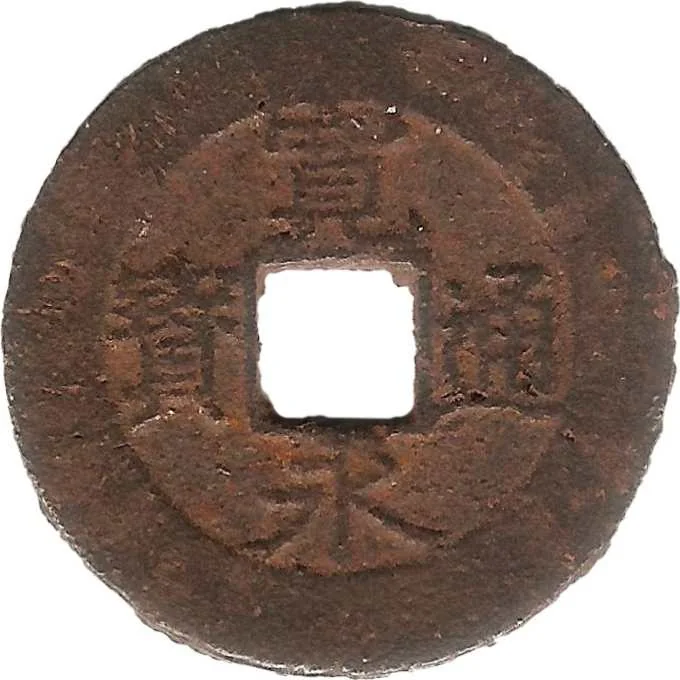
Obverse
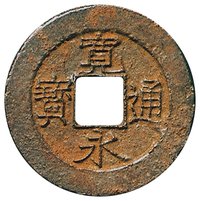
Description:
Inscription encircling the square opening.
Inscription:
寛
寶 通
永
寶 通
永
Translation:
Eternal Coins
Circulate Treasure
Kuan
Circulate Treasure
Kuan
Language: Chinese
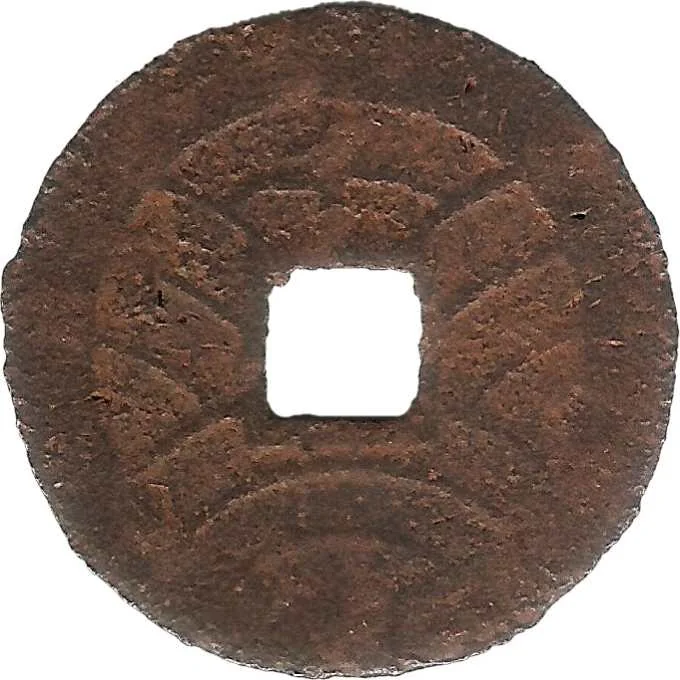
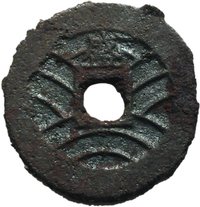
Reverse
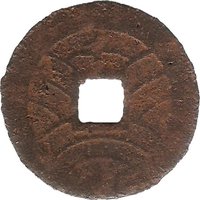
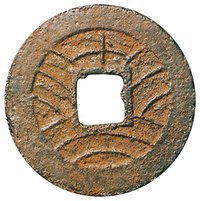
Description:
11 waves, mintmark 千 above hole.
Inscription:
千
Translation:
One thousand.
Language: Classical Chinese
Edge
Plain
Mintings
| Year | Mint Mark | Mintage | Quality | Collection |
|---|---|---|---|---|
| 1866 | — | — |
Historical background
In 1866, Japan's currency system was in a state of profound disarray, a direct reflection of the political and economic crisis of the late Tokugawa shogunate. The nation operated without a unified currency; instead, over 200 semi-autonomous domains (han) issued their own often inconvertible paper notes (hansatsu), while the shogunate minted gold, silver, and copper coins. This patchwork system, plagued by inconsistent values and widespread counterfeiting, crippled domestic trade and fostered deep economic instability. The situation was severely worsened by the shogunate's desperate financial straits, driven by the immense costs of suppressing domestic dissent and dealing with foreign powers after the forced opening of the country. To cover deficits, the Bakufu repeatedly debased its own coinage, leading to rampant inflation, loss of public confidence, and a chaotic multiplicity of exchange rates.
The arrival of Western merchants following the 1858 treaties exacerbated the crisis, creating a destructive arbitrage opportunity. Foreign traders, paying for Japanese silk and tea with silver Mexican dollars, discovered they could exchange those dollars for vastly undervalued Japanese gold coins at the official shogunal rate, then sell the gold abroad for massive profit. This triggered a massive outflow of gold bullion, depleting the shogunate's reserves and further destabilizing the entire monetary structure. Internally, the resulting inflation severely harmed samurai on fixed stipends and the peasantry, fueling social unrest that directly undermined the legitimacy of the Tokugawa regime.
Thus, by 1866, the currency chaos was both a symptom and a cause of the shogunate's collapse. It represented the failure of the old feudal economic order to function in a modernizing world and created an urgent practical need for centralization and reform. This monetary anarchy became a powerful argument for the imperial loyalists (later the Meiji government), who would, upon taking power in 1868, prioritize the creation of a single, stable, nationally regulated currency—the yen—as a foundational step in building a modern nation-state.
The arrival of Western merchants following the 1858 treaties exacerbated the crisis, creating a destructive arbitrage opportunity. Foreign traders, paying for Japanese silk and tea with silver Mexican dollars, discovered they could exchange those dollars for vastly undervalued Japanese gold coins at the official shogunal rate, then sell the gold abroad for massive profit. This triggered a massive outflow of gold bullion, depleting the shogunate's reserves and further destabilizing the entire monetary structure. Internally, the resulting inflation severely harmed samurai on fixed stipends and the peasantry, fueling social unrest that directly undermined the legitimacy of the Tokugawa regime.
Thus, by 1866, the currency chaos was both a symptom and a cause of the shogunate's collapse. It represented the failure of the old feudal economic order to function in a modernizing world and created an urgent practical need for centralization and reform. This monetary anarchy became a powerful argument for the imperial loyalists (later the Meiji government), who would, upon taking power in 1868, prioritize the creation of a single, stable, nationally regulated currency—the yen—as a foundational step in building a modern nation-state.
💎 Extremely Rare