

10 hryven – Ukraine
Add to wishlist
Non-circulating coins
Commemoration: The Digital State
Ukraine
Context
Year: 2024
Issuer: Ukraine
Issuing organization: National Bank of Ukraine
Period:
(since 1991)
Currency:
(since 1996)
Total mintage: 5,000
Material
Weight: 31.1 g
Silver Weight:: 31.07 g
Shape: Square with rounded corners
Composition: 99.9% Silver
Standard: Silver ounce
Magnetic: No
Technique: Milled
Alignment: Medal alignment
flip
References
KM: #
Numista: #446365
Value
Exchange value: 10 UAH
Bullion value: $75.99
Obverse
Description:
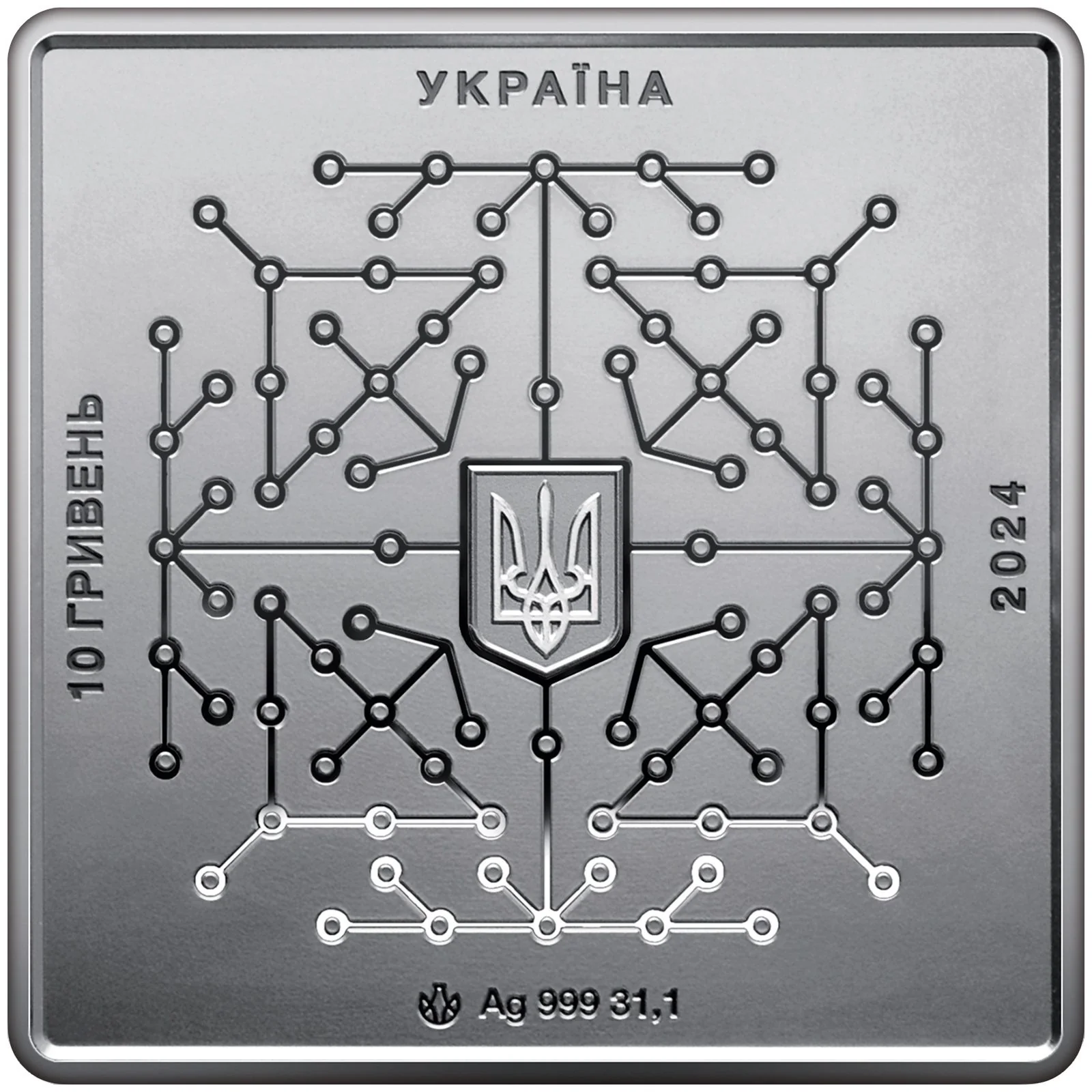
Ukraine's coat of arms embedded in a circuit board.
Inscription:
УКРАЇНА
10 ГРИВЕНЬ
2024
Ag 999 31.1
10 ГРИВЕНЬ
2024
Ag 999 31.1
Translation:
UKRAINE
10 HRYVNIAS
2024
Ag 999 31.1
10 HRYVNIAS
2024
Ag 999 31.1
Language: Ukrainian
Designer: Andrii Sahach
Reverse
Description:
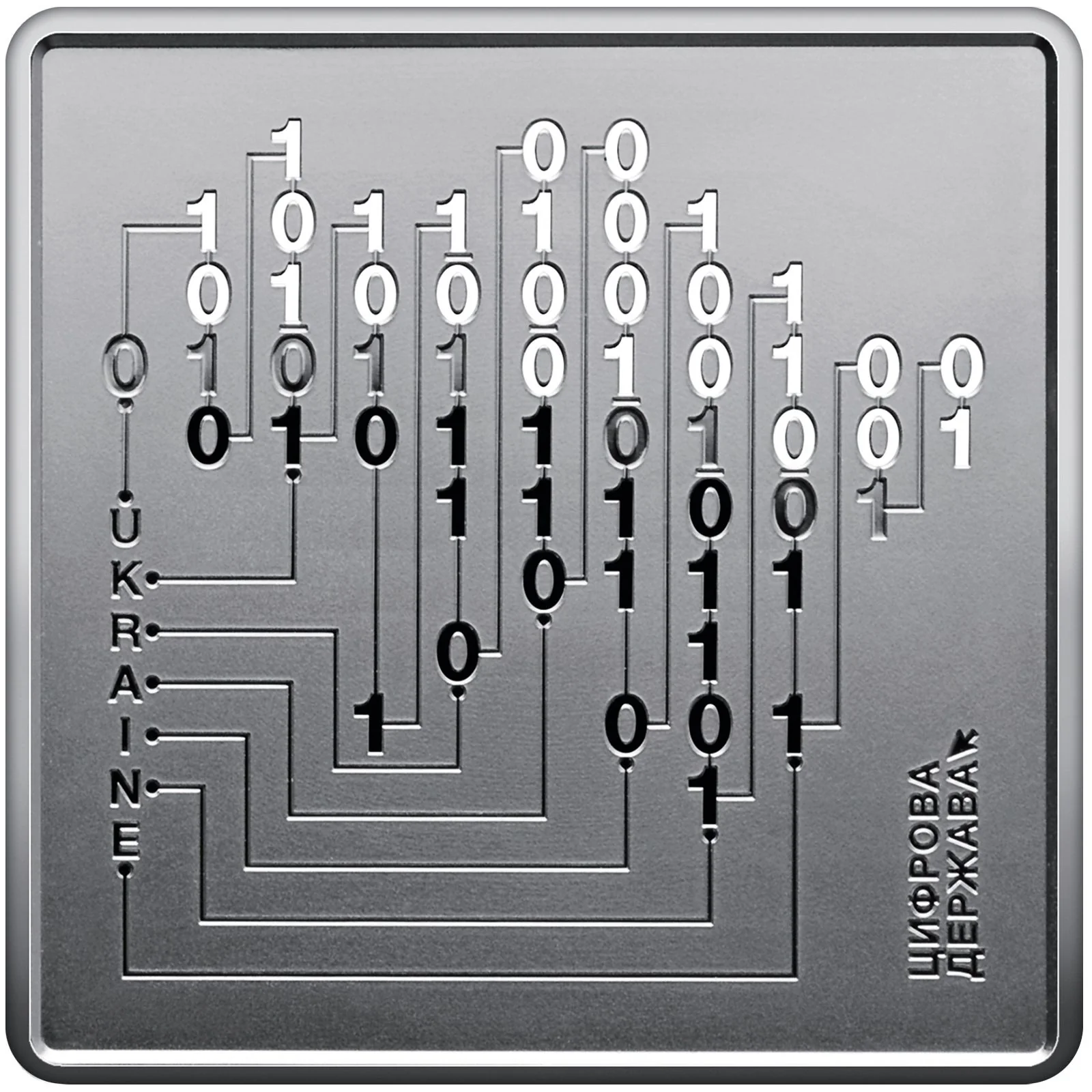
Binary code map of Ukraine.
Inscription:
UKRAINE
ЦИФРОВА ДЕРЖАВА
ЦИФРОВА ДЕРЖАВА
Translation:
Digital State
Ukraine
Ukraine
Language: Ukrainian
Designer: Andrii Sahach
Edge
Plain
Mints
| Name | Mark |
|---|---|
| National Bank of Ukraine Banknote Printing and Minting Works | — |
Mintings
| Year | Mint Mark | Mintage | Quality | Collection |
|---|---|---|---|---|
| 2024 | — | 5,000 | Special Uncirculated |
Historical background
In 2024, Ukraine's currency, the hryvnia (UAH), operates under a managed floating exchange rate regime, heavily stabilized by the National Bank of Ukraine (NBU). The primary anchor for this stability is the unprecedented level of international financial assistance from Western partners, including the EU, IMF, and the United States. These inflows, covering a significant portion of the state budget, allow the NBU to replenish foreign reserves—which have reached multi-year highs—and intervene in the forex market to smooth out volatility. Despite the ongoing full-scale war, the official exchange rate has remained remarkably stable, hovering around UAH 39 to the US dollar for an extended period, a policy the NBU prioritizes to control inflation and ensure macroeconomic predictability.
However, this formal stability masks underlying pressures and a stark duality in the currency landscape. A significant shadow market for US dollars exists, where the exchange rate has historically traded at a 10-15% premium to the official rate, reflecting persistent demand for hard currency and the risks associated with the war. Key challenges for the NBU include maintaining sufficient inflows of foreign aid, managing high budget expenditures for defense, and controlling inflationary pressures which, while reduced from peak levels, remain a concern due to monetization of the deficit and structural damage to the economy. The stability is thus conditional and externally dependent.
Looking forward, the currency's trajectory in 2024 is inextricably linked to the duration of the war and the continuity of foreign financial support. The government and the NBU are navigating a narrow path, balancing the need for wartime spending with long-term monetary stability. Successful implementation of the IMF program and progress on EU accession talks provide positive signals for investors. Nevertheless, any significant reduction in external financing or a severe escalation of the conflict would pose immediate and substantial risks to the hryvnia's stability, potentially testing the limits of the central bank's managed float.
However, this formal stability masks underlying pressures and a stark duality in the currency landscape. A significant shadow market for US dollars exists, where the exchange rate has historically traded at a 10-15% premium to the official rate, reflecting persistent demand for hard currency and the risks associated with the war. Key challenges for the NBU include maintaining sufficient inflows of foreign aid, managing high budget expenditures for defense, and controlling inflationary pressures which, while reduced from peak levels, remain a concern due to monetization of the deficit and structural damage to the economy. The stability is thus conditional and externally dependent.
Looking forward, the currency's trajectory in 2024 is inextricably linked to the duration of the war and the continuity of foreign financial support. The government and the NBU are navigating a narrow path, balancing the need for wartime spending with long-term monetary stability. Successful implementation of the IMF program and progress on EU accession talks provide positive signals for investors. Nevertheless, any significant reduction in external financing or a severe escalation of the conflict would pose immediate and substantial risks to the hryvnia's stability, potentially testing the limits of the central bank's managed float.

✨ Legendary