

Obverse
Description:
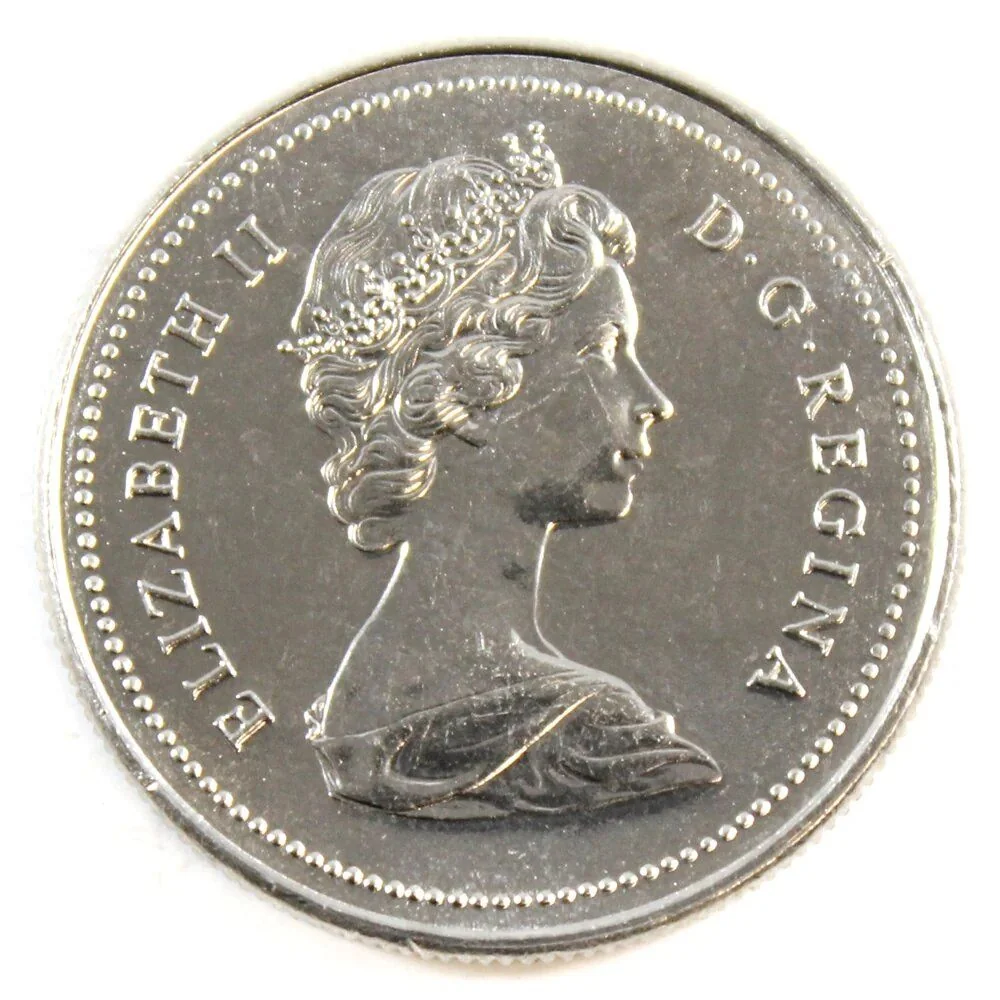
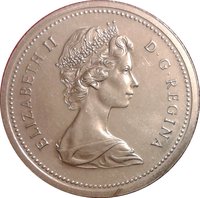
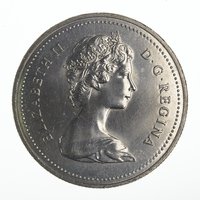
Bust of Queen Elizabeth II at age 37, wearing a tiara and facing right.
Inscription:
ELIZABETH II D·G·REGINA
Translation:
Elizabeth II, by the Grace of God, Queen
Script: Latin
Language: Latin
Designer: Arnold Machin
Reverse
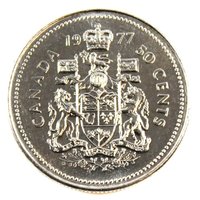
Description:
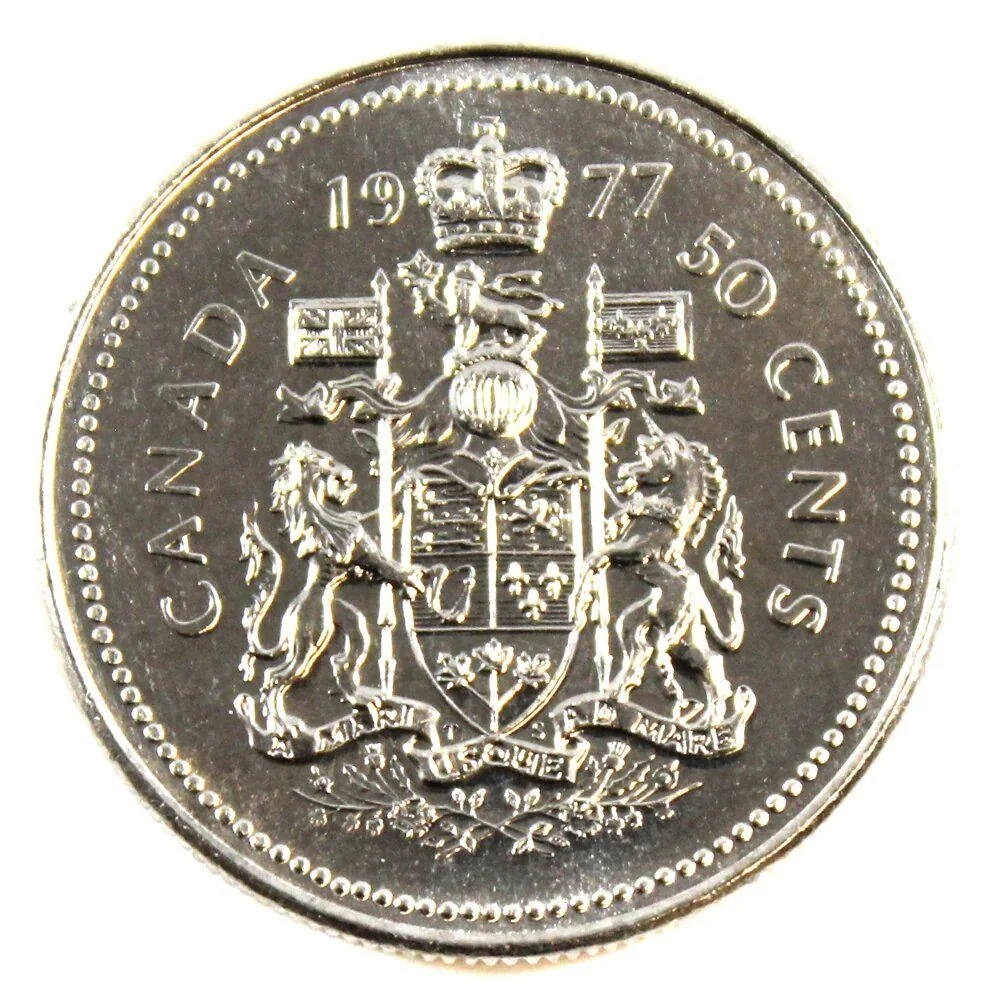
The Royal Coat of Arms of Canada, proclaimed in 1921 and updated in 1957, divides the date above, the country name left, and the value right.
Inscription:
1977
CANADA 50 CENTS
A MARI USQUE AD MARE
T S
CANADA 50 CENTS
A MARI USQUE AD MARE
T S
Script: Latin
Designer: Thomas Shingles
Edge
Reeded
Categories
| Symbols> Coat of Arms |
Mints
| Name | Mark |
|---|---|
| Royal Canadian Mint of Winnipeg | — |
Mintings
| Year | Mint Mark | Mintage | Quality | Collection |
|---|---|---|---|---|
| 1977 | — | 709,939 | ||
| 1977 | — | 225,307 | Prooflike |
Historical background
In 1977, Canada's currency situation was characterized by a period of significant transition and volatility, shaped by both domestic inflation and global economic forces. The country was emerging from the stagflation of the early 1970s, with the Bank of Canada, under Governor Gerald Bouey, maintaining a tight monetary policy focused on controlling money supply growth to combat persistent inflation, which hovered around 8%. The Canadian dollar experienced considerable pressure, depreciating against the U.S. dollar for much of the year, falling to a then-historic low near US$0.93 by autumn. This decline was driven by capital outflows, a lack of investor confidence, and a widening interest rate differential with the United States.
The currency's weakness was paradoxically set against a backdrop of strong commodity exports, particularly oil and gas, following the 1973 oil crisis. However, this resource strength was offset by concerns over the economic policies of Prime Minister Pierre Trudeau's government, including large fiscal deficits and perceived interventionist measures like wage and price controls (the Anti-Inflation Act, which was in its final year). International investors were wary, leading to a "capital strike" that exacerbated the dollar's fall. The Bank of Canada responded by raising interest rates sharply in the latter part of the year, a move that successfully attracted capital inflows and triggered a rapid rebound in the currency's value by year's end.
Ultimately, 1977 proved to be a pivotal year that reinforced a market-oriented shift in Canadian monetary policy. The volatility underscored the challenges of managing a resource-based, open economy amidst global uncertainty and domestic inflationary pressures. The experience solidified the Bank of Canada's commitment to targeting monetary aggregates, a precursor to the explicit inflation-targeting regime that would be adopted in the early 1990s, and highlighted the growing influence of international capital flows on the value of the Canadian dollar.
The currency's weakness was paradoxically set against a backdrop of strong commodity exports, particularly oil and gas, following the 1973 oil crisis. However, this resource strength was offset by concerns over the economic policies of Prime Minister Pierre Trudeau's government, including large fiscal deficits and perceived interventionist measures like wage and price controls (the Anti-Inflation Act, which was in its final year). International investors were wary, leading to a "capital strike" that exacerbated the dollar's fall. The Bank of Canada responded by raising interest rates sharply in the latter part of the year, a move that successfully attracted capital inflows and triggered a rapid rebound in the currency's value by year's end.
Ultimately, 1977 proved to be a pivotal year that reinforced a market-oriented shift in Canadian monetary policy. The volatility underscored the challenges of managing a resource-based, open economy amidst global uncertainty and domestic inflationary pressures. The experience solidified the Bank of Canada's commitment to targeting monetary aggregates, a precursor to the explicit inflation-targeting regime that would be adopted in the early 1990s, and highlighted the growing influence of international capital flows on the value of the Canadian dollar.
🌱 Common