

1 rufiyaa – Maldives
Add to wishlist
Maldives
Context
Material
References
KM: #
Numista: #4437
Value
Exchange value: 1 MVR
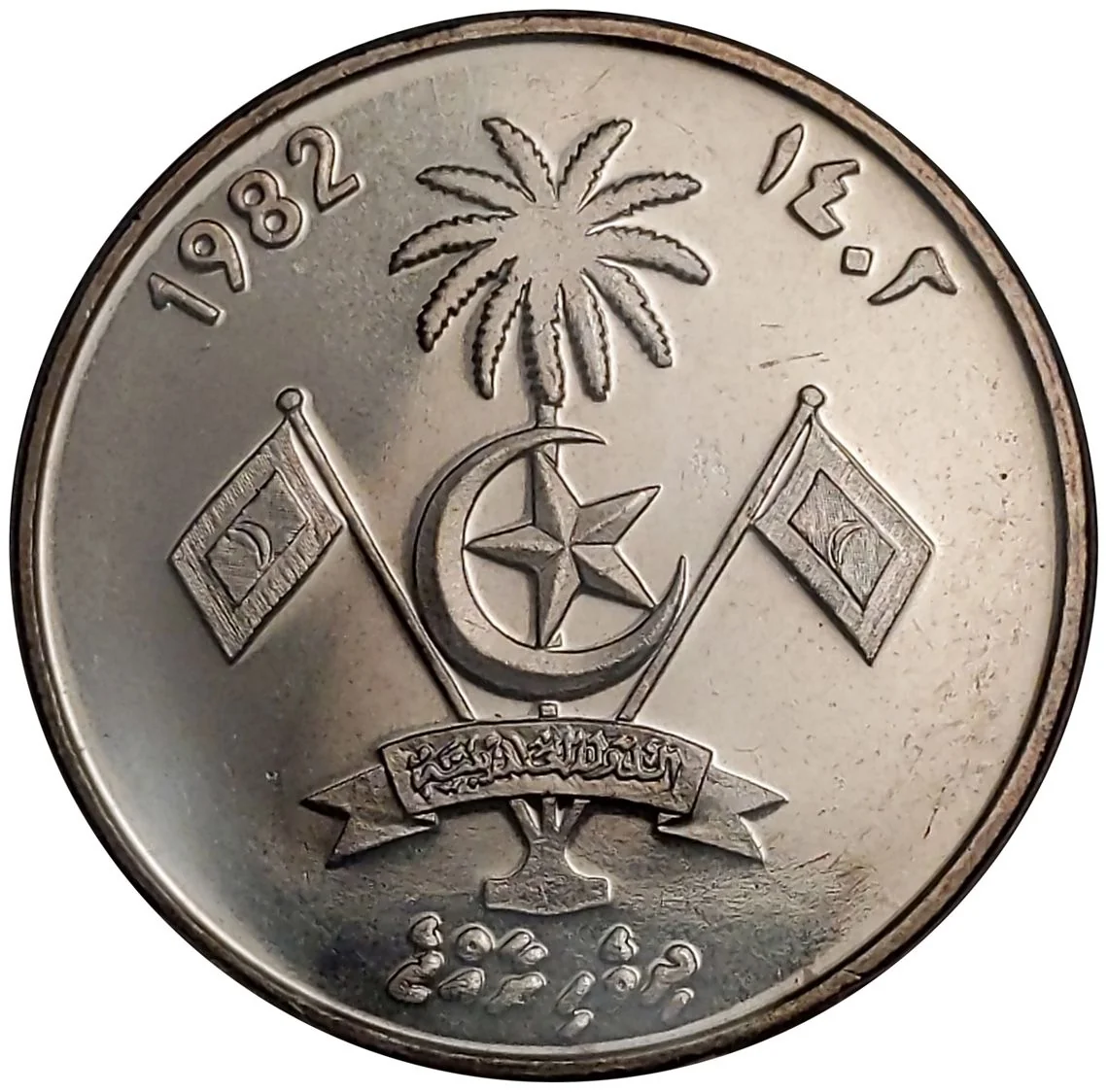
Obverse
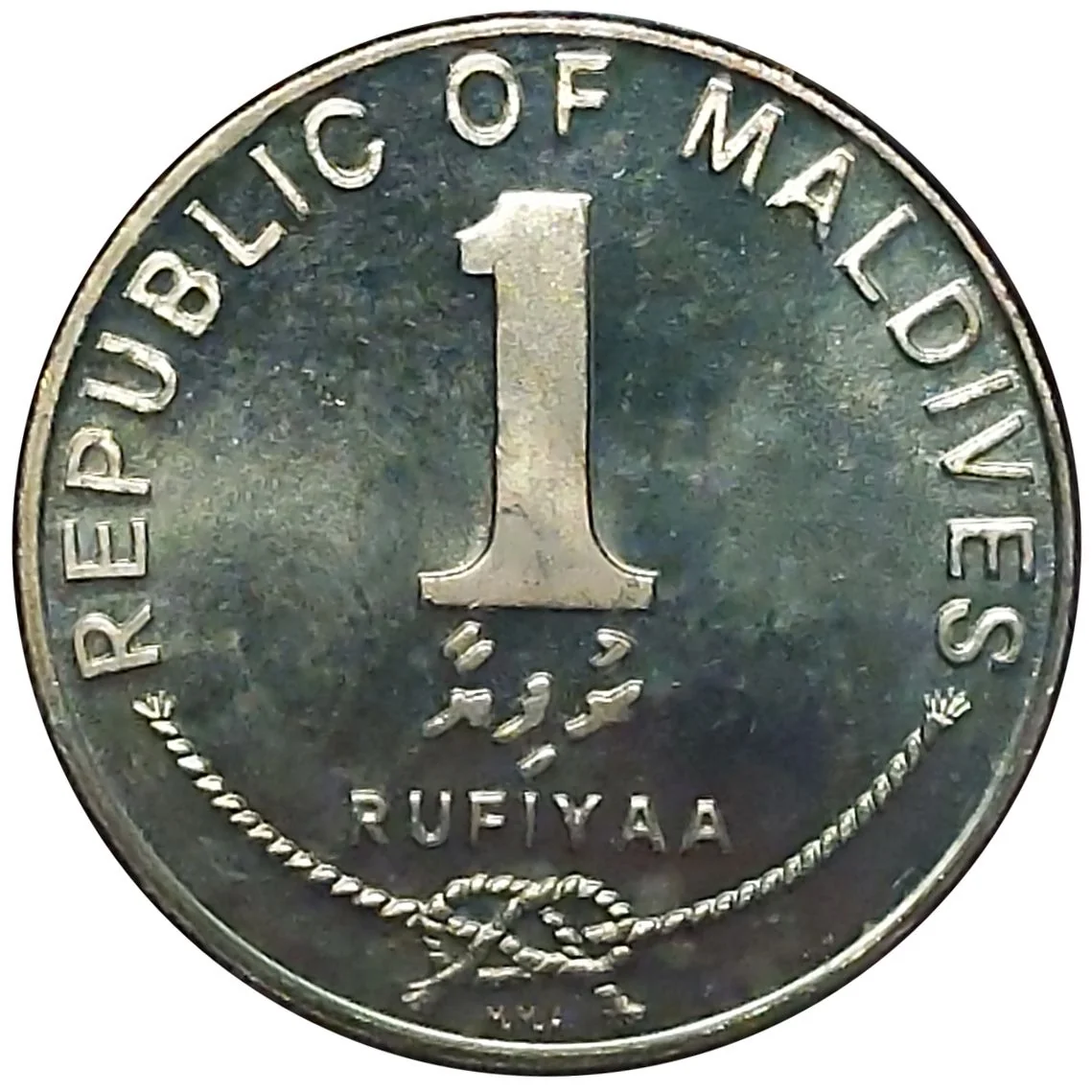
Reverse
Edge
Reeded
Categories
| Symbols> Coat of Arms |
Mints
| Name | Mark |
|---|---|
| Staatliche Münze Baden-Württemberg | — |
Mintings
| Year | Mint Mark | Mintage | Quality | Collection |
|---|---|---|---|---|
| 1982 | — | — |
Historical background
In 1982, the Maldives operated under a unique currency system that was a legacy of its historical trade patterns. The official currency was the Maldivian Rufiyaa, which had been introduced in 1947, but it circulated alongside a foreign currency that held de facto legal tender status: the Ceylonese (later Sri Lankan) Rupee. This dual-currency system was a practical reality due to the Maldives' heavy reliance on imports and the Rufiyaa's limited international convertibility at the time. The Sri Lankan Rupee was widely used in business transactions, particularly in the capital Malé and for tourism, which was then an emerging economic sector.
The government of President Maumoon Abdul Gayoom recognized the inefficiencies and symbolic dependence of this arrangement. A key economic objective was to establish full monetary sovereignty and simplify the financial system. Consequently, 1982 was a pivotal year as it marked the beginning of a formal demonetization process. The authorities announced the phased withdrawal of the Sri Lankan Rupee from circulation within the Maldives, aiming to consolidate the Rufiyaa as the sole legal tender.
This transition was part of a broader suite of economic reforms in the early 1980s aimed at modernizing the state and strengthening central control over the economy. The successful completion of this currency unification in the following years bolstered the role of the Maldives Monetary Authority (the precursor to the Central Bank) and was a significant step in the nation's journey toward a more independent and managed financial system, laying groundwork for future economic development.
The government of President Maumoon Abdul Gayoom recognized the inefficiencies and symbolic dependence of this arrangement. A key economic objective was to establish full monetary sovereignty and simplify the financial system. Consequently, 1982 was a pivotal year as it marked the beginning of a formal demonetization process. The authorities announced the phased withdrawal of the Sri Lankan Rupee from circulation within the Maldives, aiming to consolidate the Rufiyaa as the sole legal tender.
This transition was part of a broader suite of economic reforms in the early 1980s aimed at modernizing the state and strengthening central control over the economy. The successful completion of this currency unification in the following years bolstered the role of the Maldives Monetary Authority (the precursor to the Central Bank) and was a significant step in the nation's journey toward a more independent and managed financial system, laying groundwork for future economic development.
🌱 Common