

50 euro (Felipe VI proclamation) – Spain
Add to wishlist
Non-circulating coins
Commemoration: 10th anniversary of the proclamation of Felipe VI
Spain
Material

References
KM: #
Numista: #443552
Value
Exchange value: 50 EUR
Bullion value: $382.90
Inflation-adjusted value: 51.60 EUR
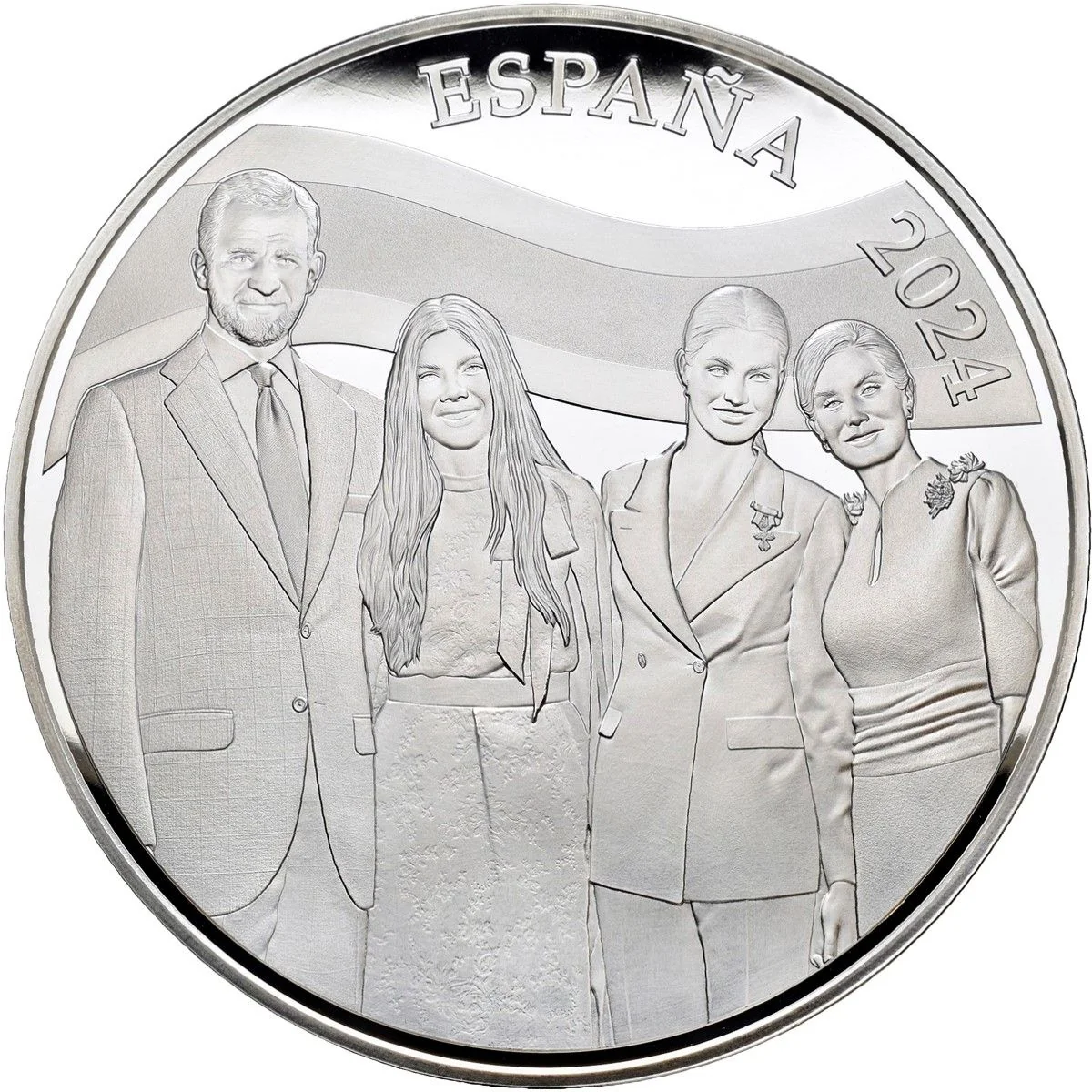
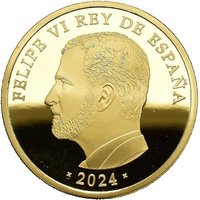
Obverse
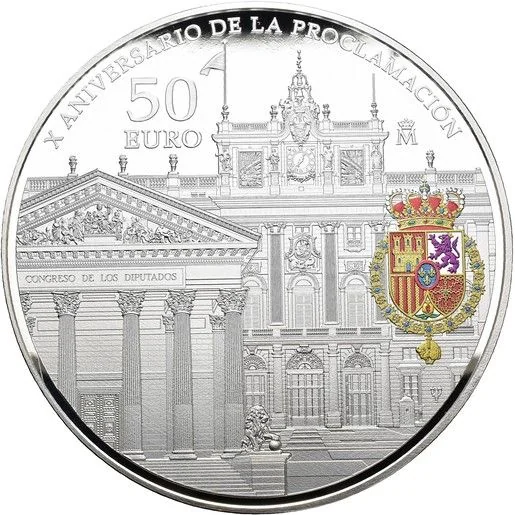
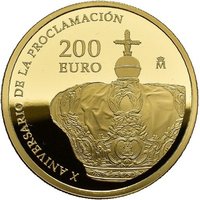
Reverse
Description:
King Felipe VI's coat of arms beside the Congress of Deputies, with the Royal Palace of Madrid behind.
Inscription:
X ANIVERSARIO DE LA PROCLAMACIÓN
50 EURO
M
CONGRESO DE LOS DIPUTADOS
50 EURO
M
CONGRESO DE LOS DIPUTADOS
Translation:
Tenth Anniversary of the Proclamation
50 Euro
M
Congress of Deputies
50 Euro
M
Congress of Deputies
Script: Latin
Language: Spanish
Edge
Plain
Categories
| Building> Governmental building |
| Building> Palace |
| Person> Monarch |
| Symbols> Coat of Arms |
Mints
| Name | Mark |
|---|---|
| Royal Mint of Madrid | (M) |
Mintings
| Year | Mint Mark | Mintage | Quality | Collection |
|---|---|---|---|---|
| 2024 | M | 2,500 | Proof |
Historical background
In 2024, Spain remains a fully integrated member of the Eurozone, using the euro (€) as its sole legal tender. The currency situation is therefore defined not by national policy but by the monetary decisions of the European Central Bank (ECB). The primary focus throughout the year has been the ECB's efforts to combat persistent inflation, which peaked post-pandemic and was further exacerbated by the energy crisis. After a historic series of interest rate hikes throughout 2022 and 2023, the ECB began a cautious easing cycle in mid-2024, aiming to balance price stability with avoiding a deep recession. This monetary tightening and subsequent easing directly influence credit costs, mortgages, and business investment across Spain.
Domestically, the euro's stability is broadly supported, though it presents ongoing challenges. Key sectors like tourism benefit from the currency's strength, facilitating travel from non-Eurozone countries. However, Spanish exporters, particularly in agriculture and manufacturing, sometimes face competitiveness issues against countries with weaker currencies. Internally, high inflation has eroded purchasing power, sparking significant wage negotiation disputes and contributing to cost-of-living pressures. The government has responded with targeted fiscal measures, such as VAT reductions on essential goods and direct aid, to mitigate these effects within the constraints of EU fiscal rules.
Looking ahead, the currency outlook is tied to broader Eurozone dynamics and Spain's economic performance. A key concern is managing the high public debt-to-GDP ratio (exceeding 110%) in an environment of higher-for-longer interest rates, which increases debt servicing costs. The digital euro project, in its exploratory phase from the ECB, represents a potential future shift, but it remains a long-term prospect without immediate impact on daily transactions. Ultimately, Spain's currency stability in 2024 hinges on the successful navigation of the ECB's soft landing—reducing inflation without stifling the modest economic growth the country is experiencing.
Domestically, the euro's stability is broadly supported, though it presents ongoing challenges. Key sectors like tourism benefit from the currency's strength, facilitating travel from non-Eurozone countries. However, Spanish exporters, particularly in agriculture and manufacturing, sometimes face competitiveness issues against countries with weaker currencies. Internally, high inflation has eroded purchasing power, sparking significant wage negotiation disputes and contributing to cost-of-living pressures. The government has responded with targeted fiscal measures, such as VAT reductions on essential goods and direct aid, to mitigate these effects within the constraints of EU fiscal rules.
Looking ahead, the currency outlook is tied to broader Eurozone dynamics and Spain's economic performance. A key concern is managing the high public debt-to-GDP ratio (exceeding 110%) in an environment of higher-for-longer interest rates, which increases debt servicing costs. The digital euro project, in its exploratory phase from the ECB, represents a potential future shift, but it remains a long-term prospect without immediate impact on daily transactions. Ultimately, Spain's currency stability in 2024 hinges on the successful navigation of the ECB's soft landing—reducing inflation without stifling the modest economic growth the country is experiencing.

✨ Legendary