

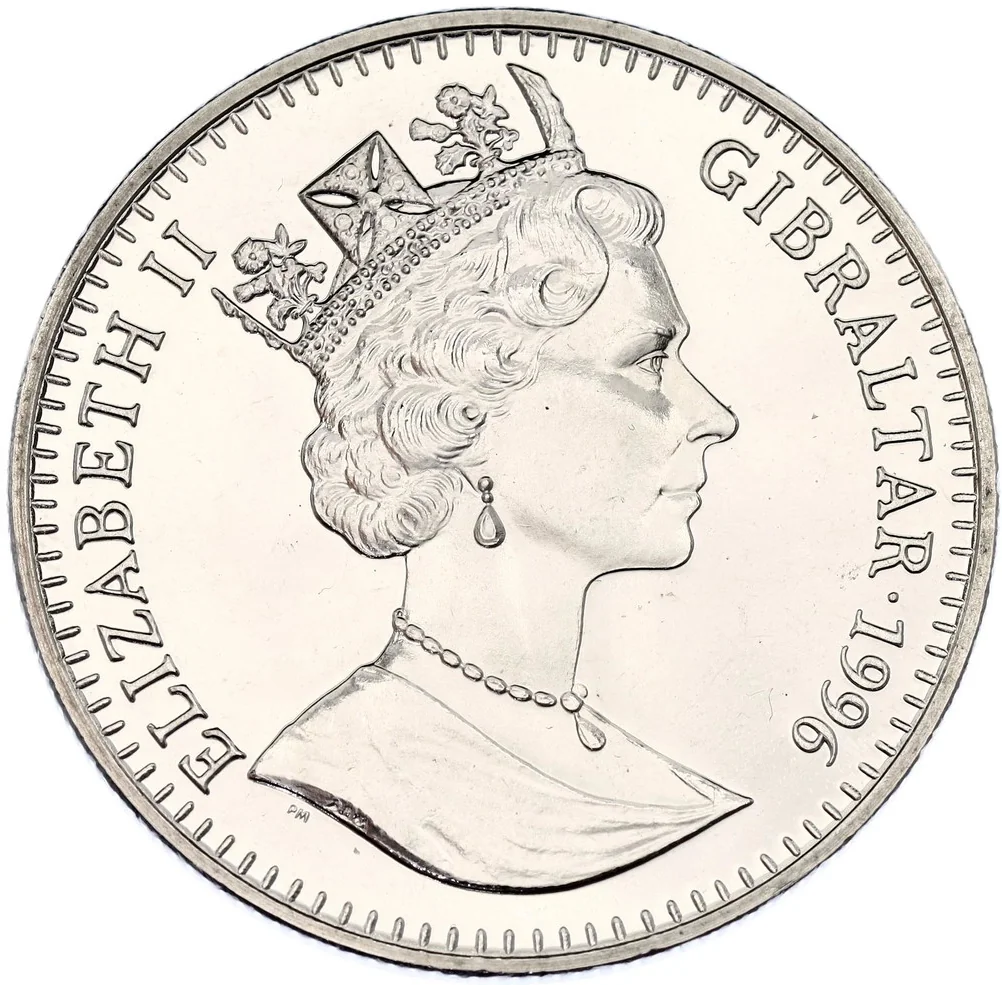
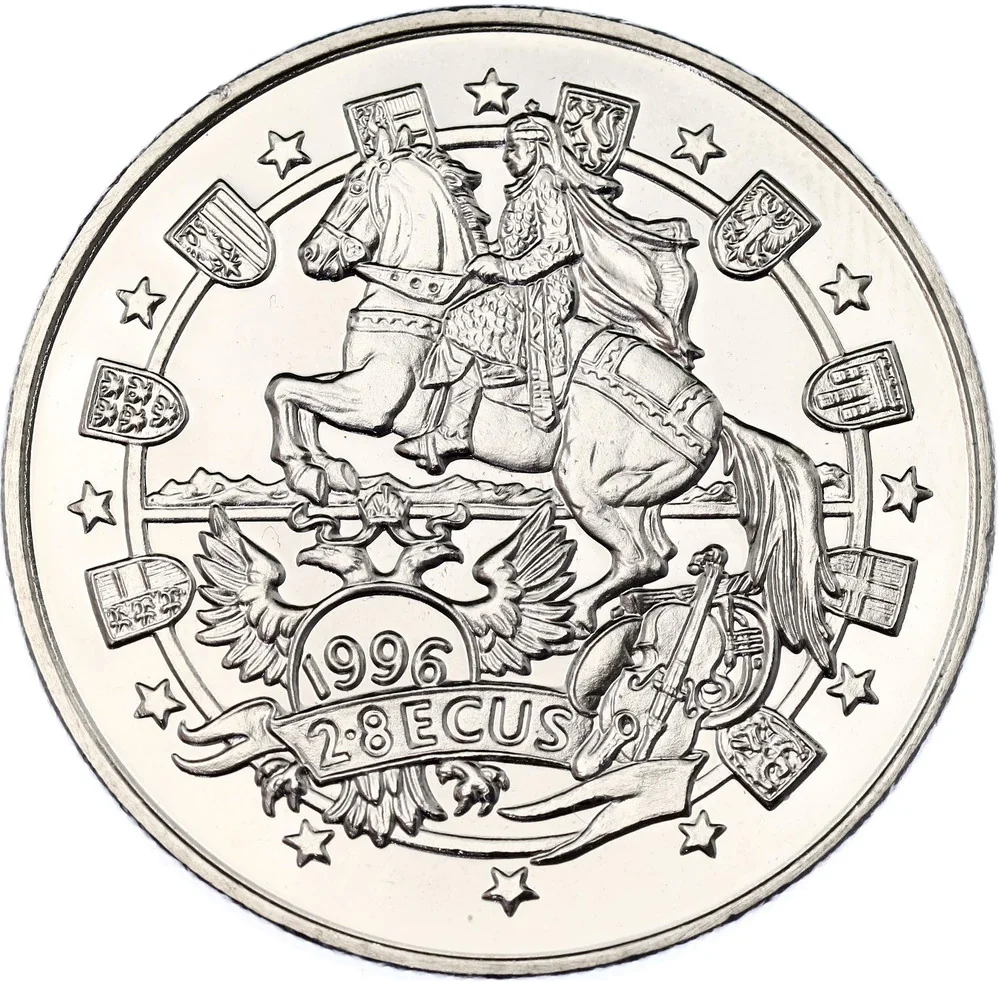
2.8 ECUs (Austrian history) – Gibraltar
Circulating commemorative coins
Commemoration: 1000 Years of Austria
United Kingdom
Context
Year: 1996
Country: United Kingdom 
Issuer: Gibraltar 
Ruler: Elizabeth II
Currency:
(1990—1996)
Demonetized: Yes
Material
Diameter: 38.5 mm
Weight: 28.1 g
Thickness: 3.1 mm
Shape: Round
Composition: Copper-nickel
Technique: Milled
References
KM: #Click to copy to clipboard508
Numista: #44351
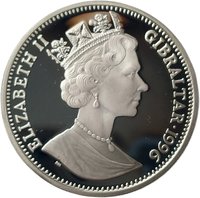
Obverse
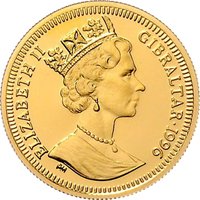
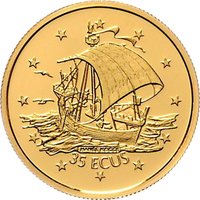
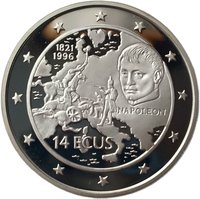
Reverse
Edge
Reeded
Categories
| Animal> Horse |
| Symbols> Coat of Arms |
Mints
| Name | Mark |
|---|---|
| Pobjoy Mint | (PM) |
Mintings
| Year | Mint Mark | Mintage | Quality | Collection |
|---|---|---|---|---|
| 1996 | PM | — |
Historical background
In 1996, the currency situation in Gibraltar was defined by its unique constitutional relationship with the United Kingdom and its practical economic ties with neighbouring Spain. Officially, the legal tender was the Gibraltar pound (GIP), issued by the Government of Gibraltar and pegged at par with the British pound sterling (GBP). Sterling notes and coins also circulated freely and were accepted interchangeably with local issues, underscoring Gibraltar's status as a British Overseas Territory. This dual circulation provided monetary stability and was crucial for an economy heavily reliant on financial services, tourism, and port operations.
However, the reality on the ground was more complex due to Gibraltar's geographic and economic integration with the Campo de Gibraltar region in Spain. While sterling and Gibraltar pounds were used locally, the Spanish peseta was widely accepted, especially in retail sectors catering to the thousands of Spanish cross-border workers and day visitors. This de facto tri-currency environment was a daily fact of life for businesses, requiring flexibility in handling transactions. The border, fully open since 1985, facilitated this fluid exchange but also meant Gibraltar's monetary sphere was inherently influenced by the Spanish economy.
Looking forward, 1996 was a period of anticipation regarding European monetary integration. As a part of the EU (under the UK's membership), Gibraltar was exempt from the Common Agricultural Policy and VAT but was included in the customs union. The impending launch of the euro in 1999 raised significant questions. While the UK had an opt-out, Gibraltar's government had to consider whether maintaining the sterling peg would remain optimal or if the euro's adoption by its main trading neighbour, Spain, would necessitate a strategic shift to facilitate cross-border commerce and economic stability.
However, the reality on the ground was more complex due to Gibraltar's geographic and economic integration with the Campo de Gibraltar region in Spain. While sterling and Gibraltar pounds were used locally, the Spanish peseta was widely accepted, especially in retail sectors catering to the thousands of Spanish cross-border workers and day visitors. This de facto tri-currency environment was a daily fact of life for businesses, requiring flexibility in handling transactions. The border, fully open since 1985, facilitated this fluid exchange but also meant Gibraltar's monetary sphere was inherently influenced by the Spanish economy.
Looking forward, 1996 was a period of anticipation regarding European monetary integration. As a part of the EU (under the UK's membership), Gibraltar was exempt from the Common Agricultural Policy and VAT but was included in the customs union. The impending launch of the euro in 1999 raised significant questions. While the UK had an opt-out, Gibraltar's government had to consider whether maintaining the sterling peg would remain optimal or if the euro's adoption by its main trading neighbour, Spain, would necessitate a strategic shift to facilitate cross-border commerce and economic stability.
💎 Very Rare