

½ angel – Isle of Man
Add to wishlist
Non-circulating coins
Commemoration: Archangel Michael
Context
Year: 2018
Country: British Crown dependencies
Issuer: Isle of Man
Ruler: Elizabeth II
Currency:
(since 1984)
Material
Diameter: 27 mm
Weight: 15.56 g
Gold Weight:: 15.54 g
Shape: Round
Composition: 99.9% Gold
Standard: Silver half ounce
Magnetic: No
Technique: Milled
Alignment: Medal alignment
flip
References
Numista: #440300
Value
Bullion value: $2369.84
Obverse
Description:
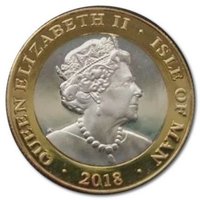
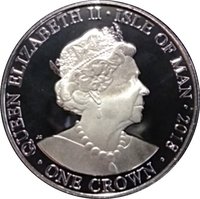
Right-facing bust of Queen Elizabeth II in the George IV State Diadem and Victorian Coronation Necklace, surrounded by legend and date, with denomination below.
Inscription:
QUEEN ELIZABETH II • ISLE OF MAN
JC
• 2018 •
JC
• 2018 •
Script: Latin
Designer: Jody Clark
Reverse
Edge
Reeded
Categories
| Mythology> Fantastic animal |
| Object> Armour |
| Person> Religious figure |
| Object> Cold weapons |
Mints
| Name | Mark |
|---|---|
| Tower Mint | — |
Mintings
| Year | Mint Mark | Mintage | Quality | Collection |
|---|---|---|---|---|
| 2018 | — | — | Proof |
Historical background
In 2018, the Isle of Man's currency situation remained defined by its long-standing and stable relationship with the United Kingdom, while also reflecting its unique constitutional status as a Crown Dependency. The primary circulating currency was the Manx pound (IMP), which was issued by the Isle of Man Government Treasury and maintained a fixed 1:1 parity with sterling (GBP). While Sterling notes and coins were also legal tender and circulated interchangeably, the distinct Manx banknotes and coins, featuring local imagery and historical figures, served as a symbol of national identity and a popular collector's item.
The island's financial system operated seamlessly within the wider UK monetary framework, with no central bank of its own. This meant monetary policy, including interest rates, was set by the Bank of England, providing stability and certainty for trade and investment. The year saw no significant changes to this arrangement, with the Manx economy continuing to benefit from the credibility of the UK pound while retaining the fiscal autonomy to issue its own currency. The government's Treasury managed the issuance prudently, ensuring full backing with sterling reserves.
A notable development in 2018 was the continued evolution of the island's digital and fintech sector, which operated alongside the traditional currency system. As an established international finance centre, the Isle of Man was actively exploring blockchain and digital ledger technologies, with several e-Gaming and fintech businesses based there. However, these innovations did not disrupt the core currency peg; instead, they represented a modern financial services layer built upon the foundational stability provided by the fixed link to sterling, which remained the bedrock of the Manx economy.
The island's financial system operated seamlessly within the wider UK monetary framework, with no central bank of its own. This meant monetary policy, including interest rates, was set by the Bank of England, providing stability and certainty for trade and investment. The year saw no significant changes to this arrangement, with the Manx economy continuing to benefit from the credibility of the UK pound while retaining the fiscal autonomy to issue its own currency. The government's Treasury managed the issuance prudently, ensuring full backing with sterling reserves.
A notable development in 2018 was the continued evolution of the island's digital and fintech sector, which operated alongside the traditional currency system. As an established international finance centre, the Isle of Man was actively exploring blockchain and digital ledger technologies, with several e-Gaming and fintech businesses based there. However, these innovations did not disrupt the core currency peg; instead, they represented a modern financial services layer built upon the foundational stability provided by the fixed link to sterling, which remained the bedrock of the Manx economy.
✨ Legendary