

½ Dollar (George Washington's Birth) – United States
Non-circulating coins
Commemoration: 250th Anniversary of George Washington's Birth
United States
Context
Year: 1982
Issuer: United States 
Period:
(since 1776)
Currency:
(since 1785)
Subdivision: ½ Dollar = 50 Cents
Total mintage: 7,104,502
Material
References
KM: #Click to copy to clipboard208
Numista: #4403
Value
Exchange value: ½ USD = $0.50
Bullion value: $31.97
Inflation-adjusted value: 1.77 USD
Obverse
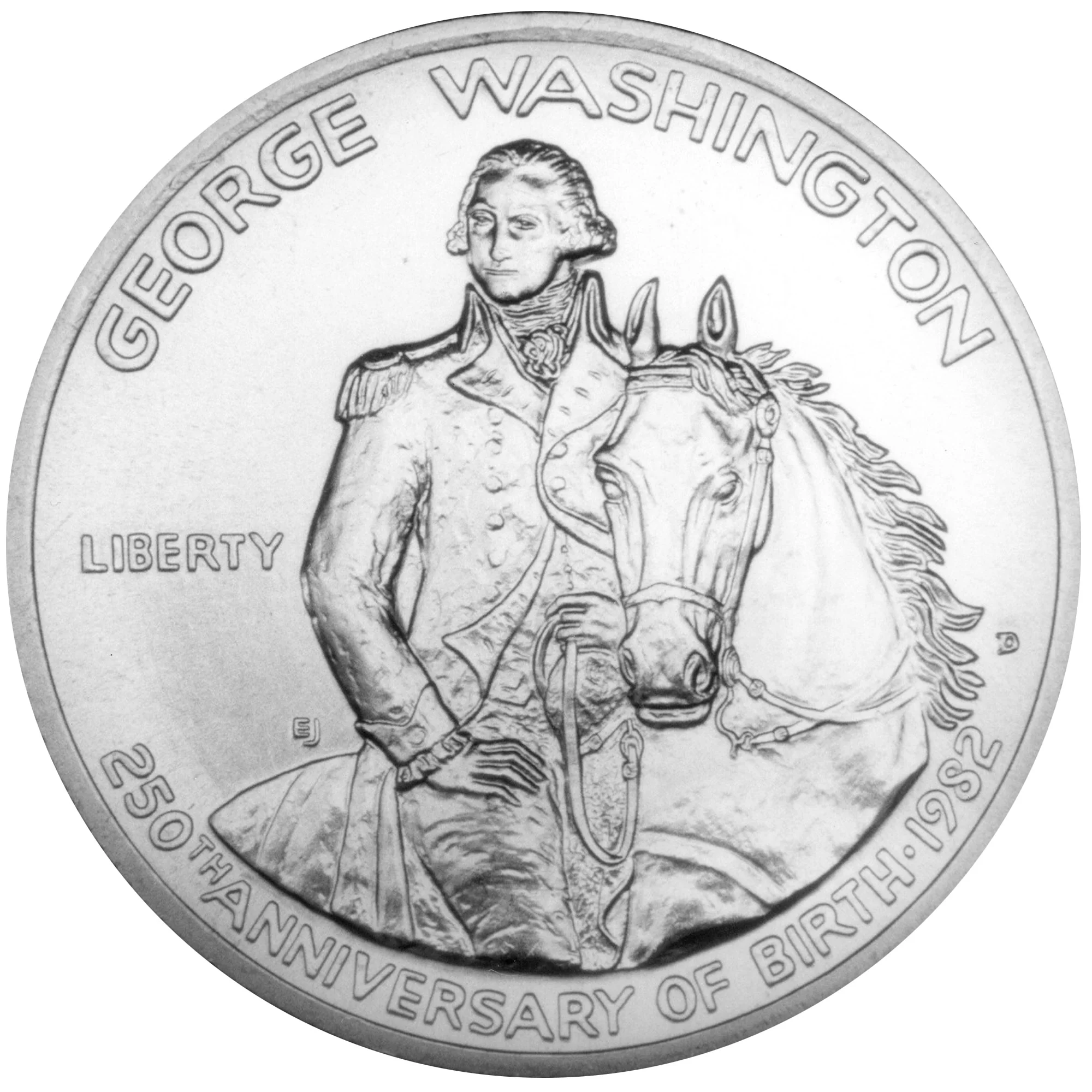
Description:
Washington mounted
Inscription:
GEORGE WASHINGTON
LIBERTY
250TH ANNIVERSARY OF BIRTH·1982
LIBERTY
250TH ANNIVERSARY OF BIRTH·1982
Script: Latin
Engraver: Elizabeth Jones
Reverse
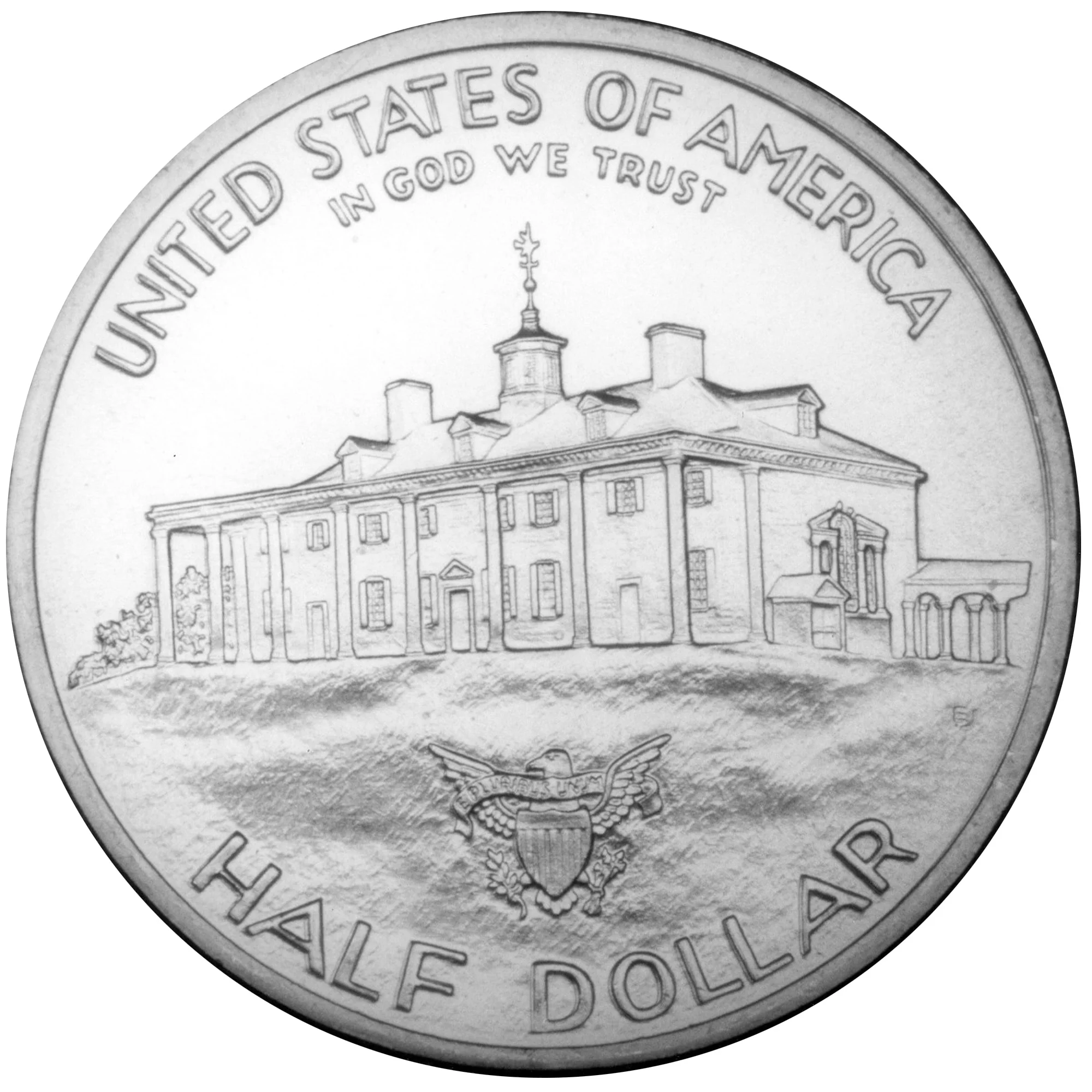
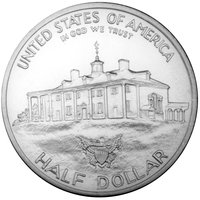
Description:
Mount Vernon's east facade, featuring a heraldic eagle.
Inscription:
UNITED STATES OF AMERICA
IN GOD WE TRUST
HALF DOLLAR
IN GOD WE TRUST
HALF DOLLAR
Script: Latin
Engraver: Elizabeth Jones
Edge
Reeded
Categories
| Animal> Horse |
| Symbols> Coat of Arms |
| Person> Politician |
Mints
| Name | Mark |
|---|---|
| United States Mint of Denver | D |
| United States Mint of San Francisco | S |
Historical background
The United States entered 1982 in the throes of a severe monetary policy experiment led by Federal Reserve Chairman Paul Volcker. To combat the entrenched double-digit inflation of the late 1970s, the Fed had dramatically raised interest rates, with the federal funds rate peaking near 20% in 1981. This aggressive tightening successfully broke inflation's back, causing it to fall from over 13% in 1980 to around 6% by year's end. However, the policy came at a steep cost: the U.S. was plunged into its deepest recession since the Great Depression, with unemployment soaring to a post-war high of 10.8% by the end of 1982.
The strong dollar was a defining feature of the 1982 currency landscape. High U.S. interest rates attracted massive foreign capital, driving up the dollar's value dramatically against other major currencies like the Deutsche Mark and Japanese Yen. While this lowered import prices and helped further curb inflation, it devastated American exporters and manufacturers, whose goods became prohibitively expensive overseas. This "overvalued" dollar became a major point of political and economic tension, fueling protectionist sentiments in Congress and creating severe strains for U.S. trading partners and developing nations with dollar-denominated debts.
By late 1982, a pivotal shift began. With inflation receding and the economy in deep distress, the Federal Reserve started to cautiously ease its monetary stance, beginning a series of interest rate cuts. This marked the start of a long economic expansion. Simultaneously, the crisis atmosphere prompted the first major international interventions in currency markets since the collapse of the Bretton Woods system a decade earlier. In June, central banks collaborated to support the faltering French franc, an early signal that governments were growing uneasy with pure floating exchange rates and the extreme volatility they could produce, setting the stage for later coordinated agreements like the Plaza Accord in 1985.
The strong dollar was a defining feature of the 1982 currency landscape. High U.S. interest rates attracted massive foreign capital, driving up the dollar's value dramatically against other major currencies like the Deutsche Mark and Japanese Yen. While this lowered import prices and helped further curb inflation, it devastated American exporters and manufacturers, whose goods became prohibitively expensive overseas. This "overvalued" dollar became a major point of political and economic tension, fueling protectionist sentiments in Congress and creating severe strains for U.S. trading partners and developing nations with dollar-denominated debts.
By late 1982, a pivotal shift began. With inflation receding and the economy in deep distress, the Federal Reserve started to cautiously ease its monetary stance, beginning a series of interest rate cuts. This marked the start of a long economic expansion. Simultaneously, the crisis atmosphere prompted the first major international interventions in currency markets since the collapse of the Bretton Woods system a decade earlier. In June, central banks collaborated to support the faltering French franc, an early signal that governments were growing uneasy with pure floating exchange rates and the extreme volatility they could produce, setting the stage for later coordinated agreements like the Plaza Accord in 1985.
🌱 Very Common